In this post we’re visiting East Finchley in North London. Situated on the Northern Line between Finchley Central and Highgate, the original station was rebuilt from scratch in the 1900s and was intended to serve many destinations. But as we’ll find out, things didn’t work out as expected.
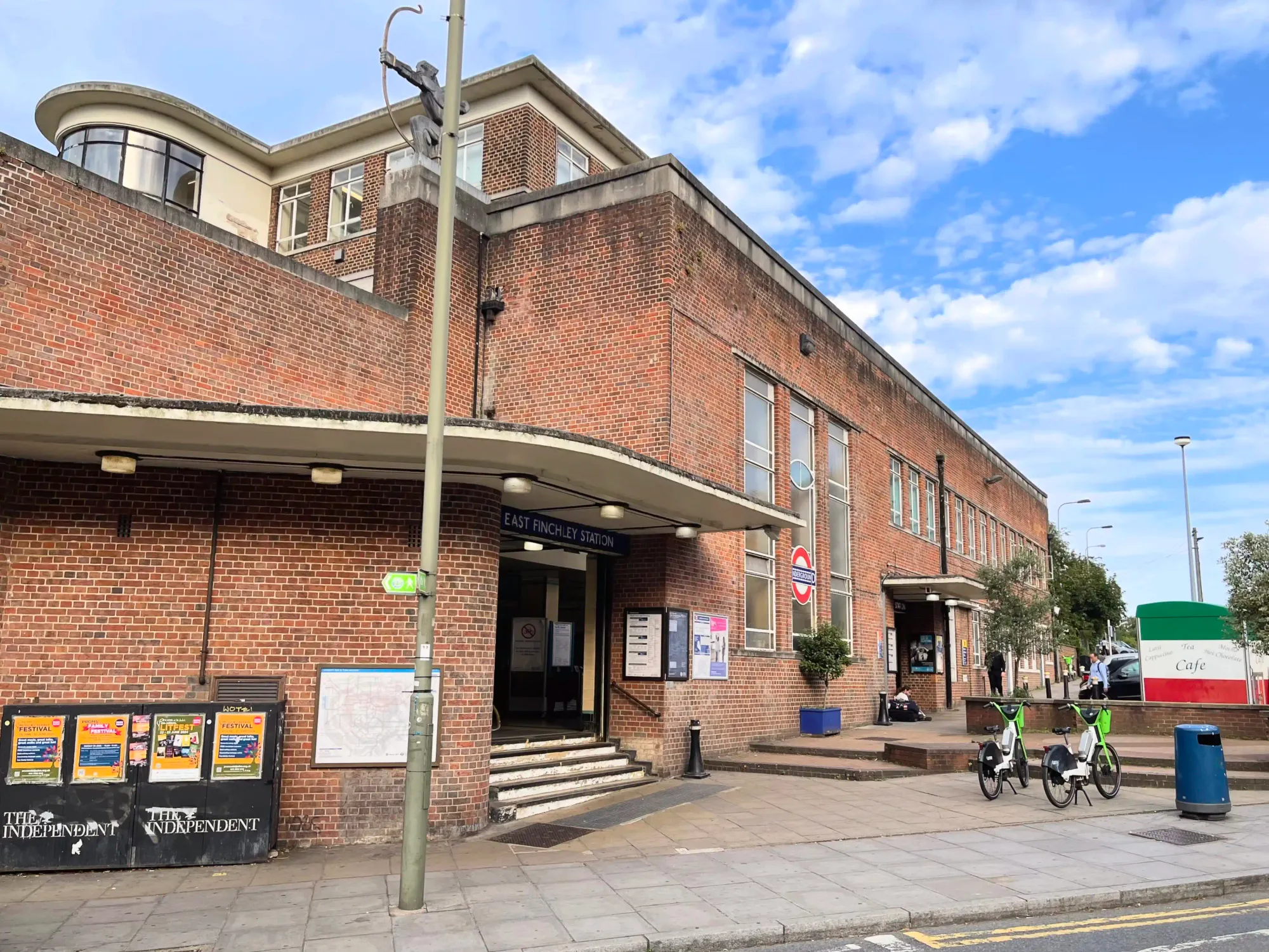
Finchley is a big place. It’s big enough to have several cardinal directions; a North, a Central (really named “Church End”), a West, and of course an East, which is where we find ourselves today.
Pick any neighbourhood in London and you’re likely to find it has a handful of famous people who once lived there. East Finchley can boast the likes of Amy Winehouse, Jerry Springer, George Michael, and Peter Sellers. It’s also home to The Bishops Avenue, which is regularly claimed to be one of the most expensive residential streets not just in London, nor the UK, but in the entire world.
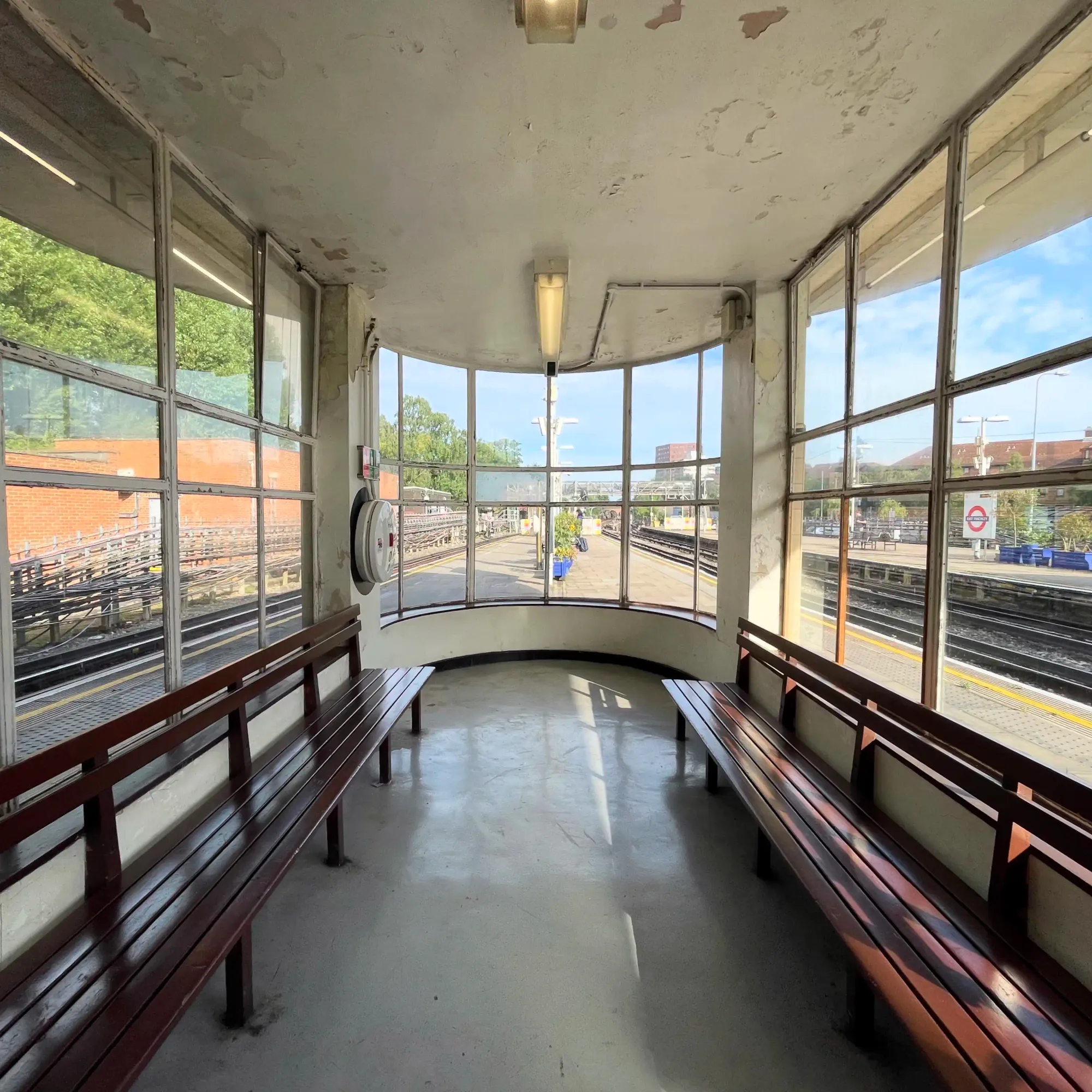
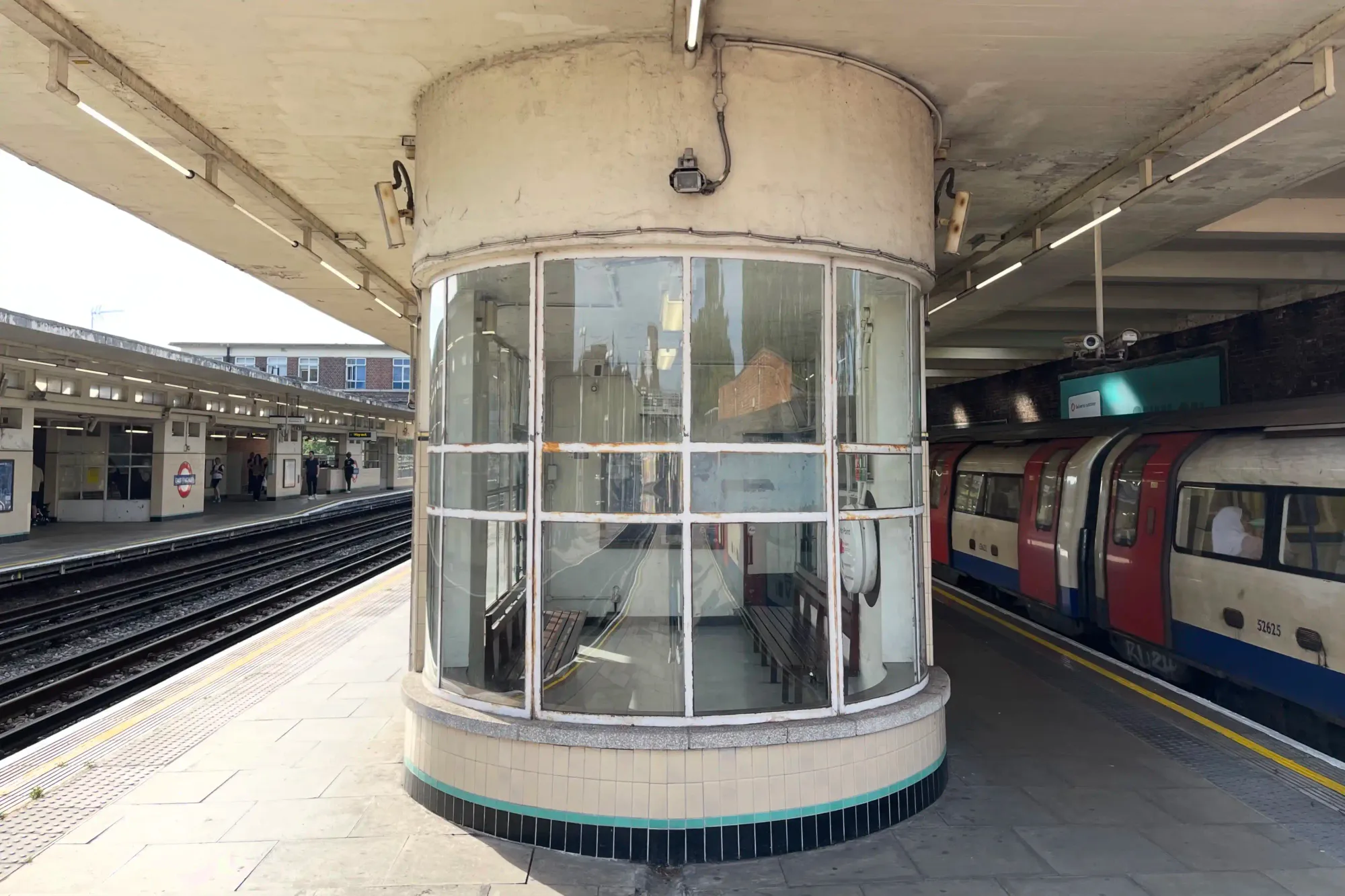
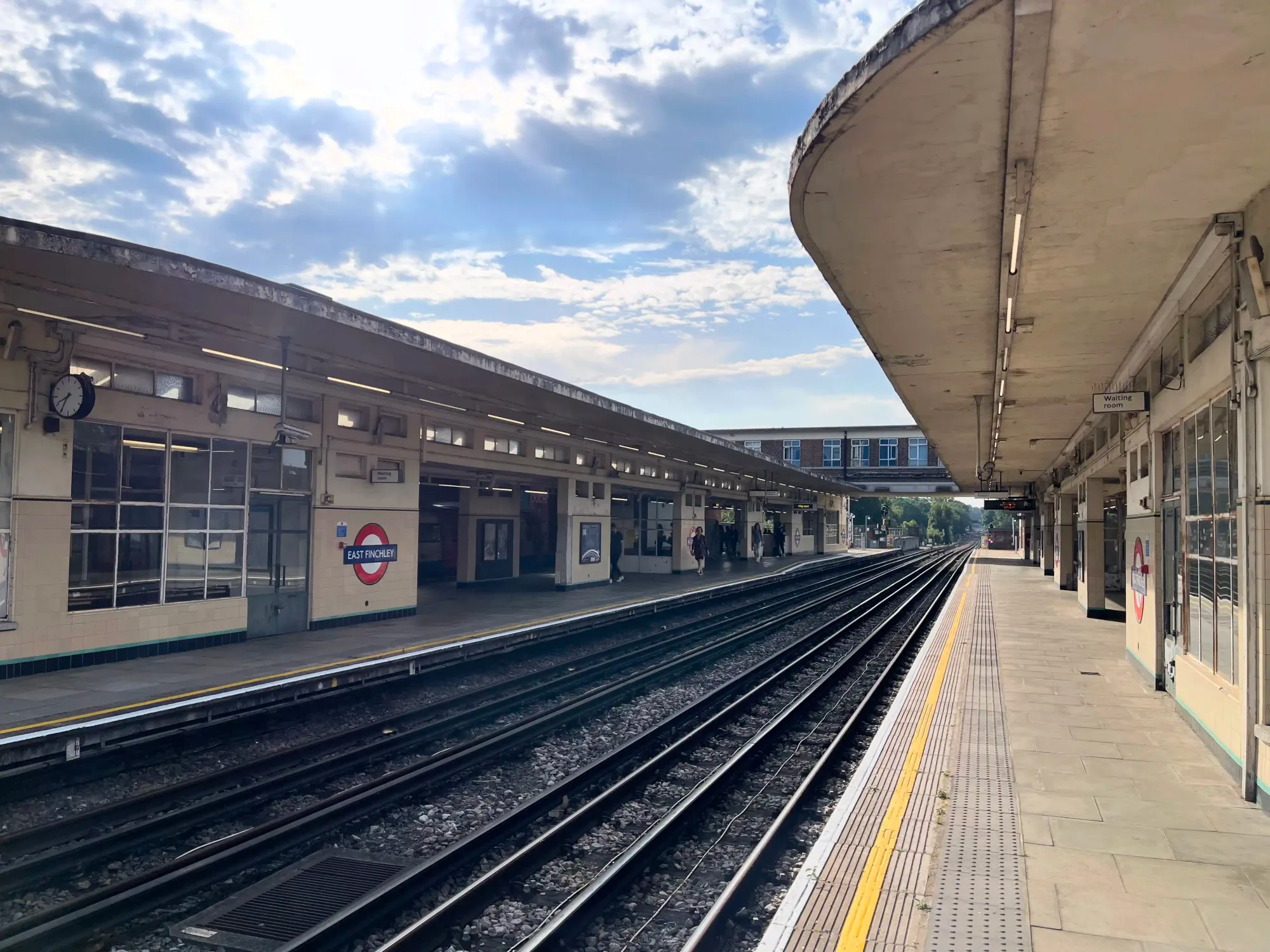
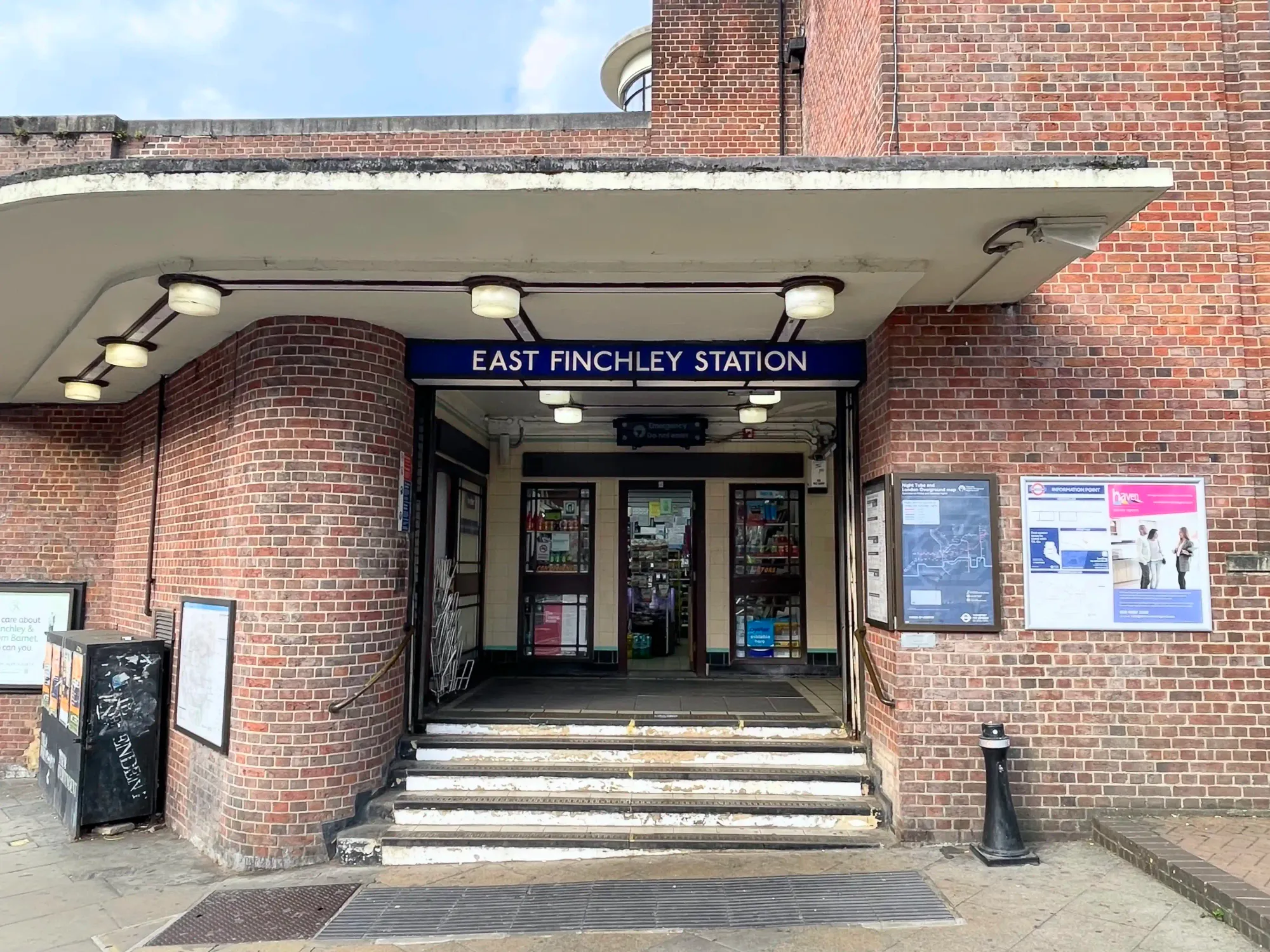
And all good neighbourhoods deserve a nice station. Some, like East Finchley, get a station which is more than merely functional, having beautiful architecture and design.
East Finchley also has some surprisingly complex infrastructure for a simple stopping point on the way from Camden to Barnet.
I’ve been through this station more times than I can count, and I’ve long been fascinated as to why it’s so grandiose compared to other stops on the line.
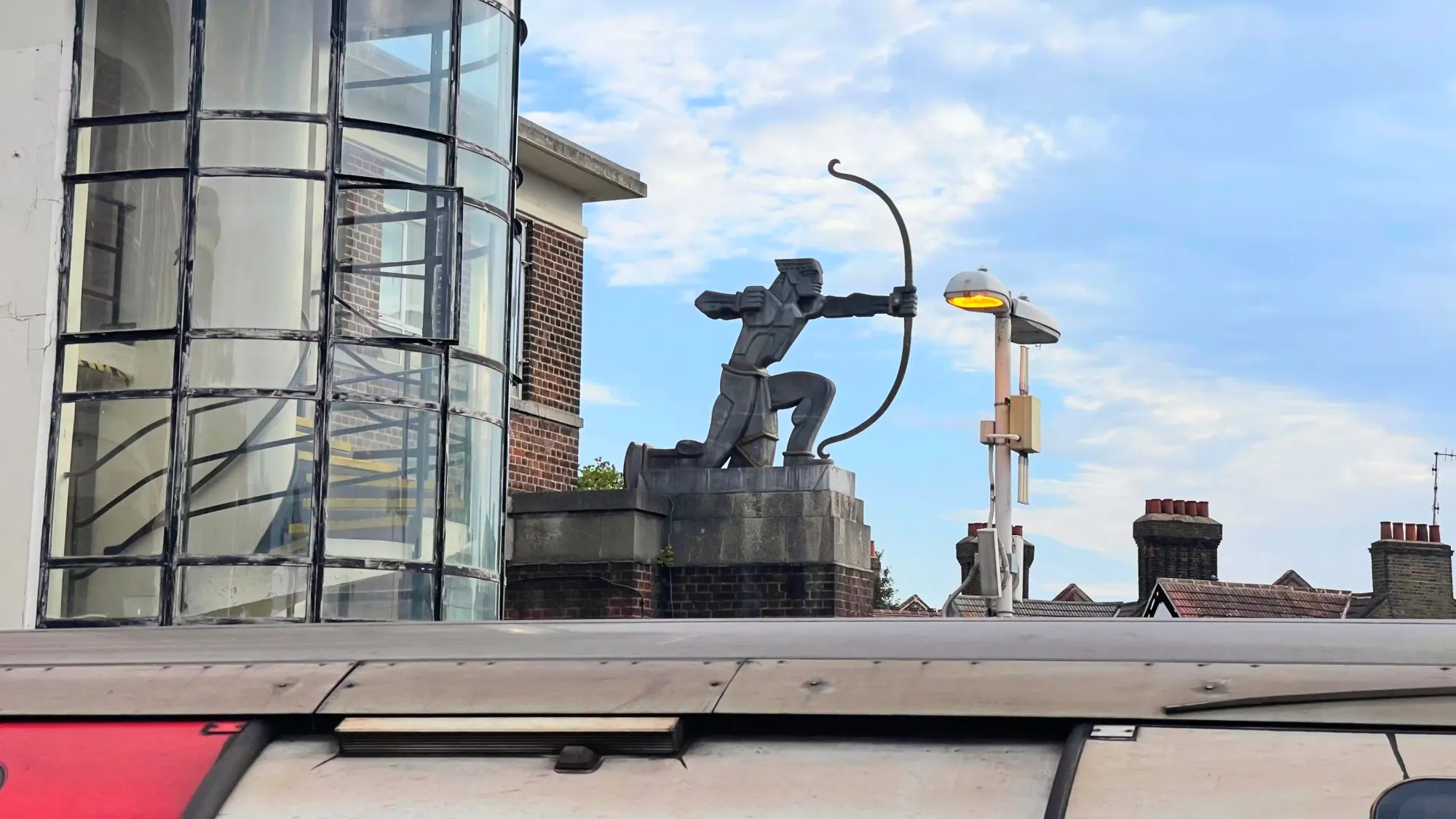
Why does East Finchley have four tracks when it’s neither a junction station nor a line which has more than one service pattern? Why does the architecture differ so much to most of the other stations on the line, being the only truly Art Deco building? And why is there a prominent statue of an archer at the end of the southbound platform, arrow poised to launch towards London?
There’s clearly a lot of things to unpack, but it helps to start with a look at the history of East Finchley station as it provides the context for understanding why it’s ended up the way it has.
Once a Completely Different Railway
If you’d stood on the platforms at East Finchley during the early 1900s, you wouldn’t recognise much in common with today’s offering. There were only two tracks towards completely different destinations: North towards Edgware and south towards Finsbury Park, King’s Cross, and Broad Street. Crucially, steam trains would have provided those services.
Eventually High Barnet was added as a destination, and current users of the line might find it odd to learn the Barnet branch was a lesser loved spur playing second fiddle to to the more important route to Edgware.
Today, all that remains of the line to Edgware is a single tracked stub between Finchley Central and Mill Hill East.
Services back then were run by the London and North Eastern Railway (LNER), the same company which at the time provided services from London to Scotland on the nearby East Coast Main Line.
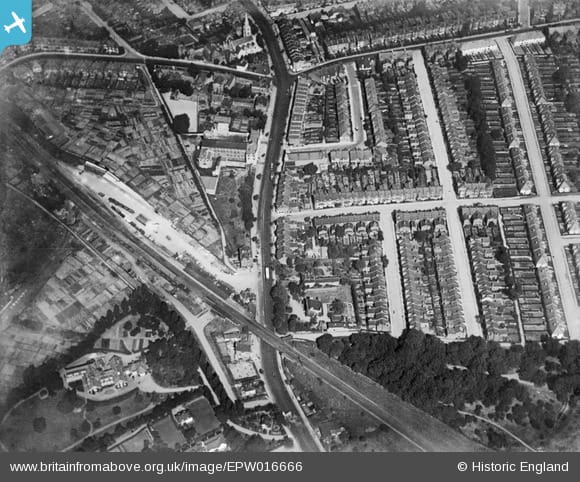
I wasn’t able to find any photos of how the station looked back in the 1920s, but we can at least take a look at the neighbourhood of that era from the air.
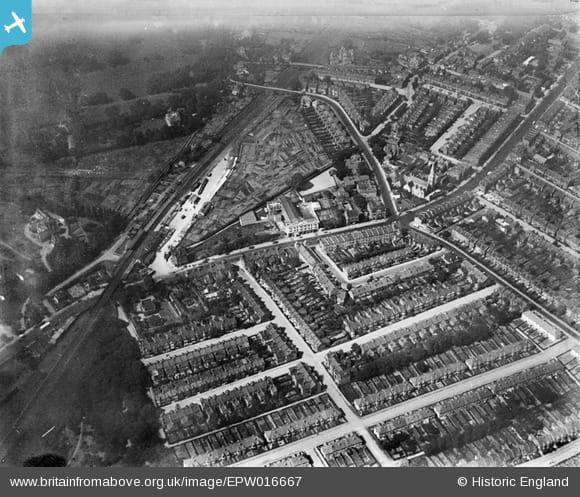
The alignment of the double tracked line is clearly visible passing over the High Road as it heads south.
In 1935, lofty plans were made to extend the Underground’s Northern Line from its current terminus at Archway – which was then confusingly called “Highgate” – up to East Finchley, to take over services as part of the ambitious Northern Heights project.
To this end, the tunnel bores were extended from Archway to a new deep level station at Highgate and then northwards to emerge at East Finchley where it joined the LNER lines from Finsbury Park.
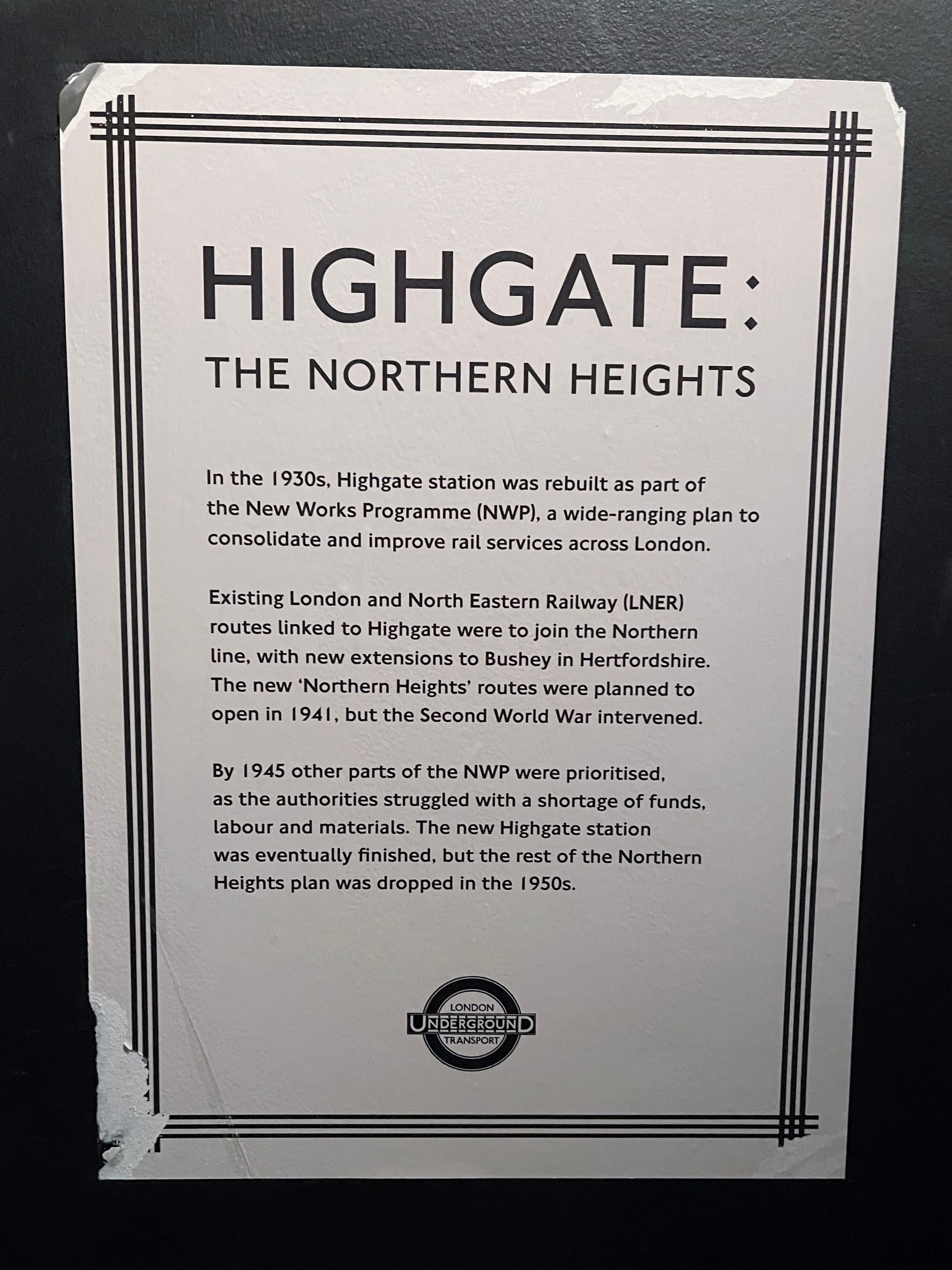
Having trains from two separate routes joining at East Finchley meant the station needed extra capacity, and so the existing two-platform station was demolished and a brand new station was constructed with four tracks in order to support the additional services which were planned to soon arrive.
The ambitious Northern Heights plans would have also seen services extended from Edgware all the way up to Bushey via Elstree, and to that end East Finchley needed to be expanded to become an important interchange on the Northern Heights.
It’s hard to visualise the spaghetti of rail lines which would have criss-crossed this area of North London, but thankfully maps had been produced to demonstrate how the future network would look.
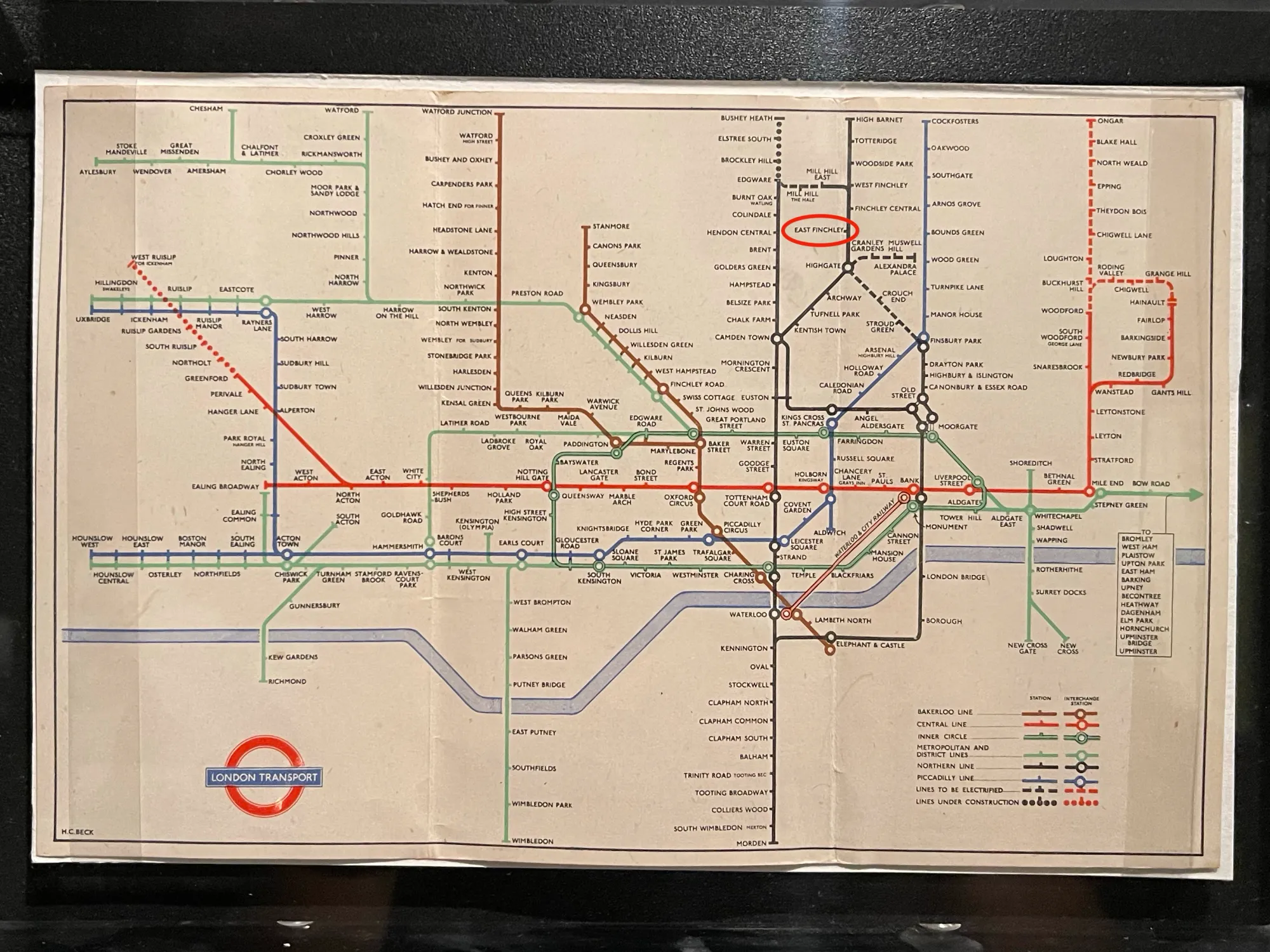
The Second World War put the brakes on the Northern Heights project, and following the conflict’s end in 1945 and the introduction of London’s green belt, this put a permanent end to the plans. Bushey wouldn’t be getting a Tube station (although the existing station of the same name on the West Coast Mainline would for a short period be served by the Bakerloo Line).
And so for a period of time it was possible to witness both Tube trains and steam trains running up and down the High Barnet branch from East Finchley, but eventually the steam trains were withdrawn. This then followed the removal of services via Finsbury Park.
Services to Edgware were also withdrawn with trains only going as far as Mill Hill East to serve its army barracks, leaving the Northern Line we see today. It became a stub of its former self and a ghost of the network it could have been should the Northern Heights plans have come to fruition.
But East Finchley did get its rebuild.
Station Architecture
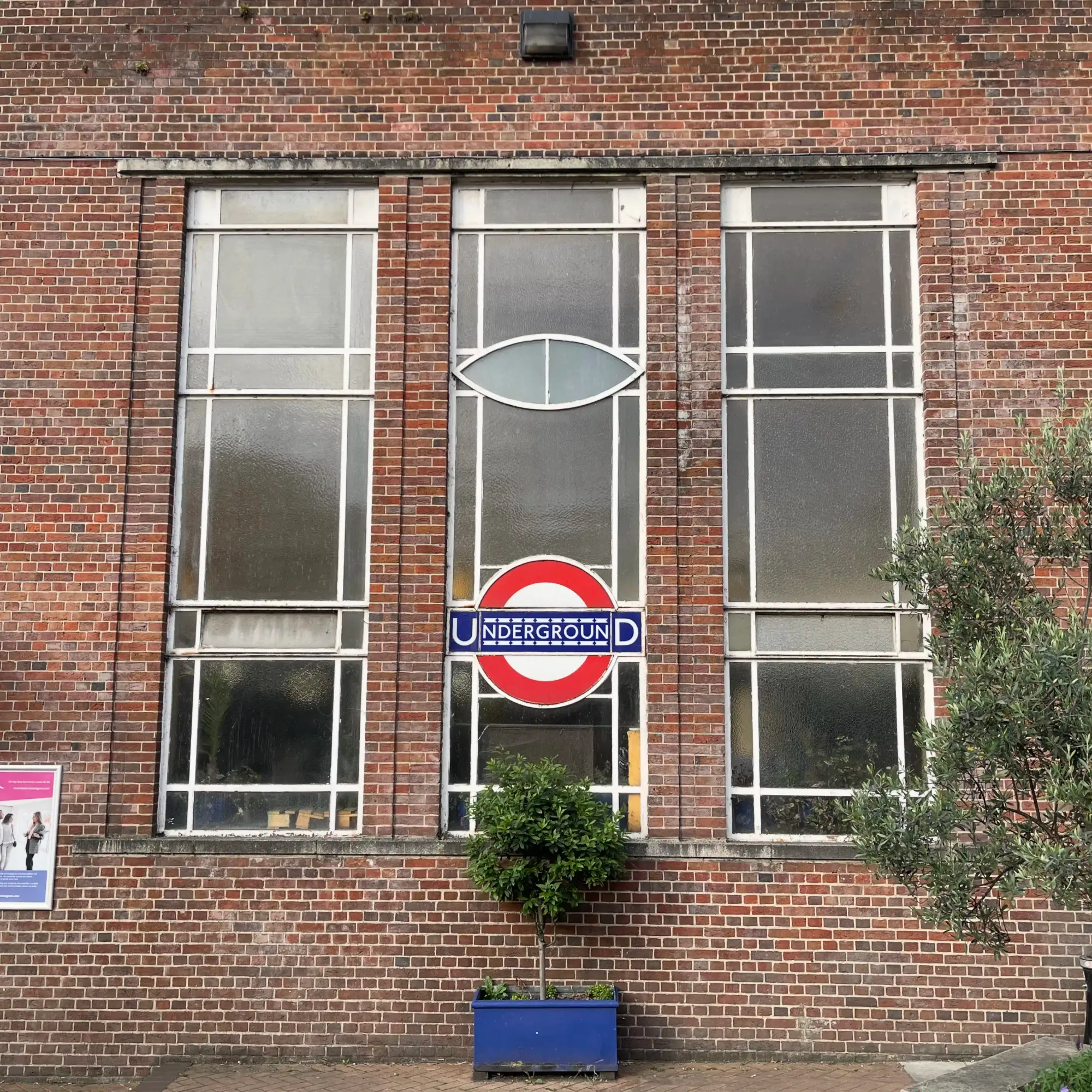
Renowned architect Charles Holden was commissioned to design the new East Finchley station. Holden has a special place in the hearts of those who appreciate railway architecture, as he’s responsible for the design of many stations on the network.
His most famous contributions are all over the Piccadilly Line and there are also several at the southern end of the Northern Line. More stations are dotted on other Tube lines as well and that’s not to mention London Underground’s impressive headquarters at St. James’s Park. There are also stations in London and around the country are heavily influence by his design ethos.
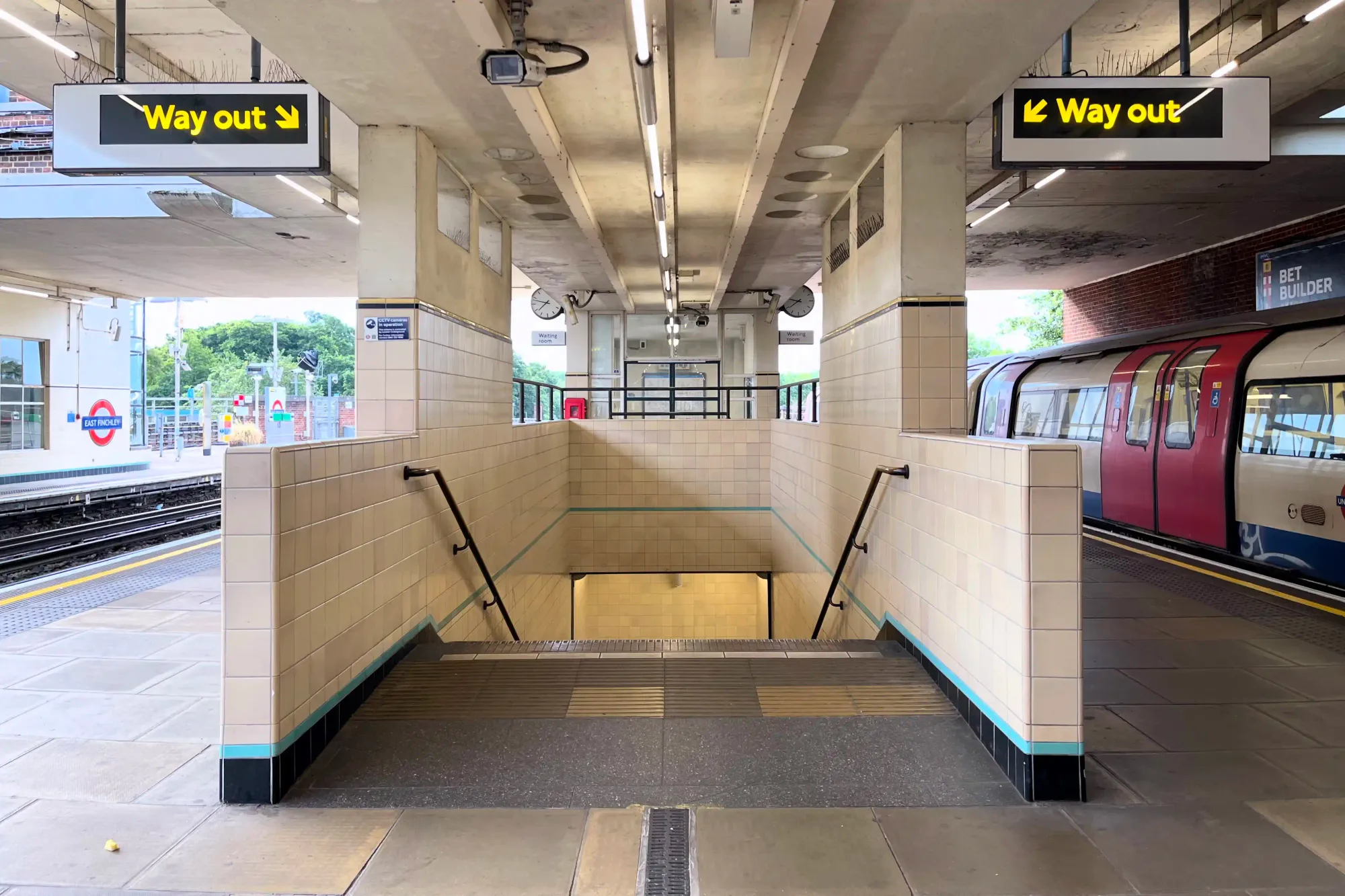
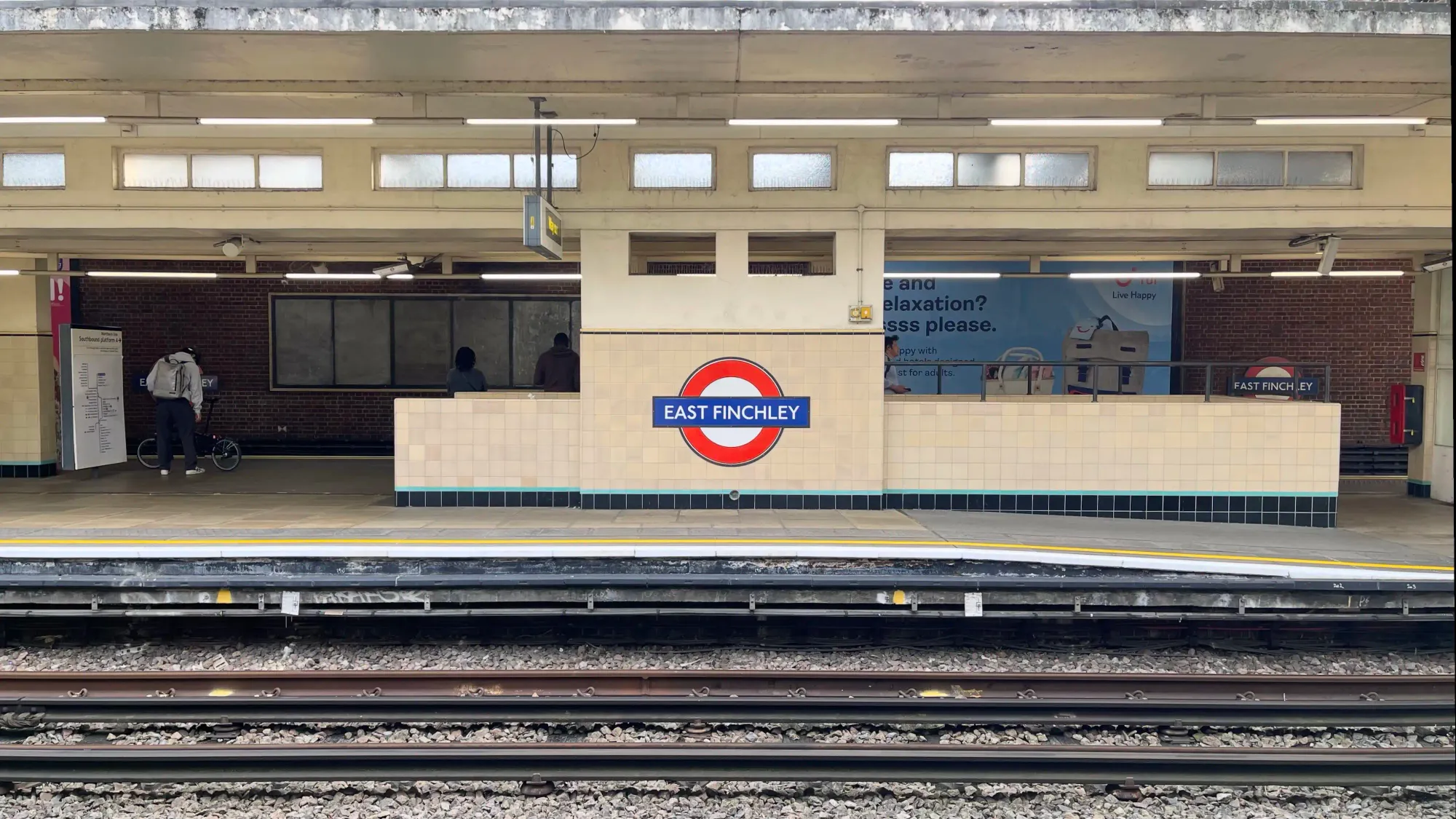
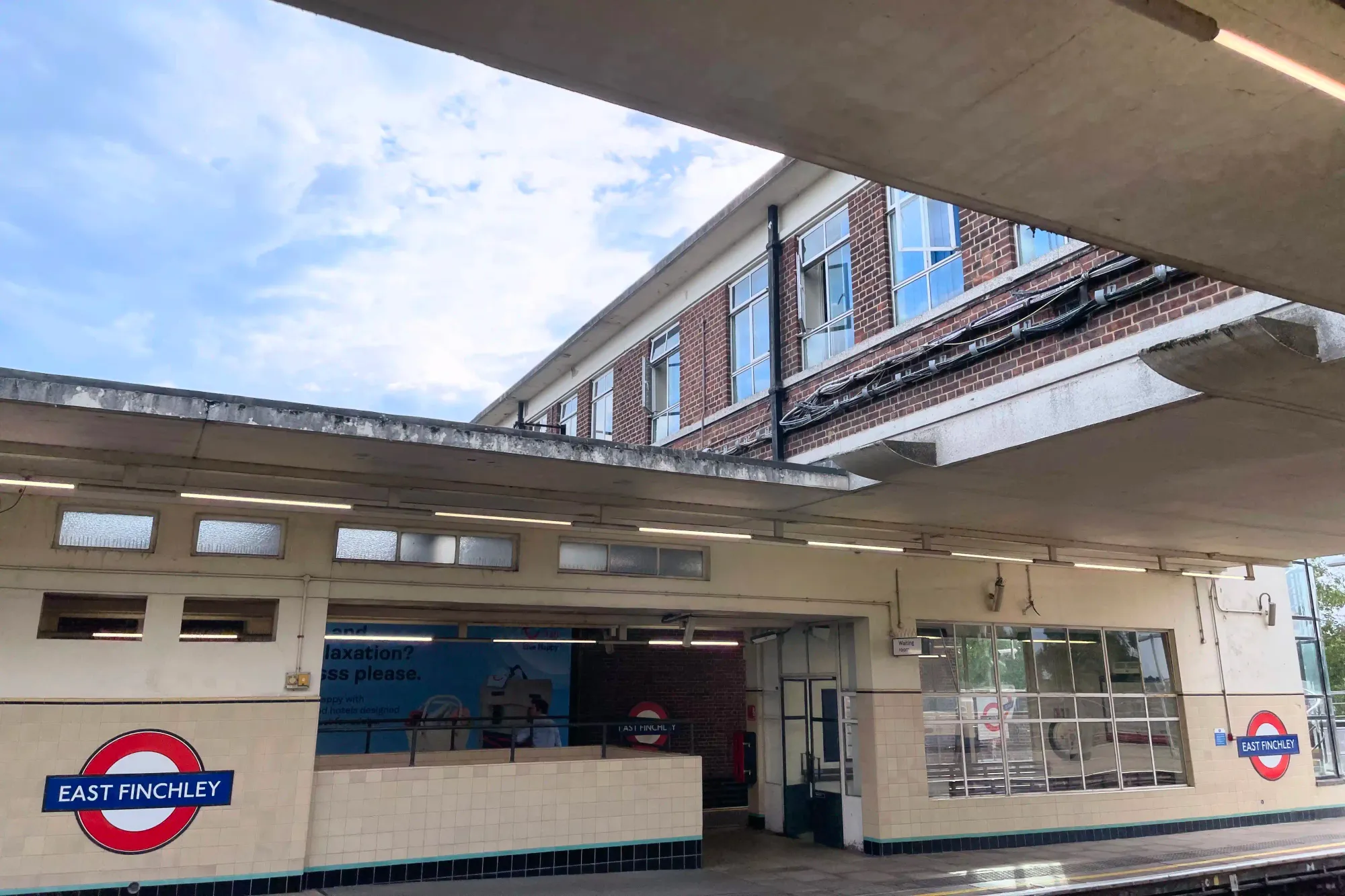
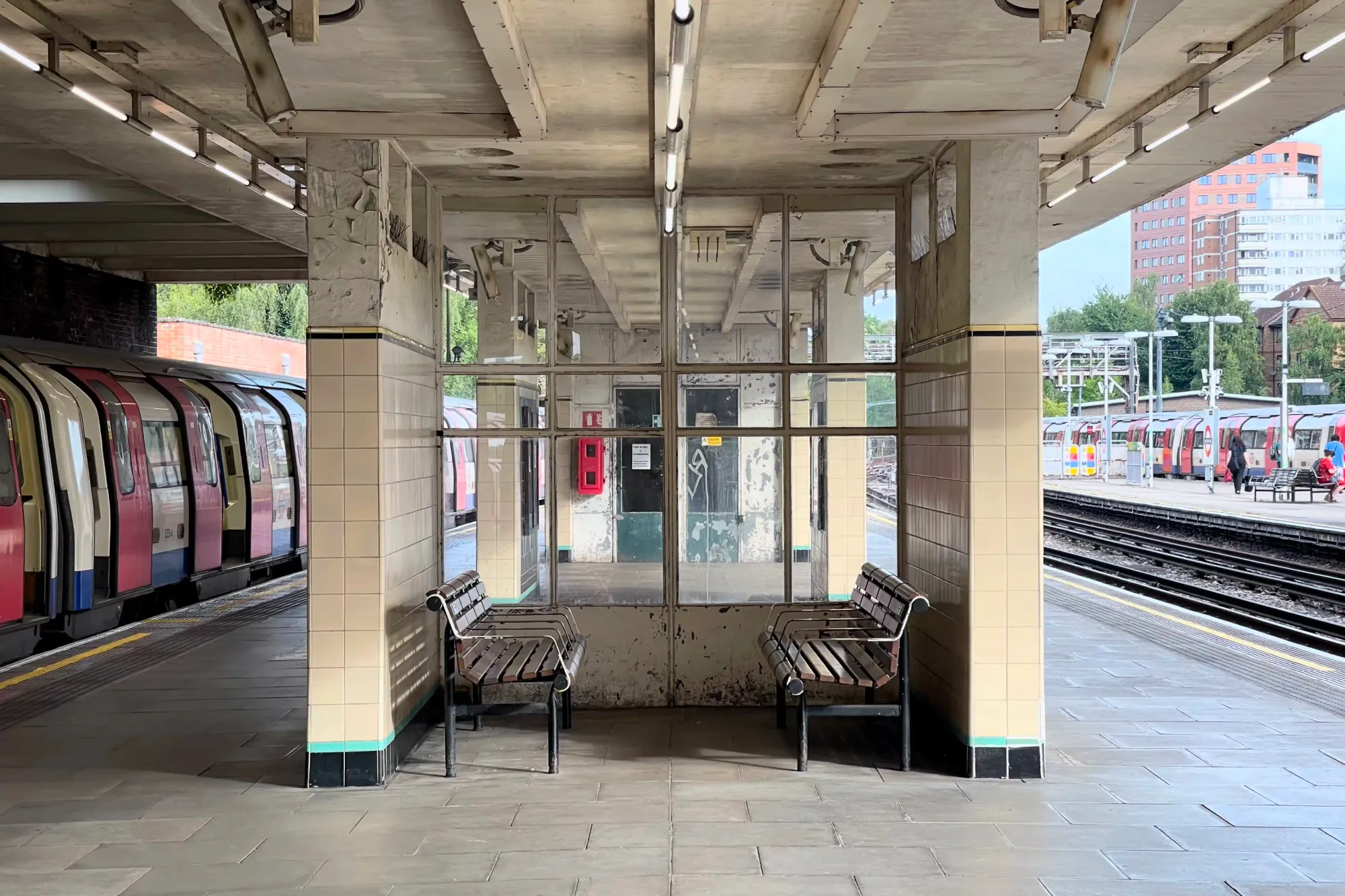
East Finchley stands as the only complete Charles Holden station on the Northern Line north of central London, and it’s a magnificent Art Deco piece. Being Grade 2 listed, it is considered a work of special architectural interest, and it’s easy to see why.
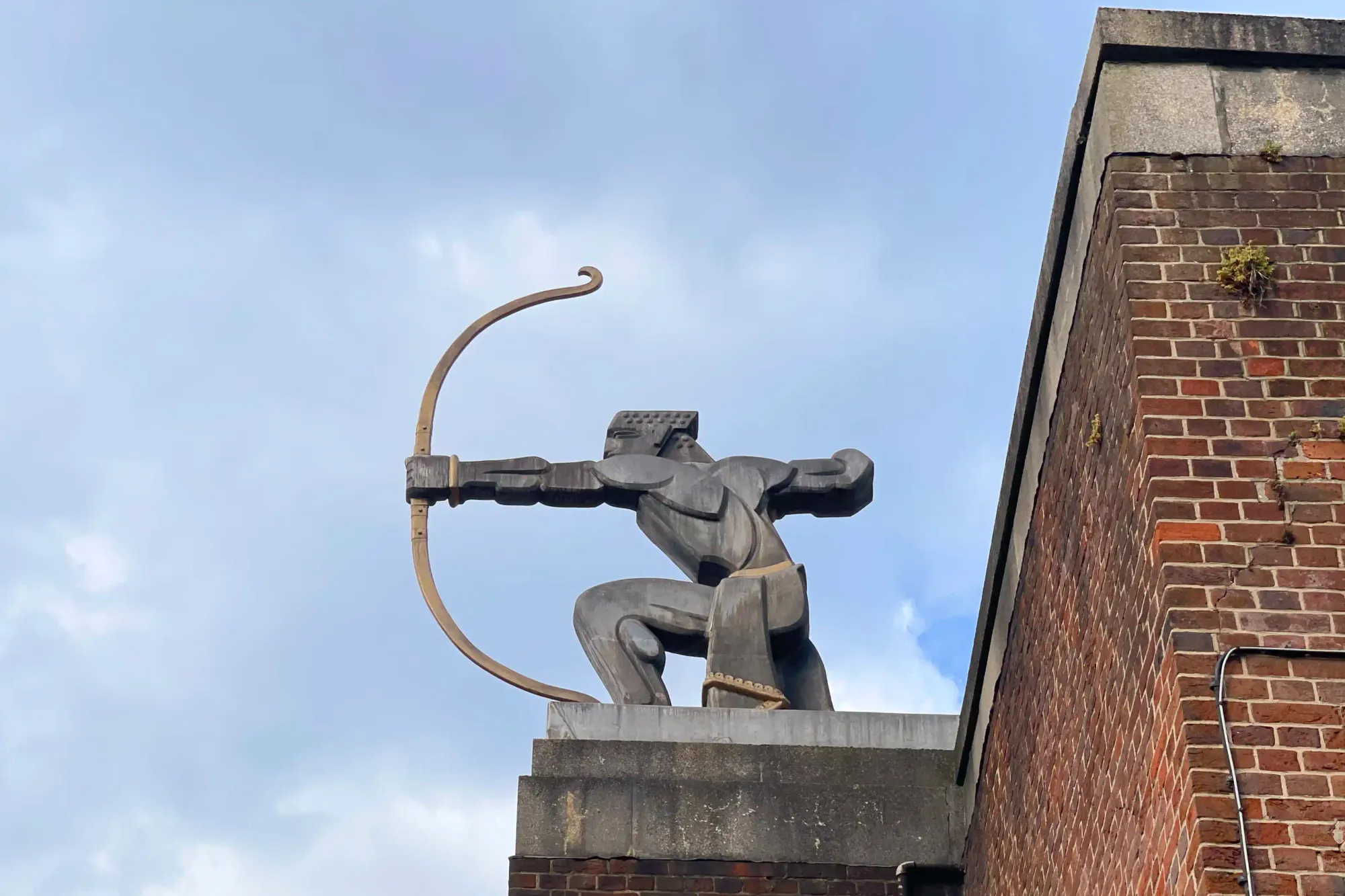
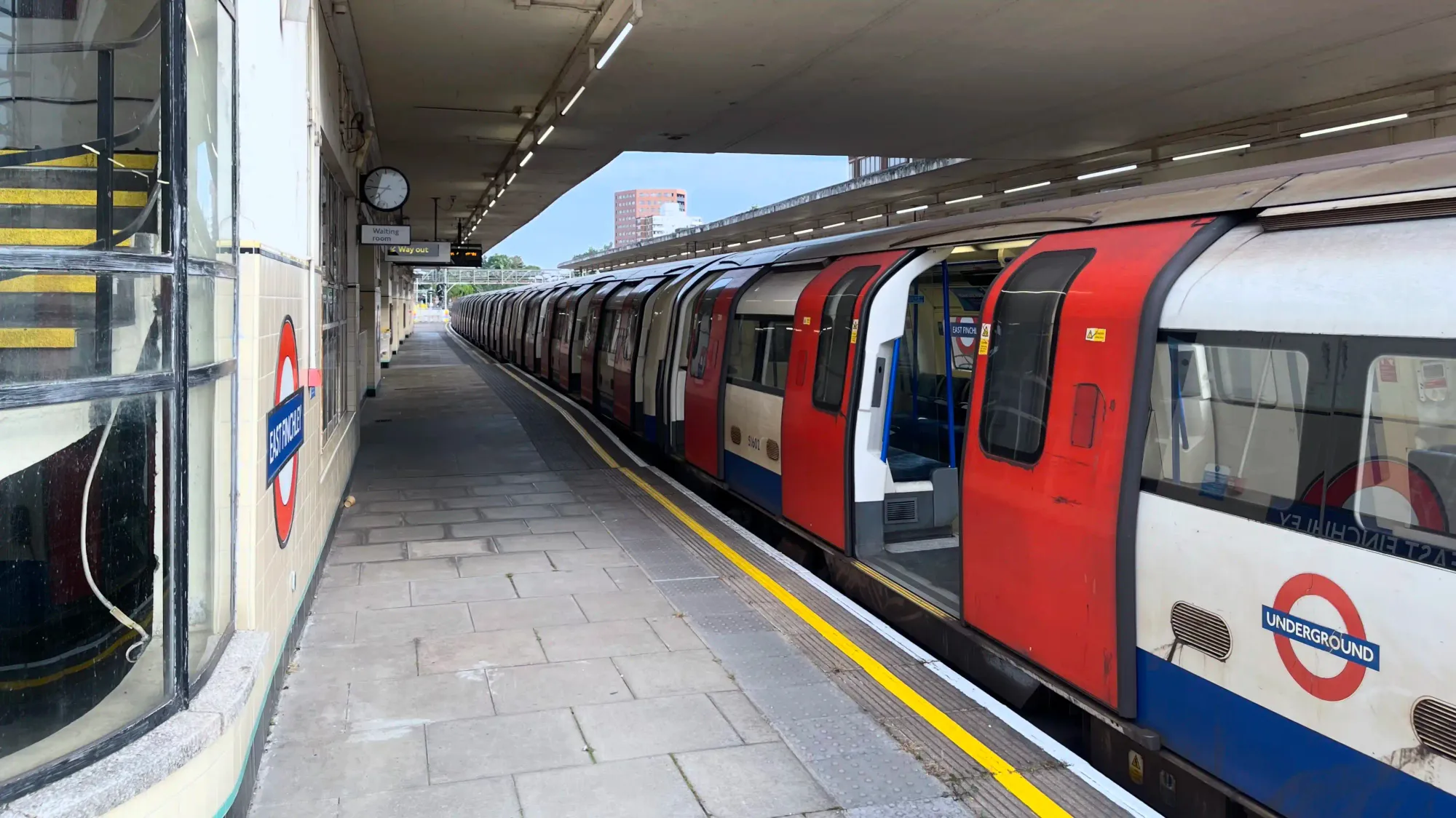
The most notable feature of the station is likely to be The East Finchley Archer, a sculpture by Eric Aumonie with a bow and arrow supposedly taking aim at the tunnel portals to the south. Fable has it that another identical sculpture was once placed at Morden at the other end of the Northern Line with its quiver pointing north, although this twin archer is no longer anywhere to be found.
So iconic is the sculpture that it’s been adopted as the symbol for East Finchley, visible on local signs and even inspiring a local academy and newspaper to take its name.
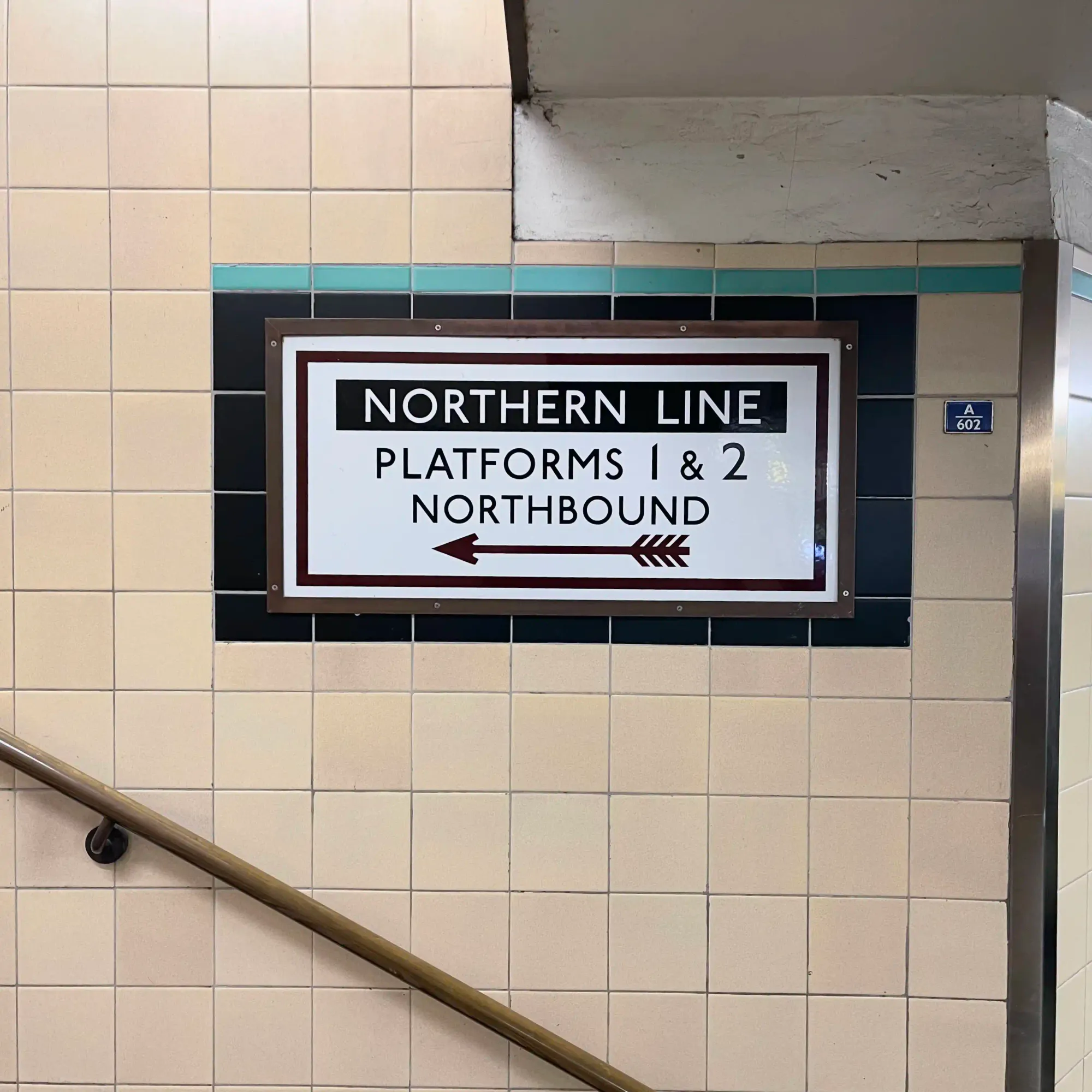
Tiling has always been a prominent design feature in Tube stations, and Charles Holden’s stations have their own recognisable spin. In many of his deep level stations, cladding takes pride of place at platform level with walls, ceilings, and tunnel heads in cream tiling with black skirting and coloured highlights unique to each station, in this case a green teal common with neighbouring Highgate’s Low Level platforms.
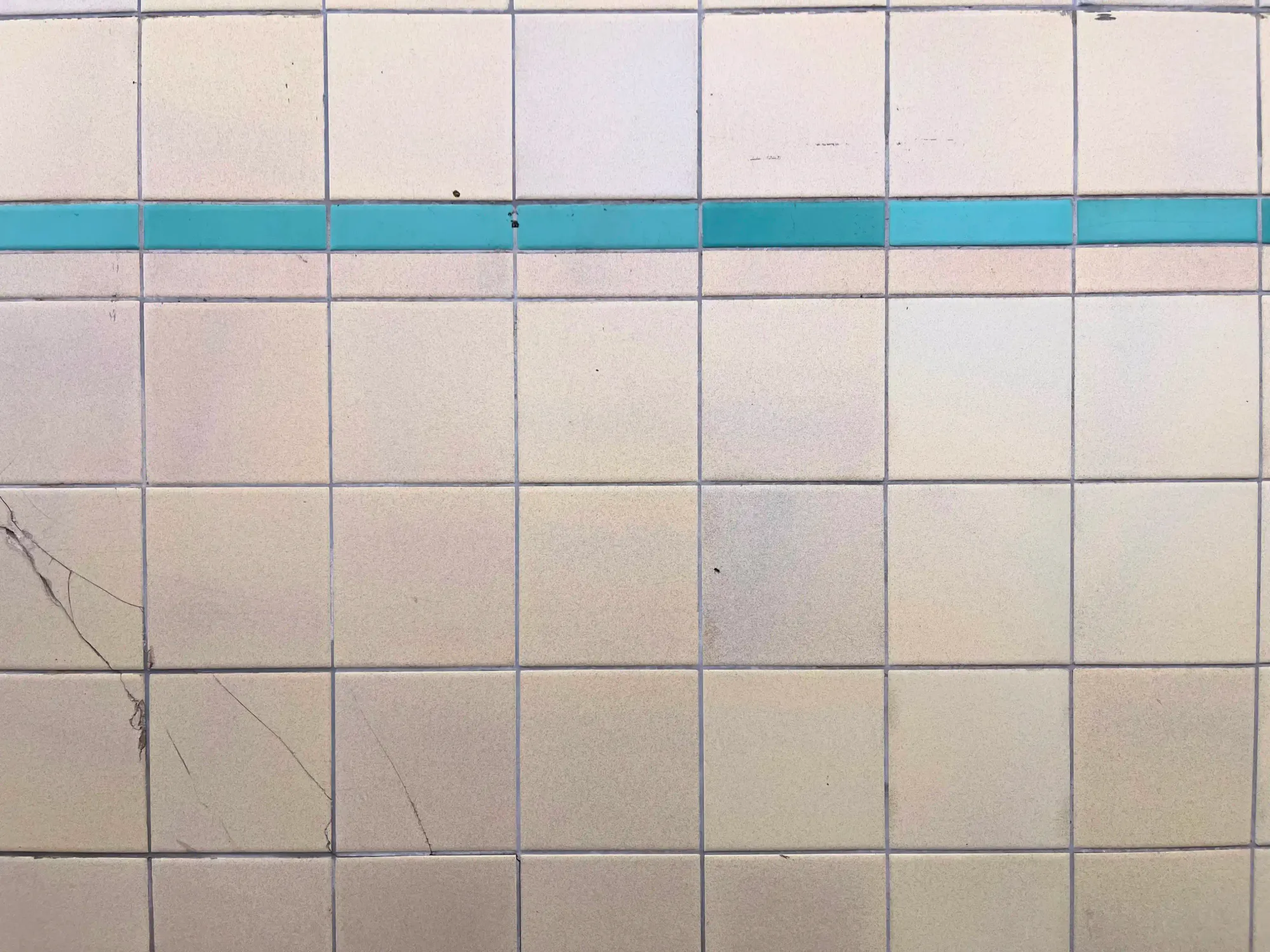
Unlike the deep level stations, this tiling is restricted to covered sections, allowing parts exposed to the elements to give way to brick.
Layout, Facilities, & Frequencies
We’ve talked about the station’s history and architecture, but what’s the station actually like to use if you’re a regular passenger and this happens to be your local stop?
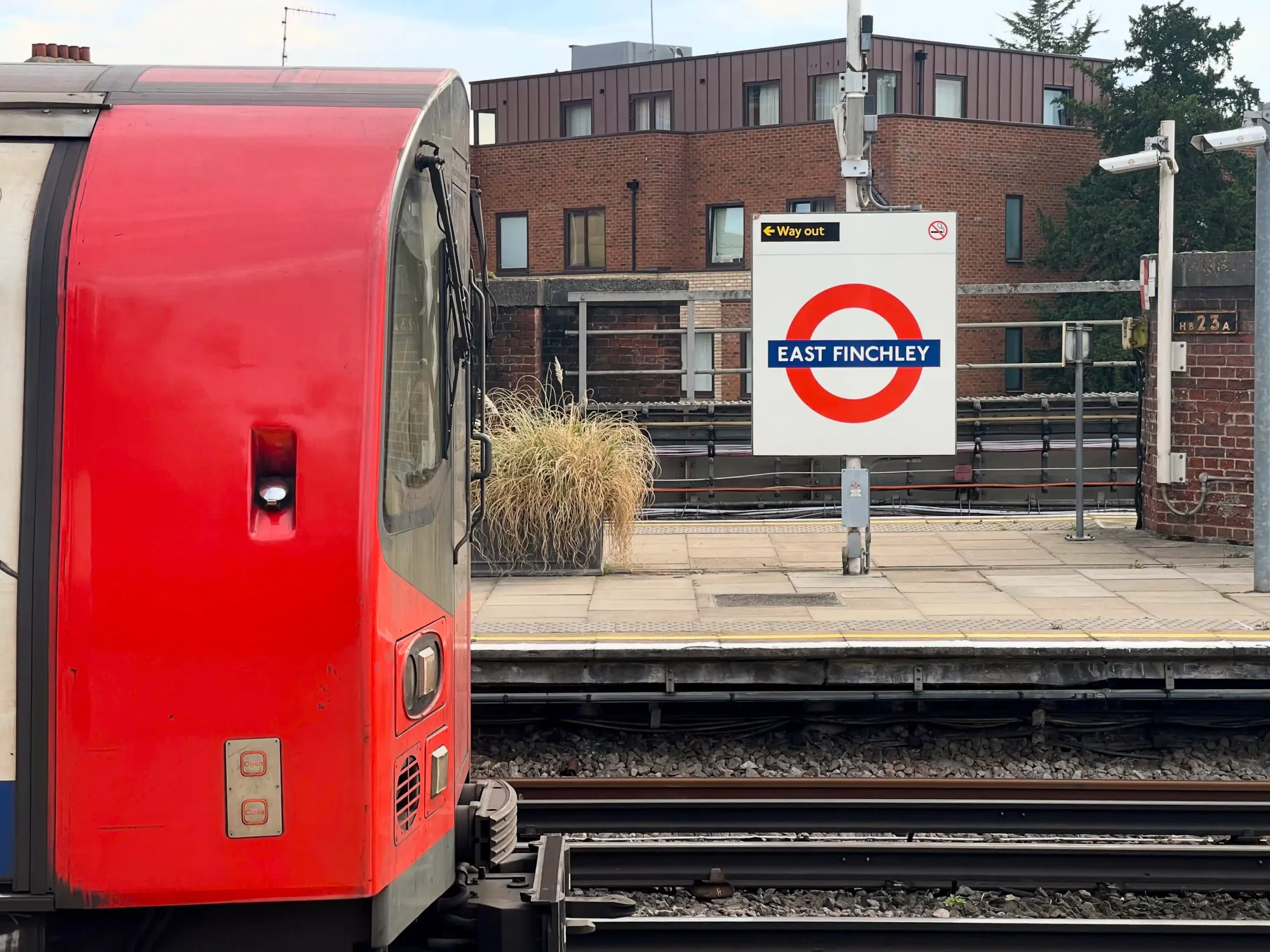
Unsurprisingly, trains are incredibly frequent. In rush hour you’re unlikely to wait much more than 2 minutes. Travel time into central London is under 30 minutes and you can also get direct trains northwards to High Barnet and Mill Hill East. It’s a consistent and reliable service, but the drawback is trains get crowded during peak times. In fact by the time a train arrives from High Barnet, any seats would have long since vanished and you’re likely to have to squeeze on. If you’re lucky, you may get a train coming in from Mill Hill East which will have had less opportunity to fill up.
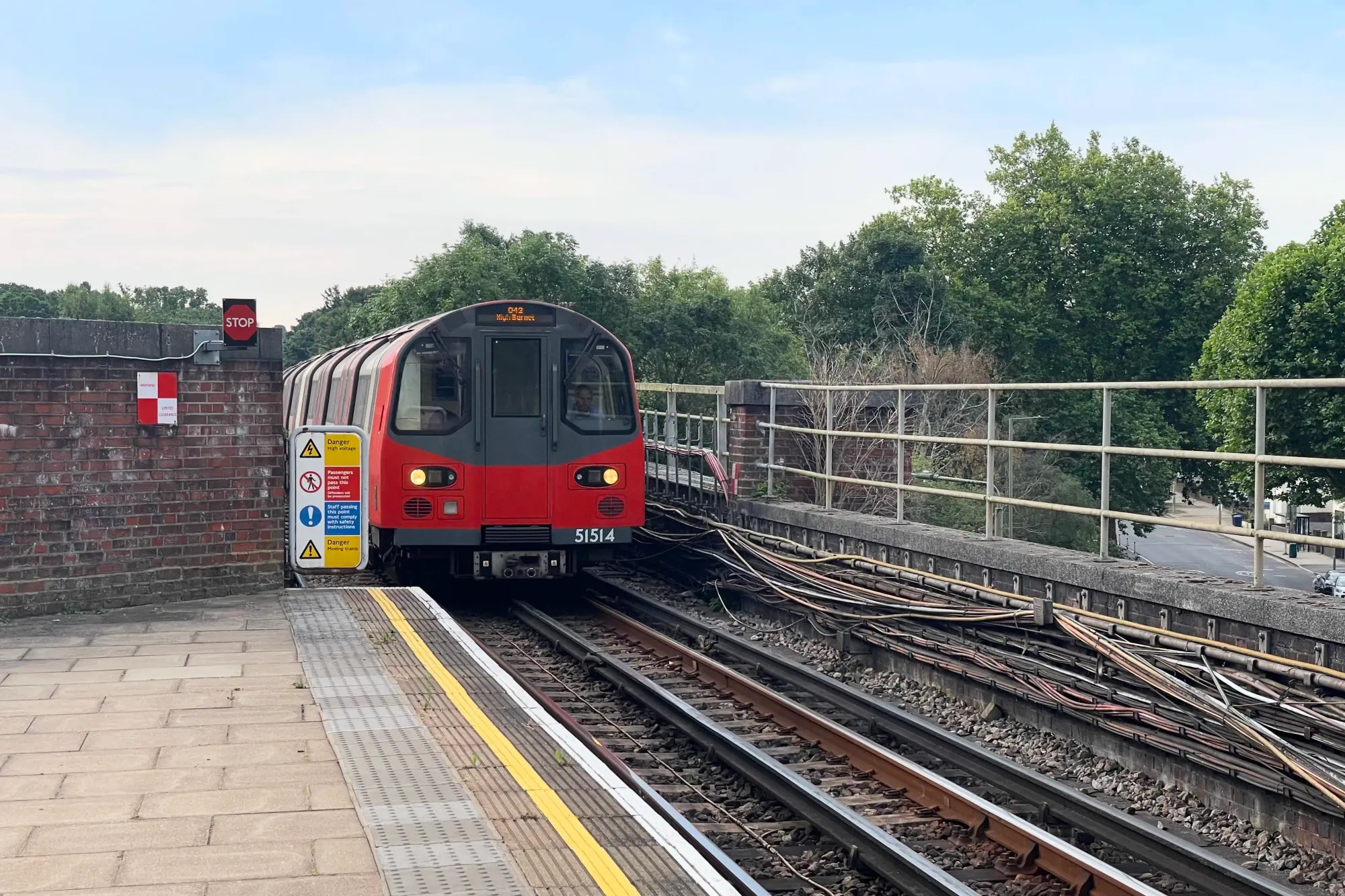
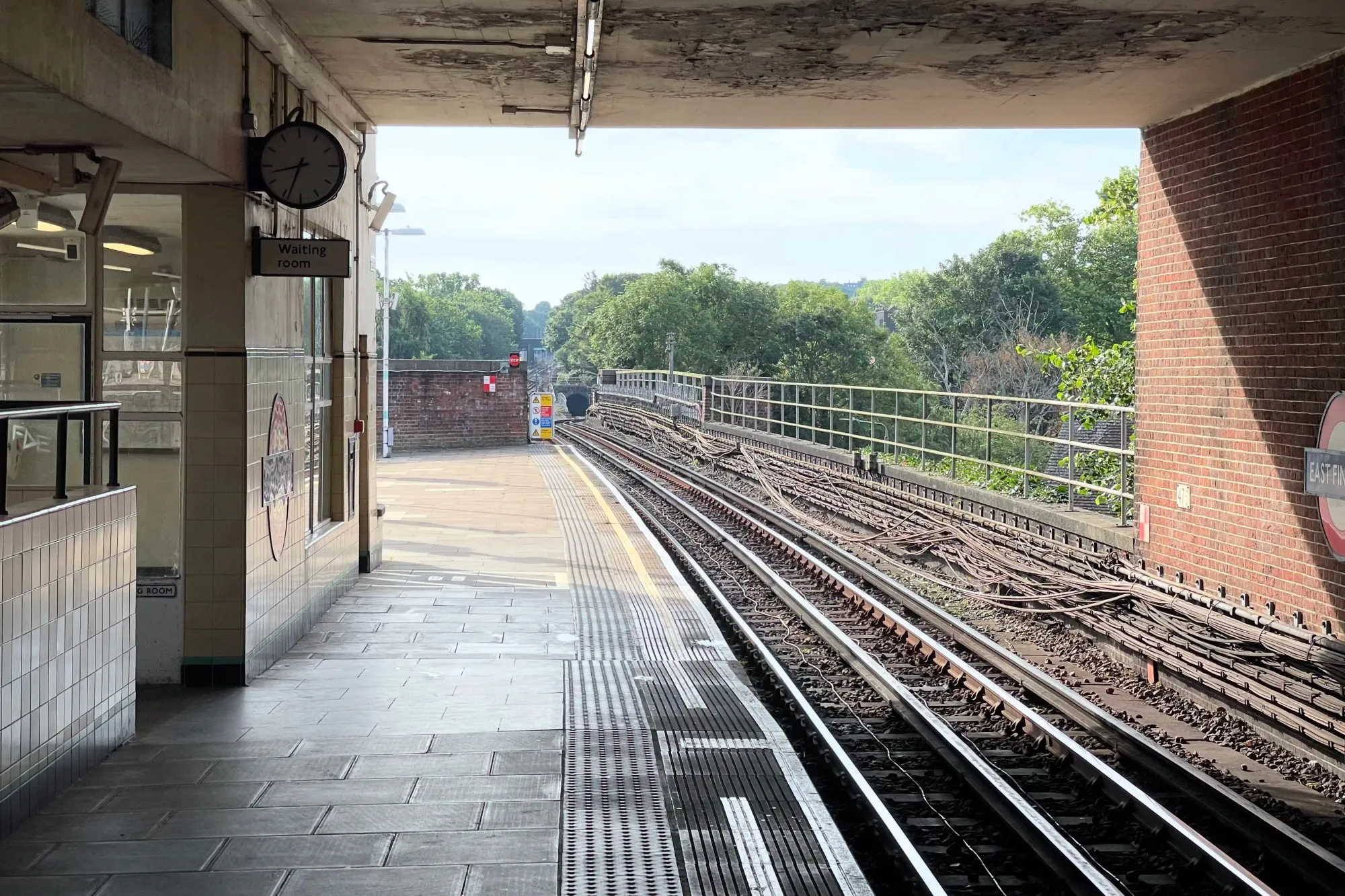
Most of the platforms are fully protected from the changeable London weather, with stairs from the subway tunnel bringing you up and into the covered sections of the platform. The ends of the platforms remain open to the elements, but it’s good to have options on where to wait depending on the weather conditions.
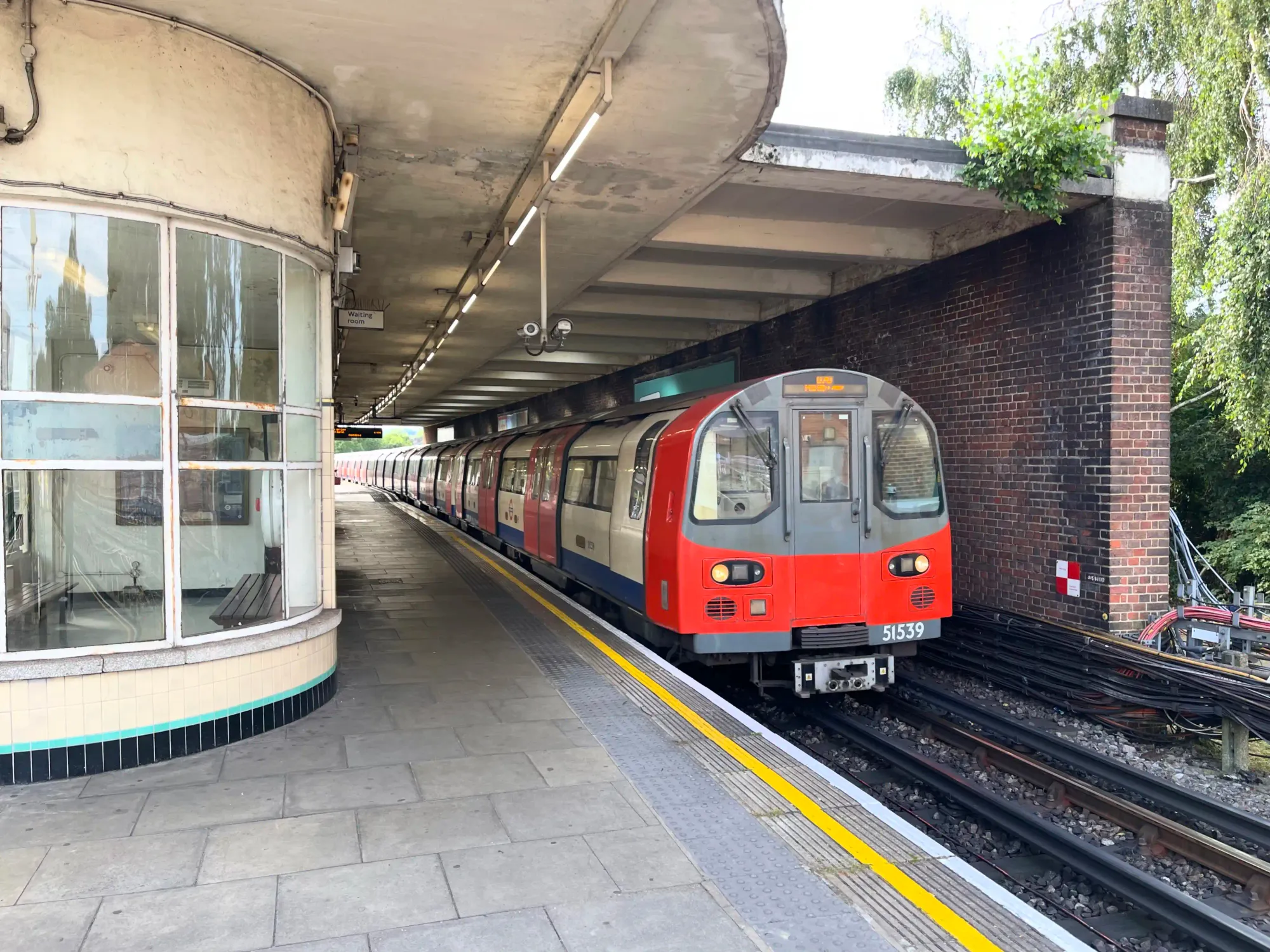
Access to both platforms is via stairs leading up from the underground passageway, and unfortunately this means the station is not accessible at all for those unable to climb steps (Transport for London does provide a dedicated Tube map which shows accessible stations, and goes into great detail in what ways each station is accessible). This means if you need to board a train but can’t do so at East Finchley, you’ll need to use Finchley Central a station to the north. One hopes that at some point they’ll introduce lifts, but with the station being Grade II listed this likely makes such works a challenge.
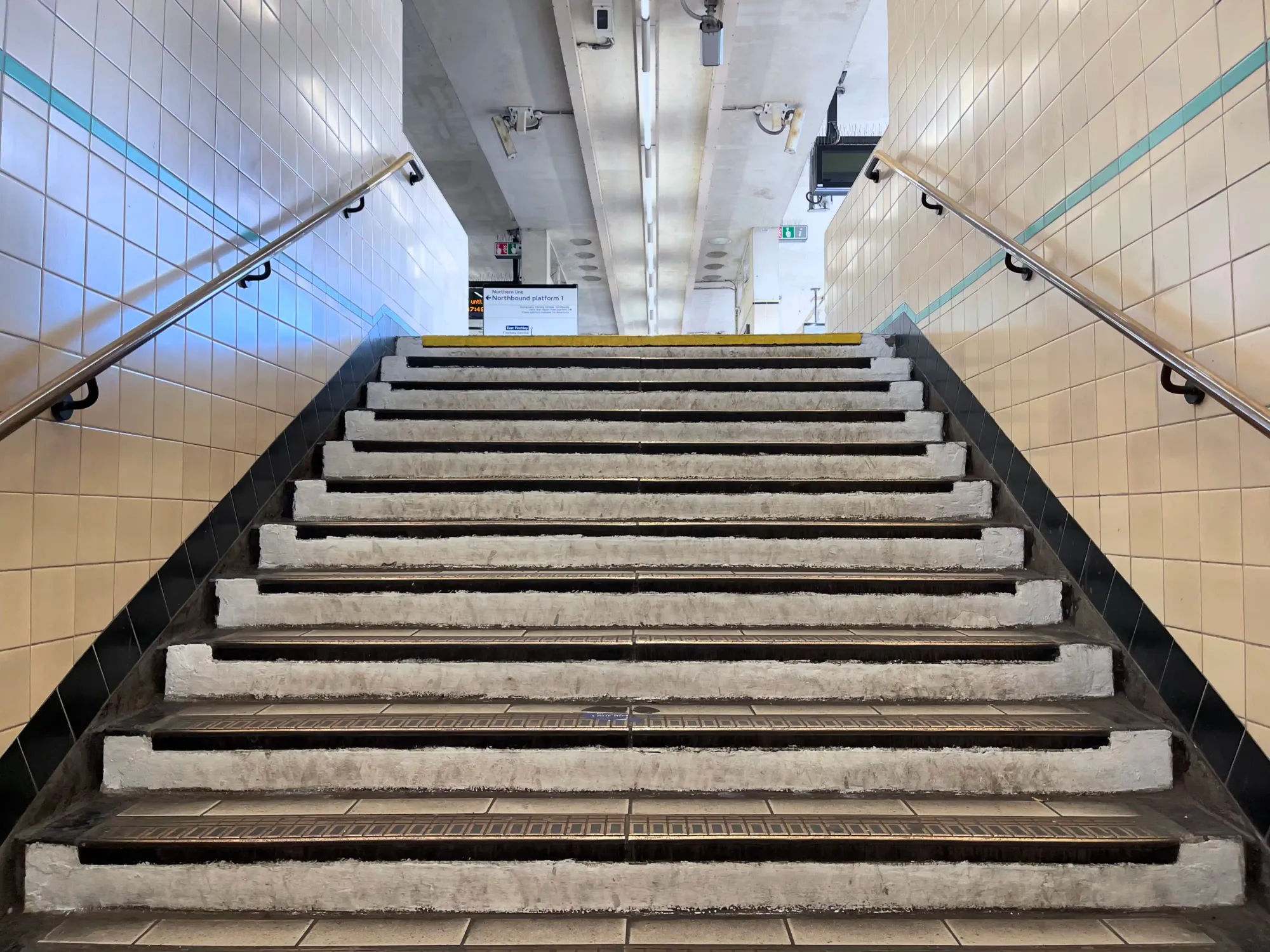
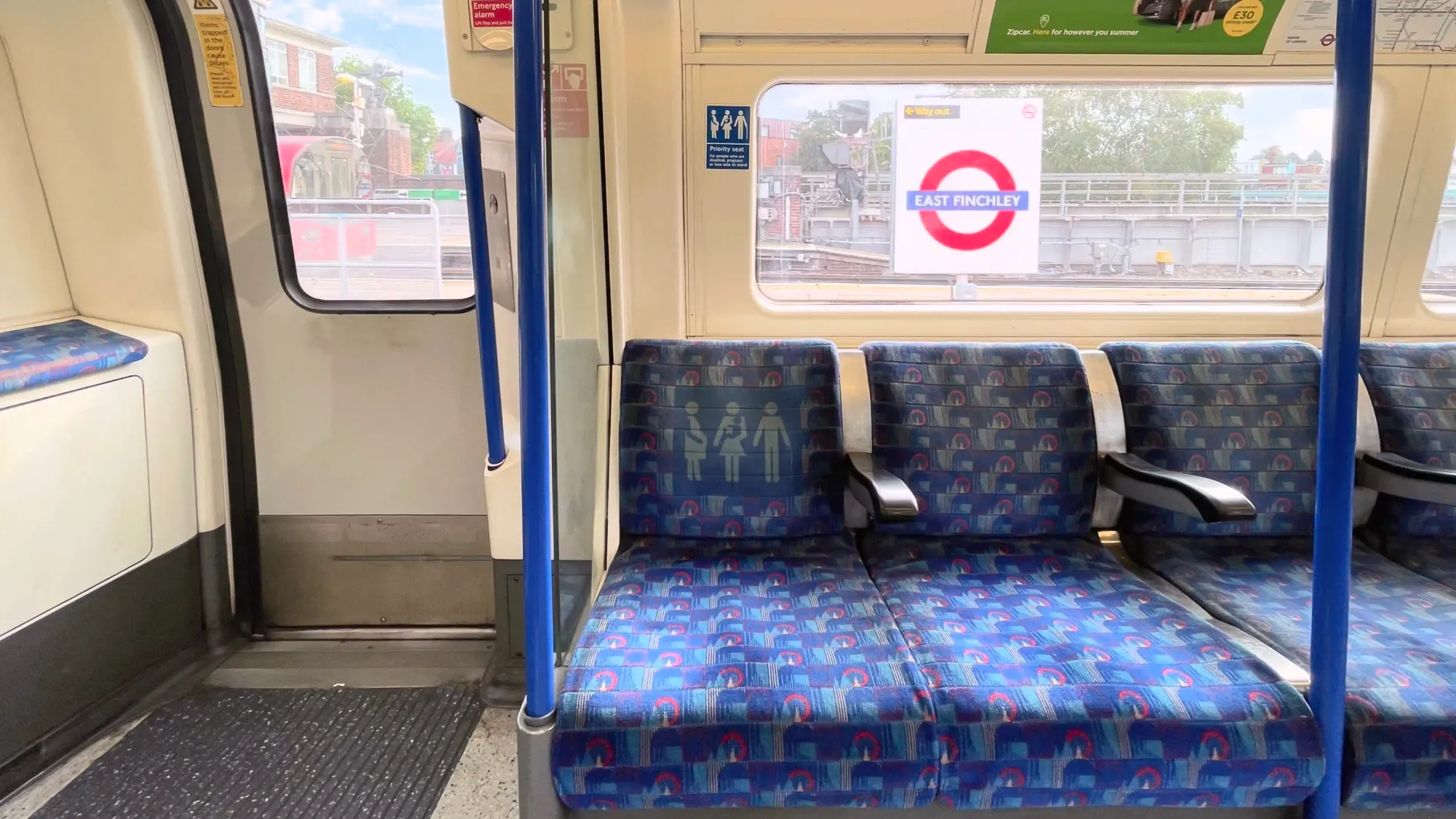
Boarding the trains also means a step up from the platform, a common issue on the Tube with most stations. There is however a hump on each platform, so if you choose the right part of the train to travel in you can at least have a level boarding experience.
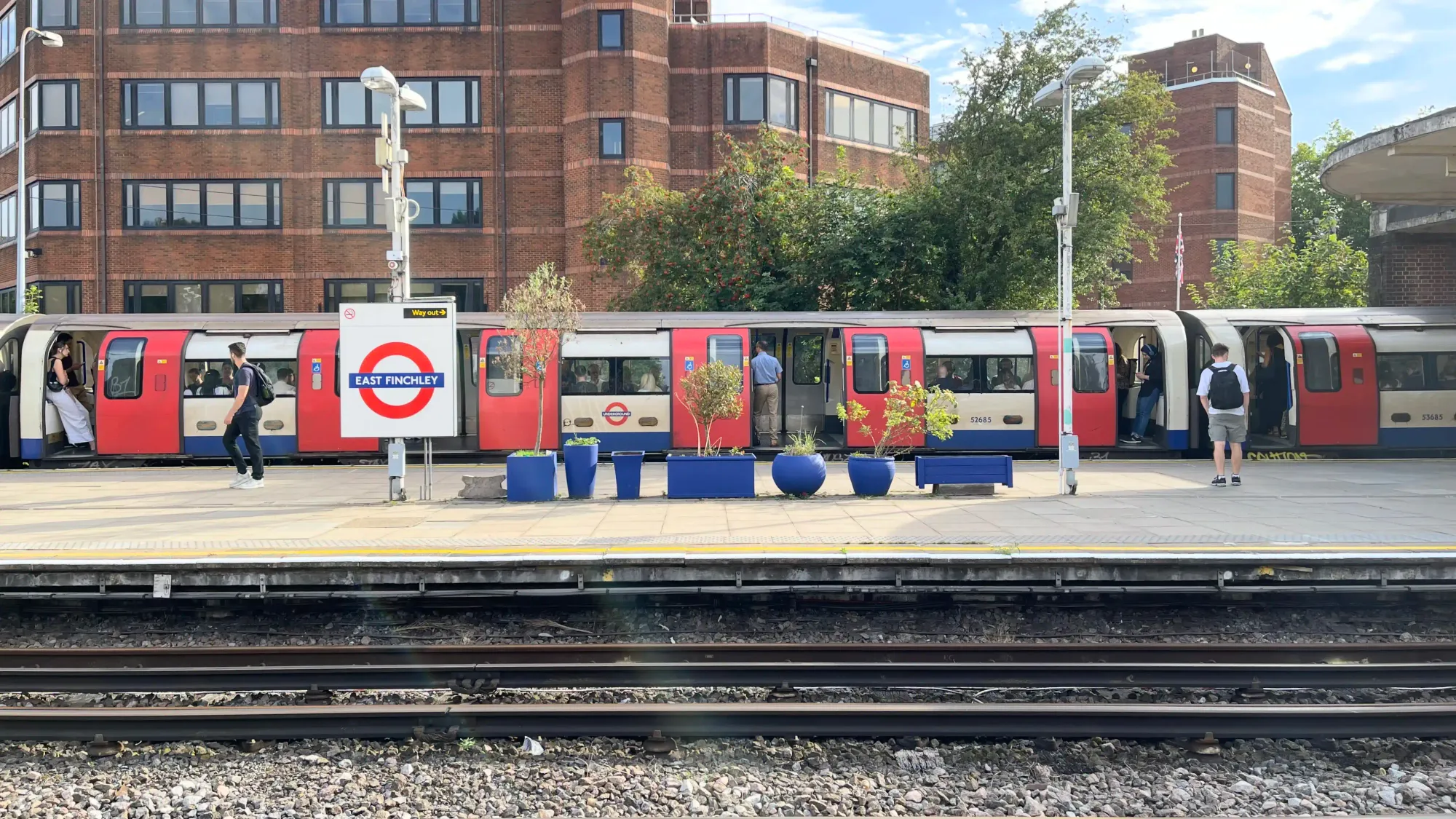
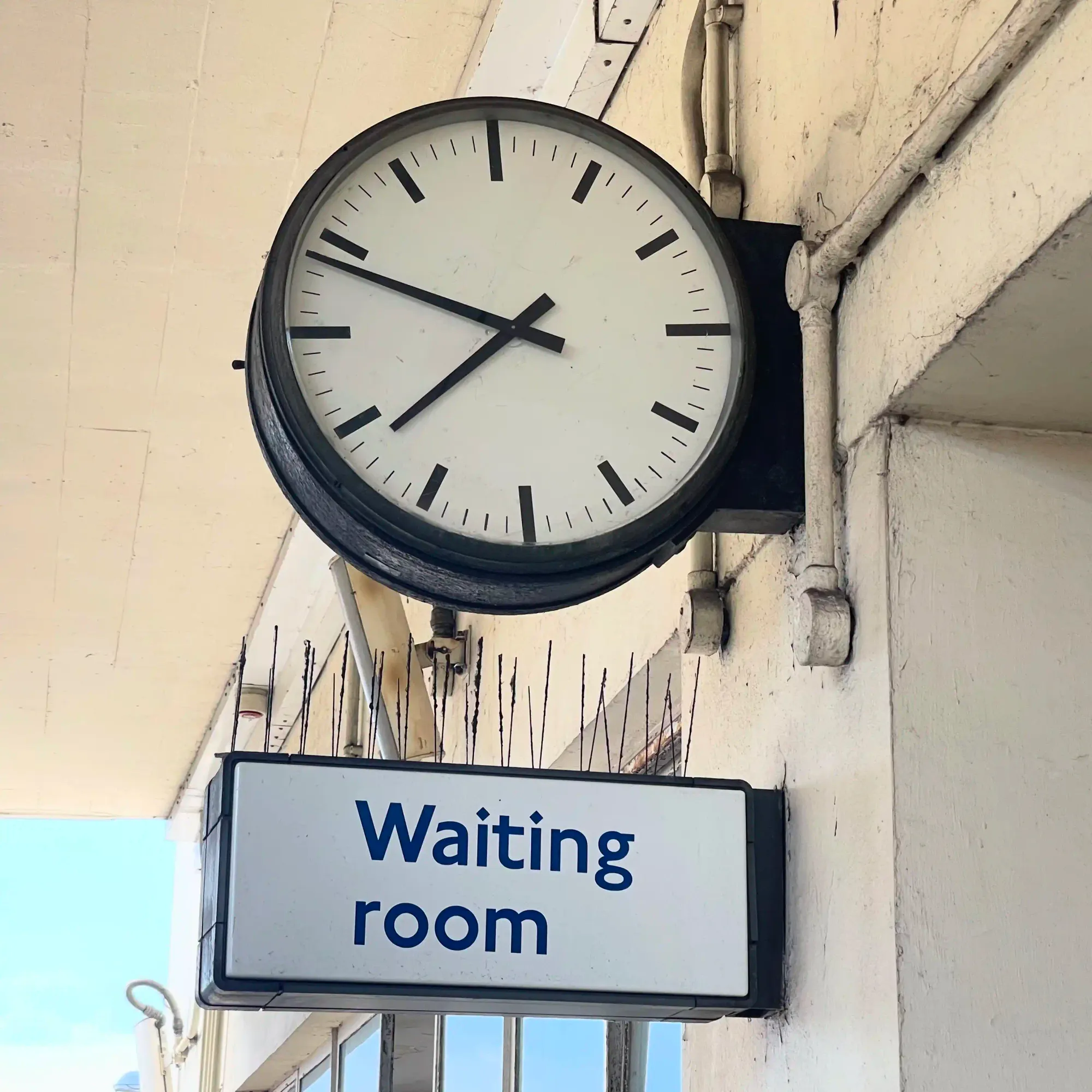
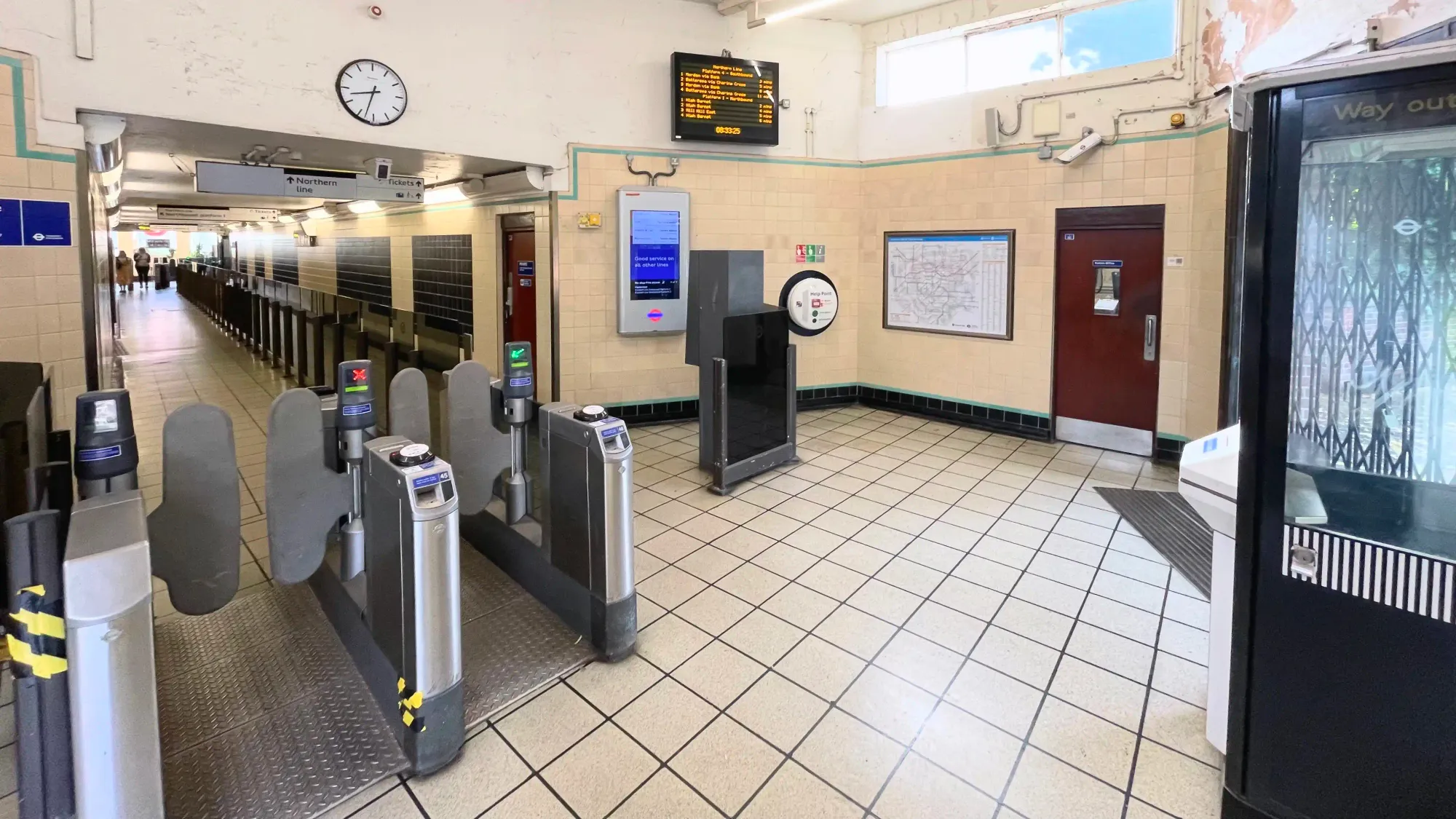
Facilities-wise, the TfL info page promises a car park, WiFi, and the beautiful waiting rooms which we’ve already discussed. There are ticket machines, and at least one staff member on duty to help passengers when needed. Throw in the customary newsagent should you want to buy a newspaper or refreshments before boarding your train. Basically, everything you’d expect in a Tube station.
Due to its proximity to Highgate Depot, East Finchley is traditionally a point where train operators start and end shifts. Much of the station building provides staff facilities to this effect.
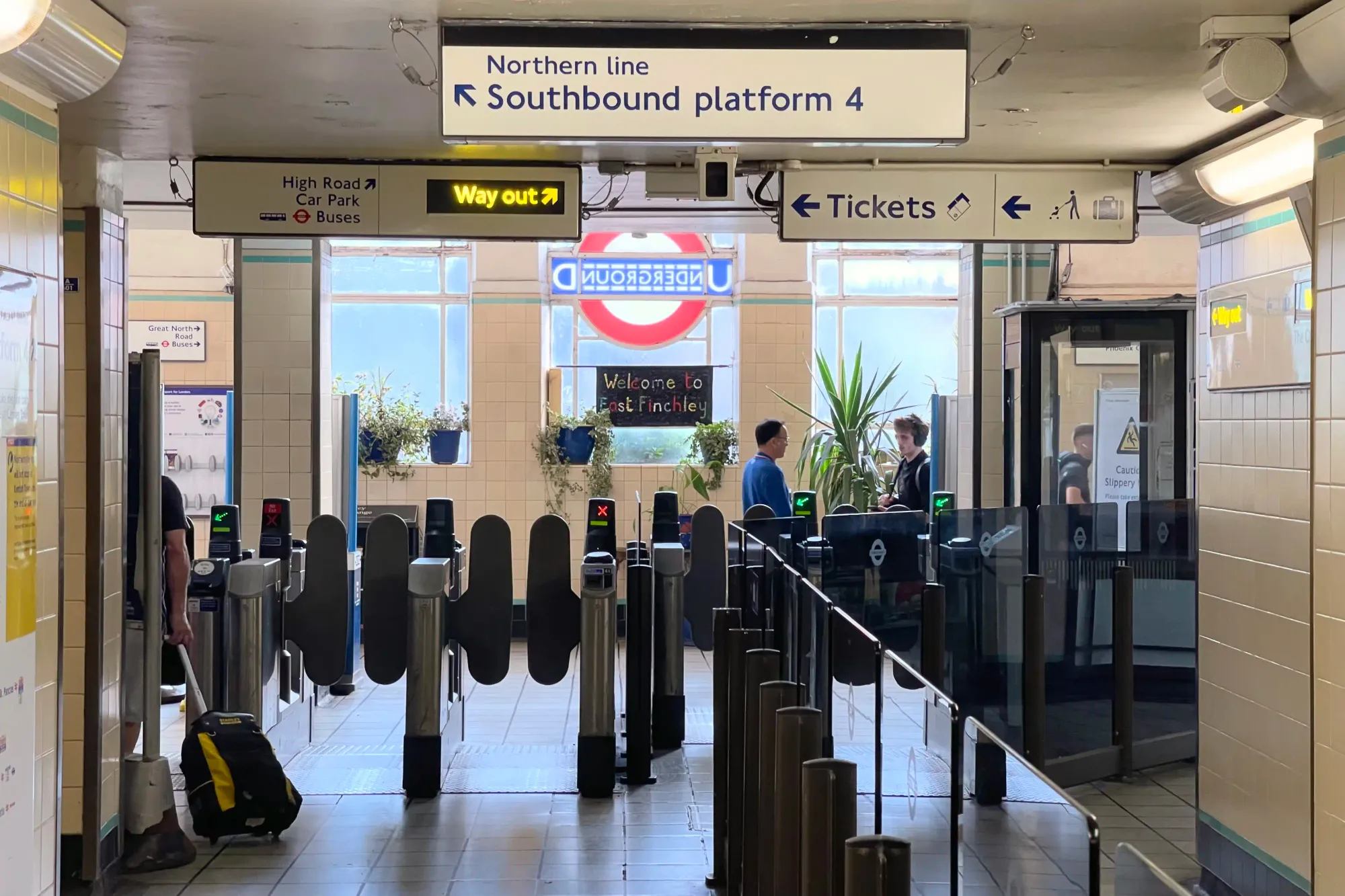
Infrastructure
Given the station’s convoluted history we find much of the local infrastructure is still in place, some of which remains in use today, but hidden out of sight from the travelling passenger. Yet we can still go and see a lot of it for ourselves to help build up a visual picture of how things used to look, and what we’ll find is fascinating.
East Finchley Tunnel Portals
Let’s start at platform level looking south towards central London. We’ve established the two outer platforms lead towards the long, tunnelled section to Morden just south of the station. They descend either side of the central tracks before reaching their respective tunnel portals and diving underground.
Above those portals, the two centre tracks which used to go towards Finsbury Park are in fact still in use because they connect to Highgate Depot, one of the main stabling points for trains on this branch of the Northern Line. This is why some southbound trains will terminate at East Finchley on the centre tracks, and some northbound trains will start their service in the middle tracks as well.
We’ll come back to Highgate Depot shortly, but to start with let’s focus on those two tracks heading to the tunnel portals which carry the bulk of trains heading south.
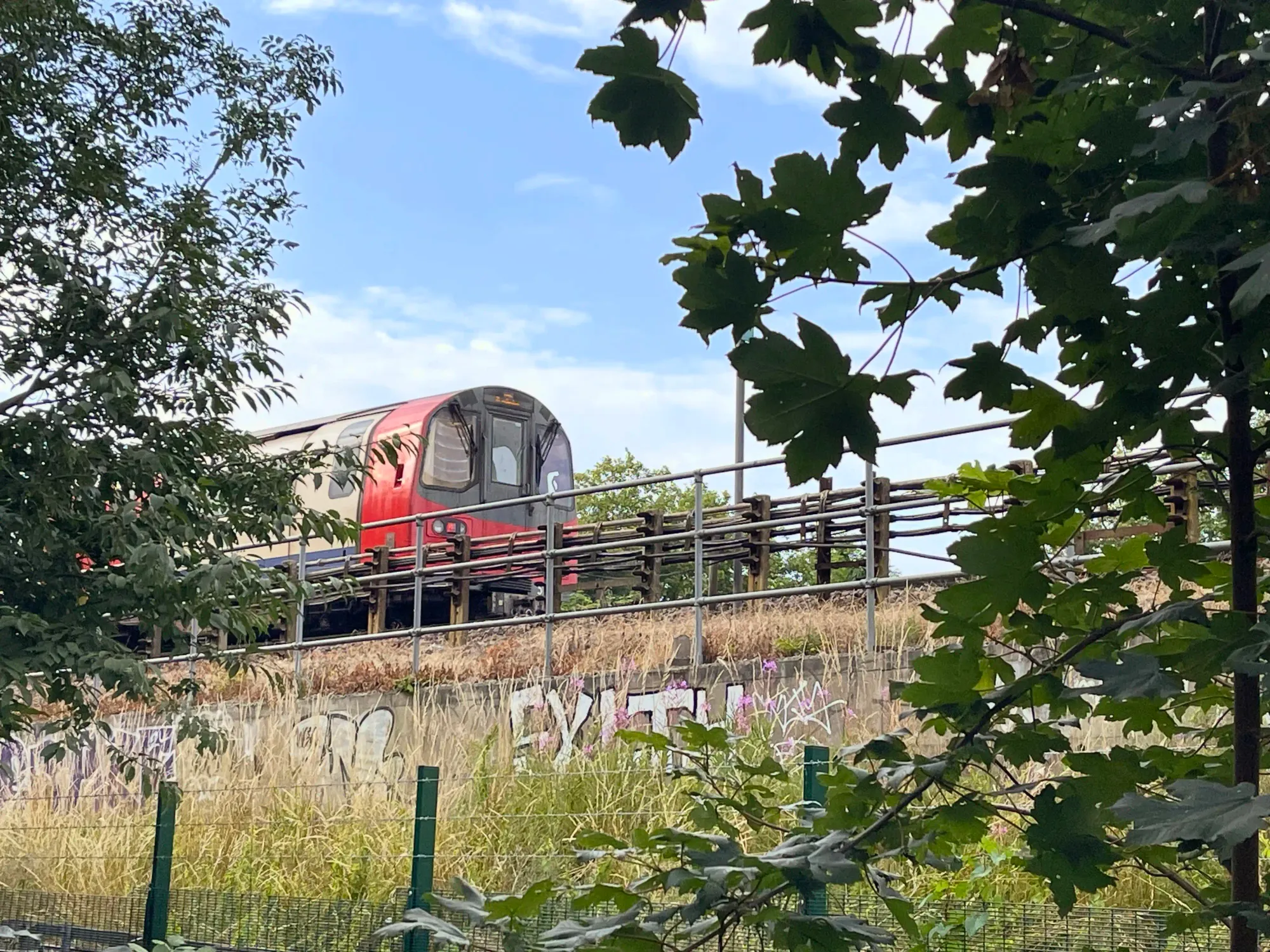
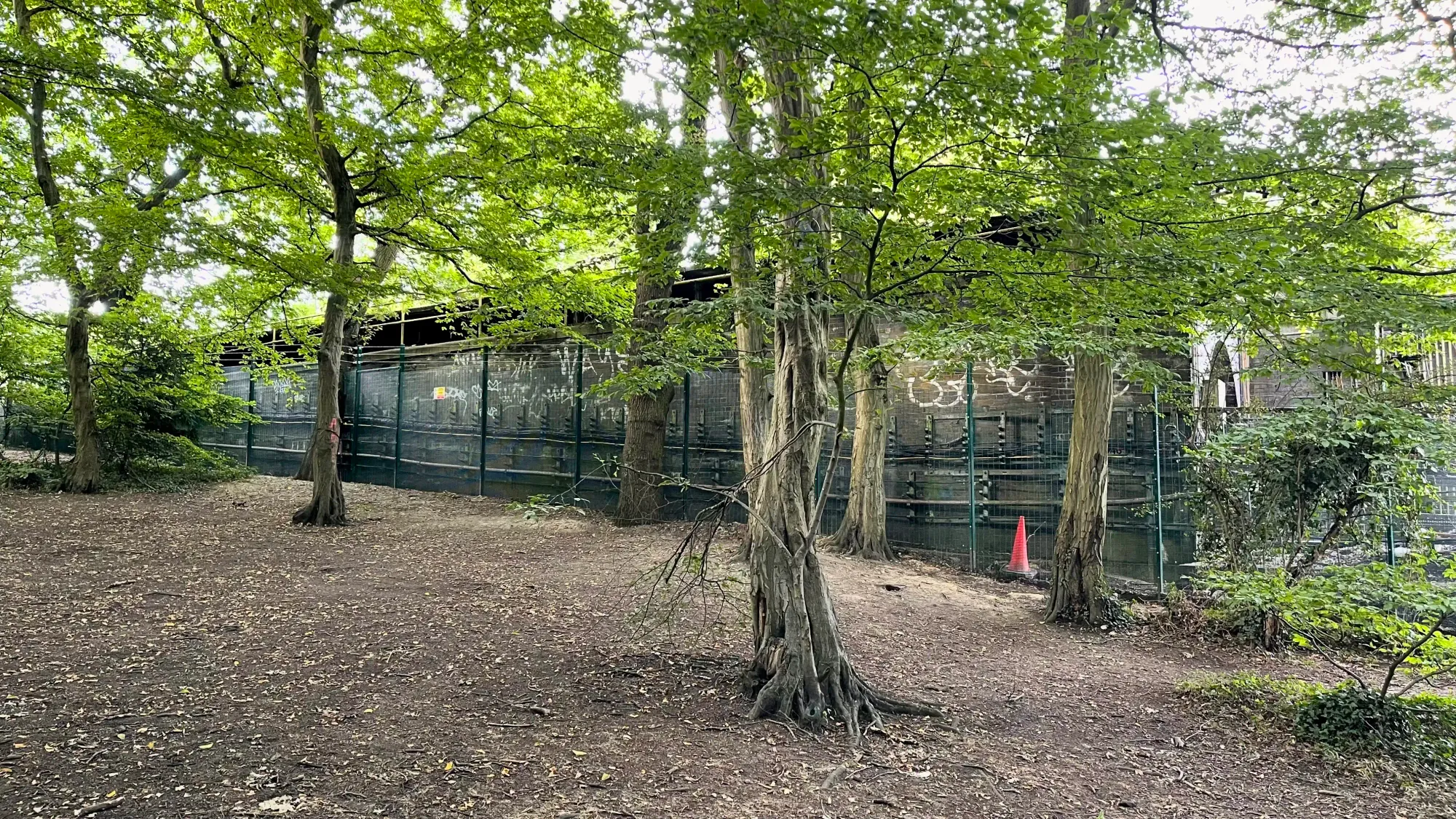
If you exit the station onto the High Road and cross over, you’ll find Cherry Tree Wood directly opposite. It’s a lovely park which as its name suggests does indeed include woodland. If you follow the path through the park doing your best to stay alongside the adjacent railway track, you’ll come across the tunnel portal which takes trains southbound, clearly visible behind security fencing.
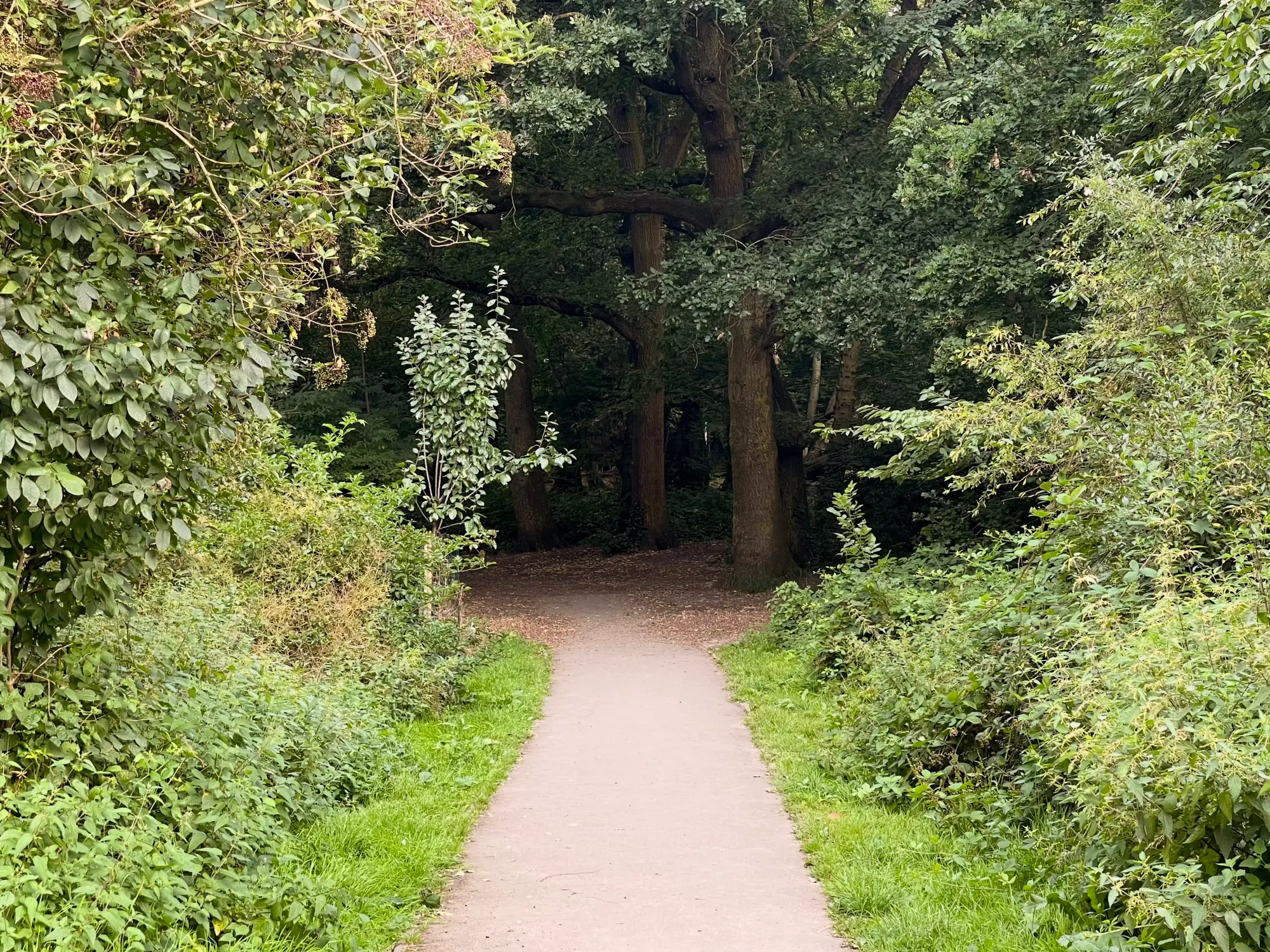
Up close you can see trains thundering down to begin their 28km underground trip to Morden, making it the start of the longest section of continuous Tube tunnel in London.
(Incidentally, as impressive as this may seem it’s beaten by numerous other systems, including the Montréal Metro’s Orange Line which just pips it at 30km between Côte-Vertu and Montmorency).
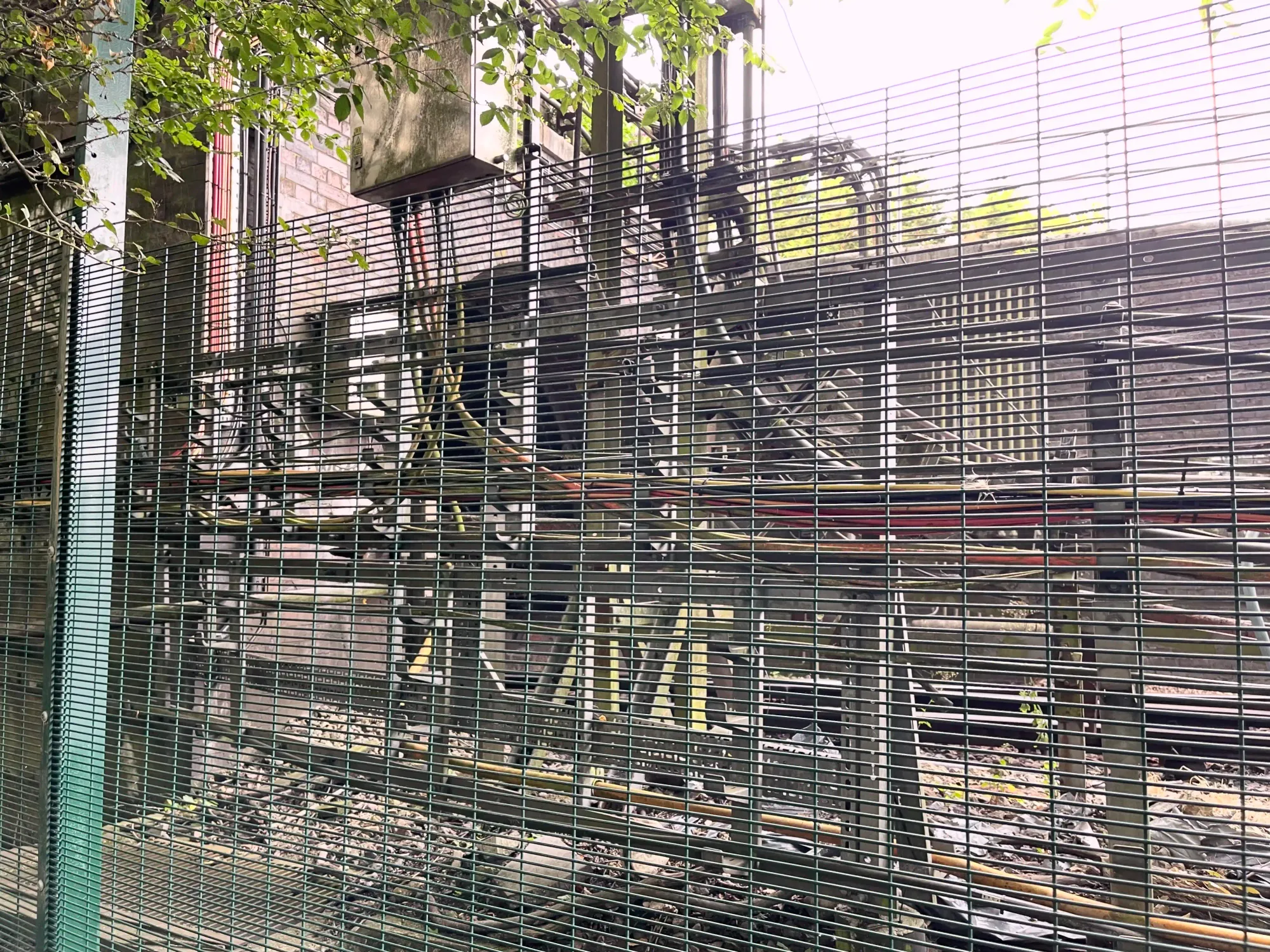
Those tunnels descend deep, but they remain parallel with the original above ground route as far as Highgate.
Highgate Depot
Those centre tracks coming out of East Finchley head towards Highgate Depot. If we continue our walk through Cherry Tree Wood, we emerge into Fordington Road. A right turn along the road leads us to Woodside Avenue and onto a bridge.
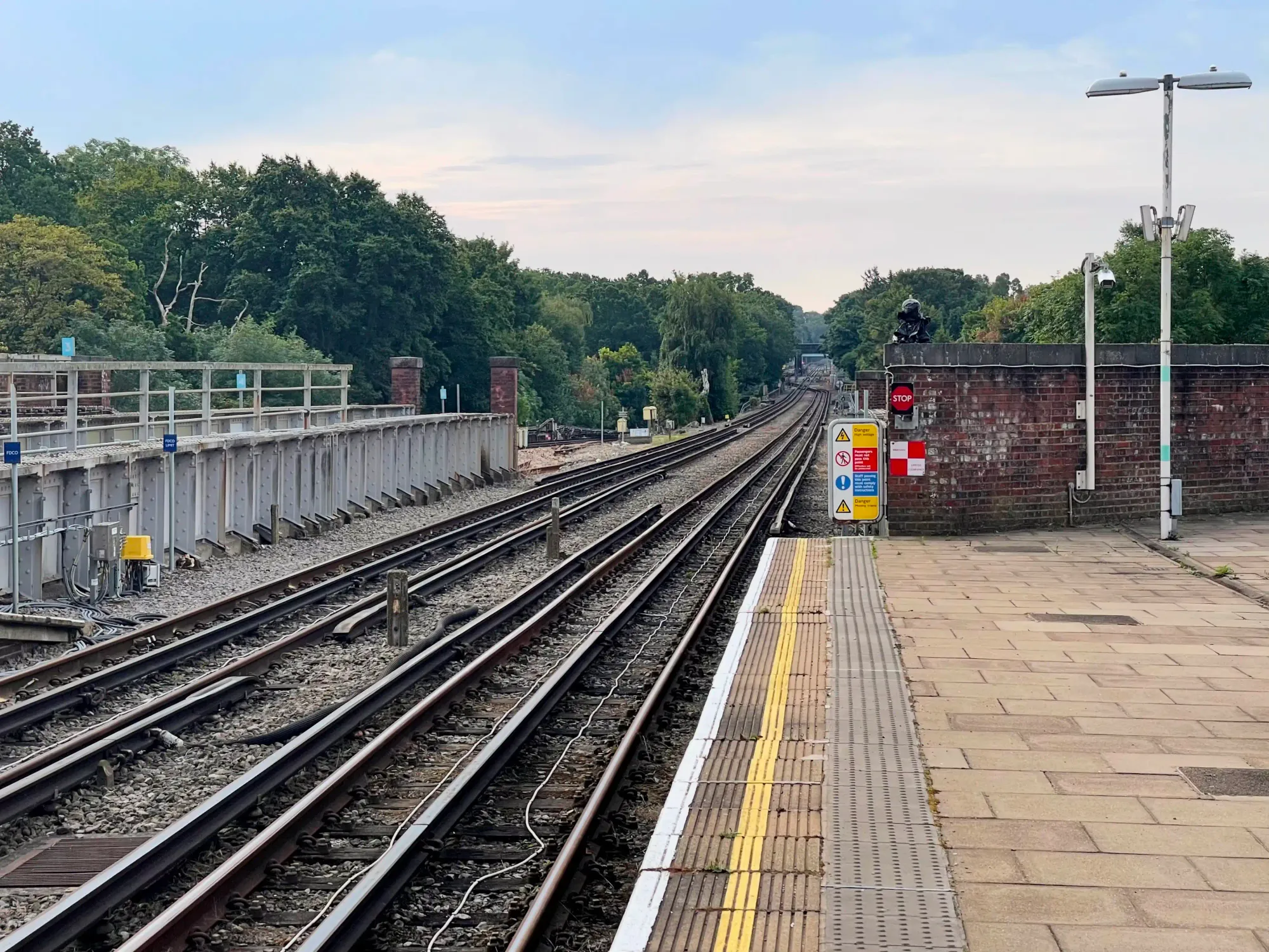
Standing on the bridge and peeking over we can look back towards a distant East Finchley station and see those two central tracks coming out of the station, and merging at some point-work before providing a single entry point into Highgate Depot.
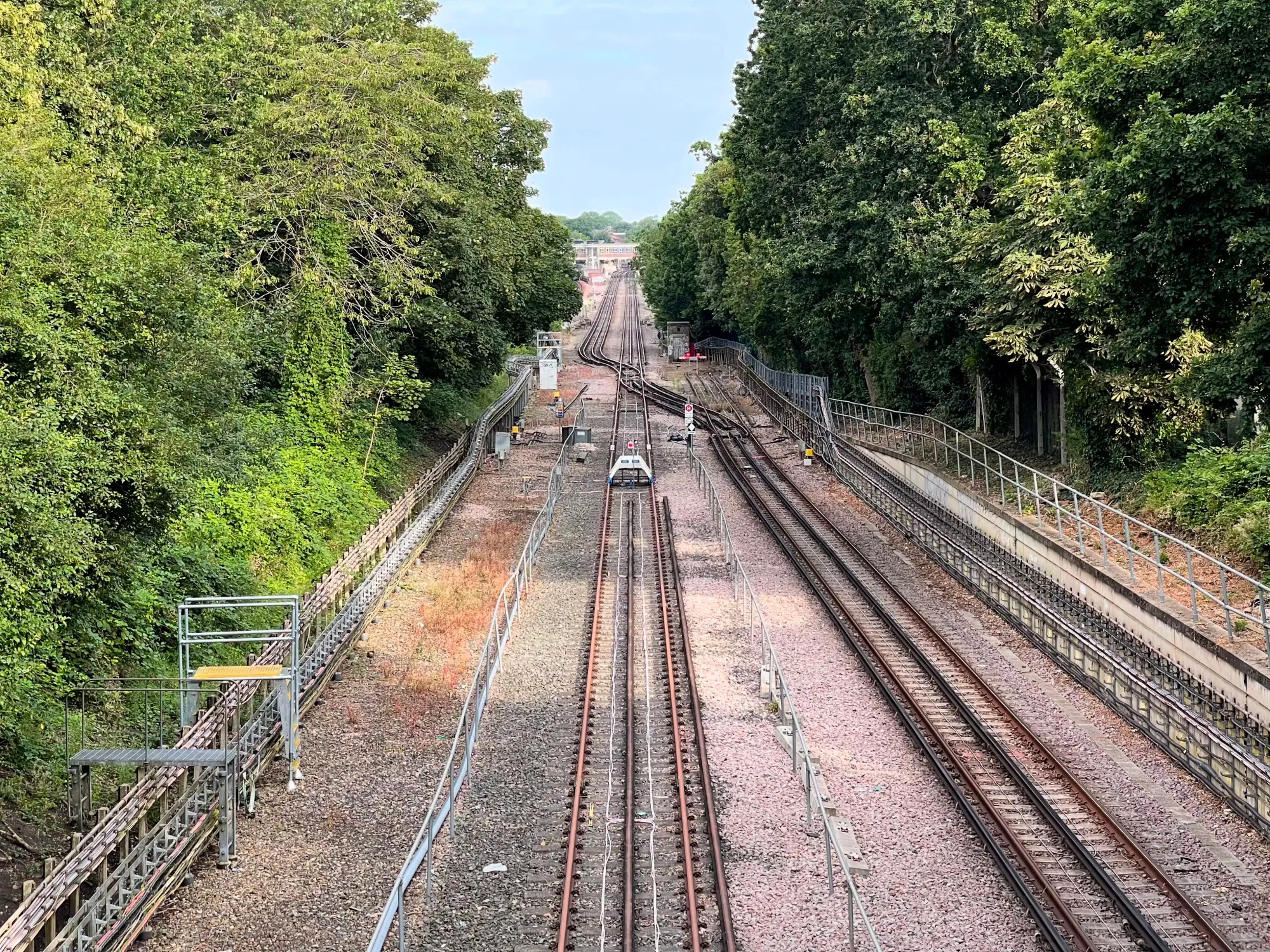
Hopping over to the other side of the bridge affords an incredible view of Highgate Depot, and there’s a lot to take in. Tracks on the left lead to multiple sidings which are sheltered from the elements by the shed. Since these photos were taken during the day, all trains were out in service. But come here at night and you’d likely expect to see these roads filled up with sleeping trains.
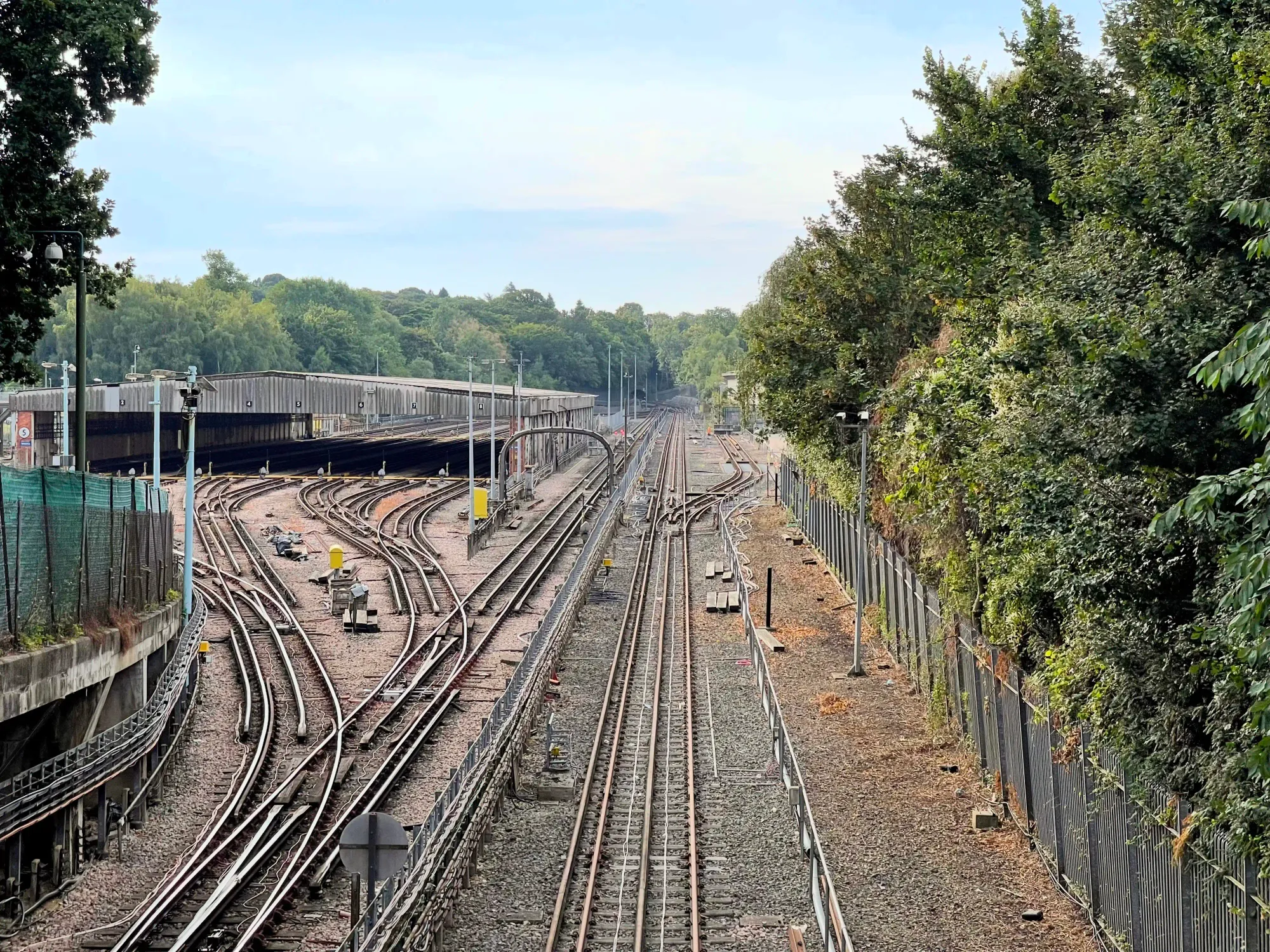
Gaze into the distance in that photo and you’ll notice something unexpected: Another tunnel portal. In fact, there are two tunnel portals (the other is out of shot). These tunnels would have taken the original route to Finsbury Park under Highgate Wood. They’re no longer in use, and in fact have been closed to traffic since 1970. The depot tracks go all the way up to the tunnel mouths, but stop just short. A now disused line coming in from Alexandra Palace would have joined from the east just before the portals.
The tunnels themselves are sealed up to prevent trespass and are now a protected bat reserve. If you were to follow those tunnels, you’d find they’d emerge at the long-disused Highgate High Level platforms, which are directly above the deep level platforms currently in use by the Northern Line.
North of the Station
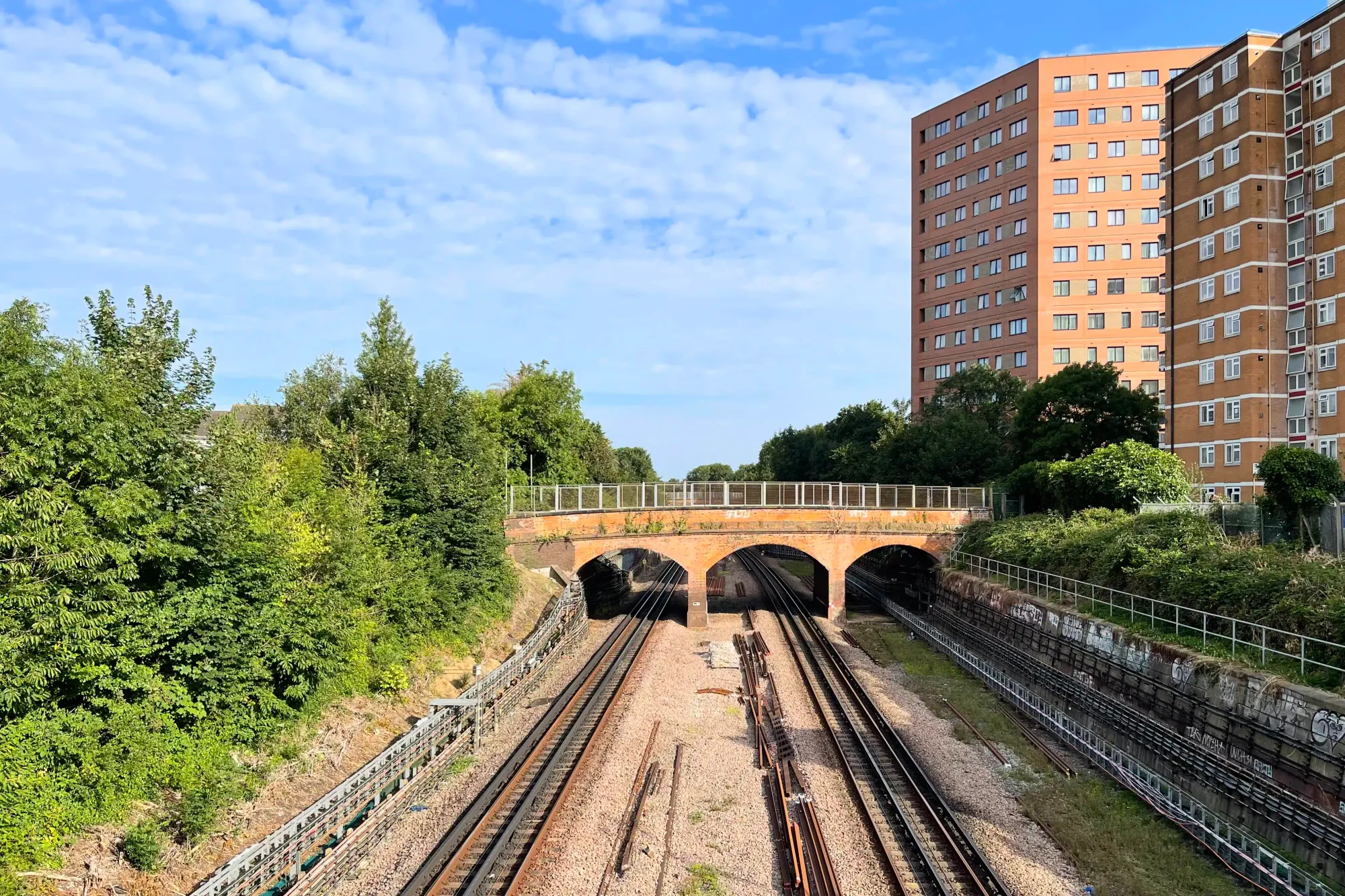
If you retrace your steps and follow the High Road back past the station and up the hill with a left turn into the East End Road, you’ll find another bridge where you can look at the station from the north.
You’ll notice the four tracks in the station converge into two – northbound and southbound – with a terminating track in the middle. This middle road can be used to reverse trains coming out of Highgate Depot and bring them into southbound service.
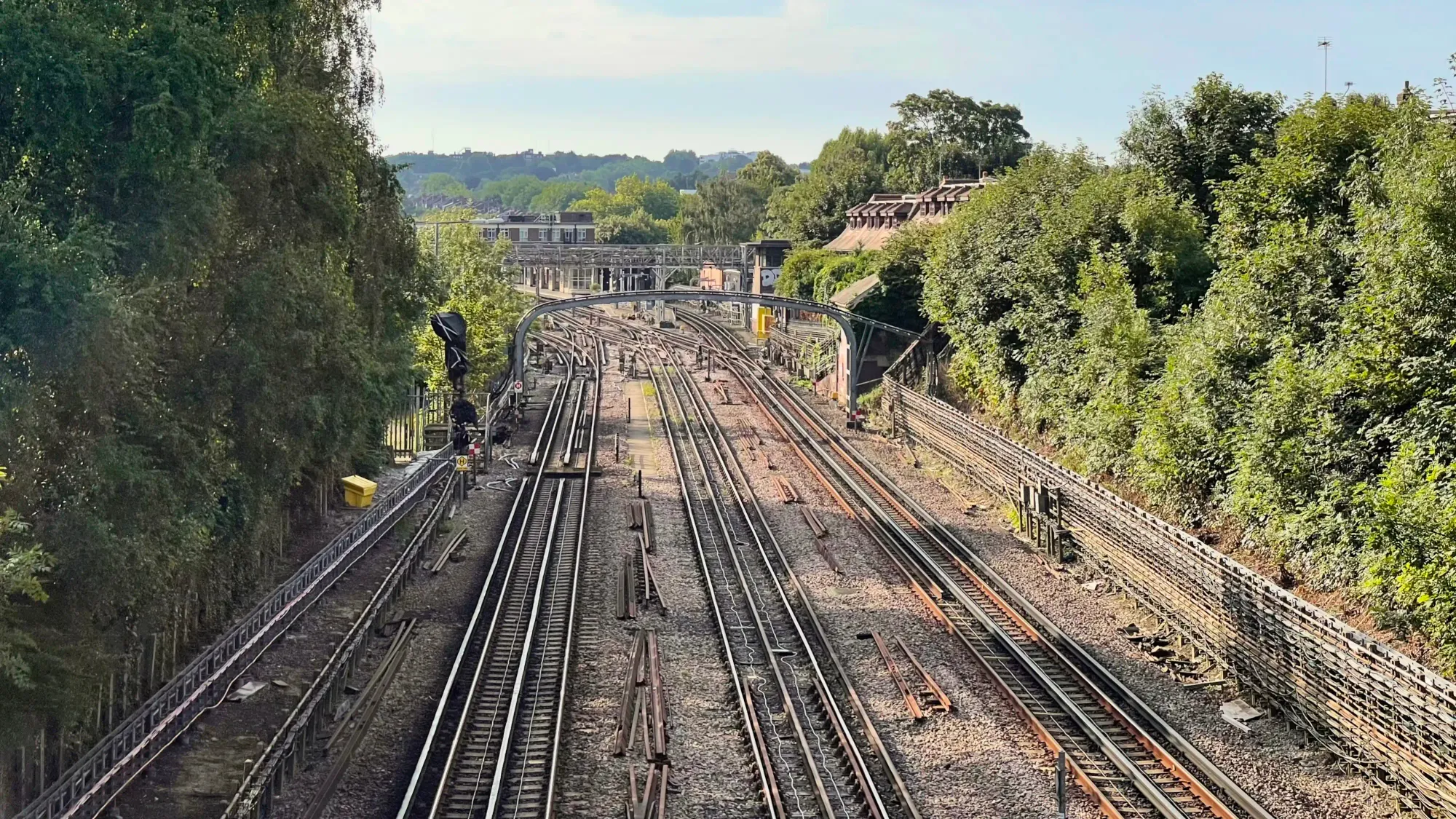
Not visible off to the left is the station car park, which back in the day would have been a goods yard. In fact, most stations along this branch of the Northern Line had a goods yard. This highlights the long history of the line, when freight ran all the way up to High Barnet pulled by steam locomotives, and goods arrived in those former yards.
These days, the line is electrified, goods trains no longer run, and those goods yards have all become car parks.
Exploring the Locality
Let’s head back to the station and make a full loop around East Finchley’s town centre, before ending back in Cherry Tree Woods. That way we can see what East Finchley has to offer.
Hampstead Garden Suburb
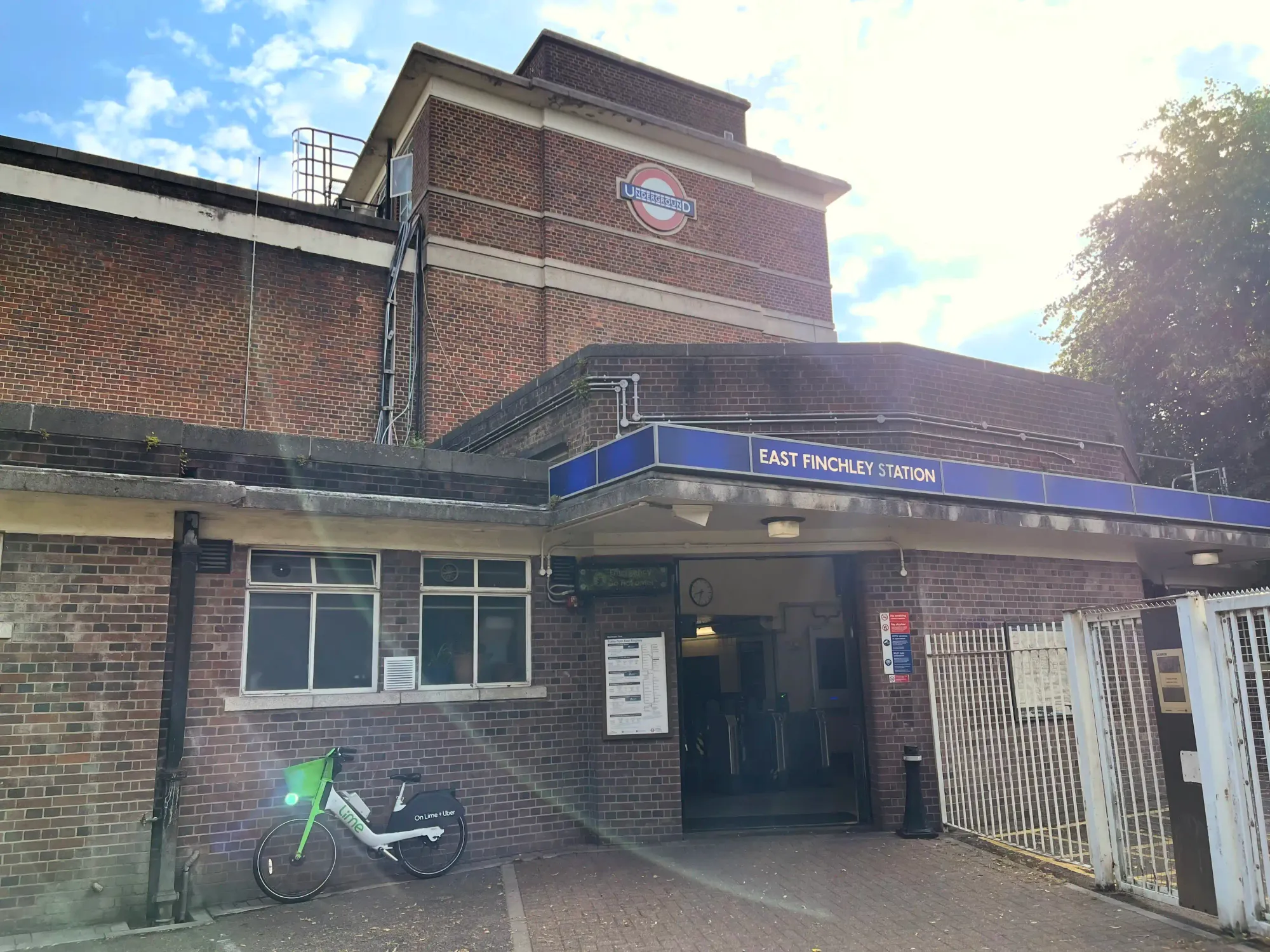
The rear station entrance takes you out onto a footpath connecting to the edge of Hampstead Garden Suburb. There’s a few of these neighbourhoods dotted around London, and the concept of the garden suburb probably deserves a post all of its own.
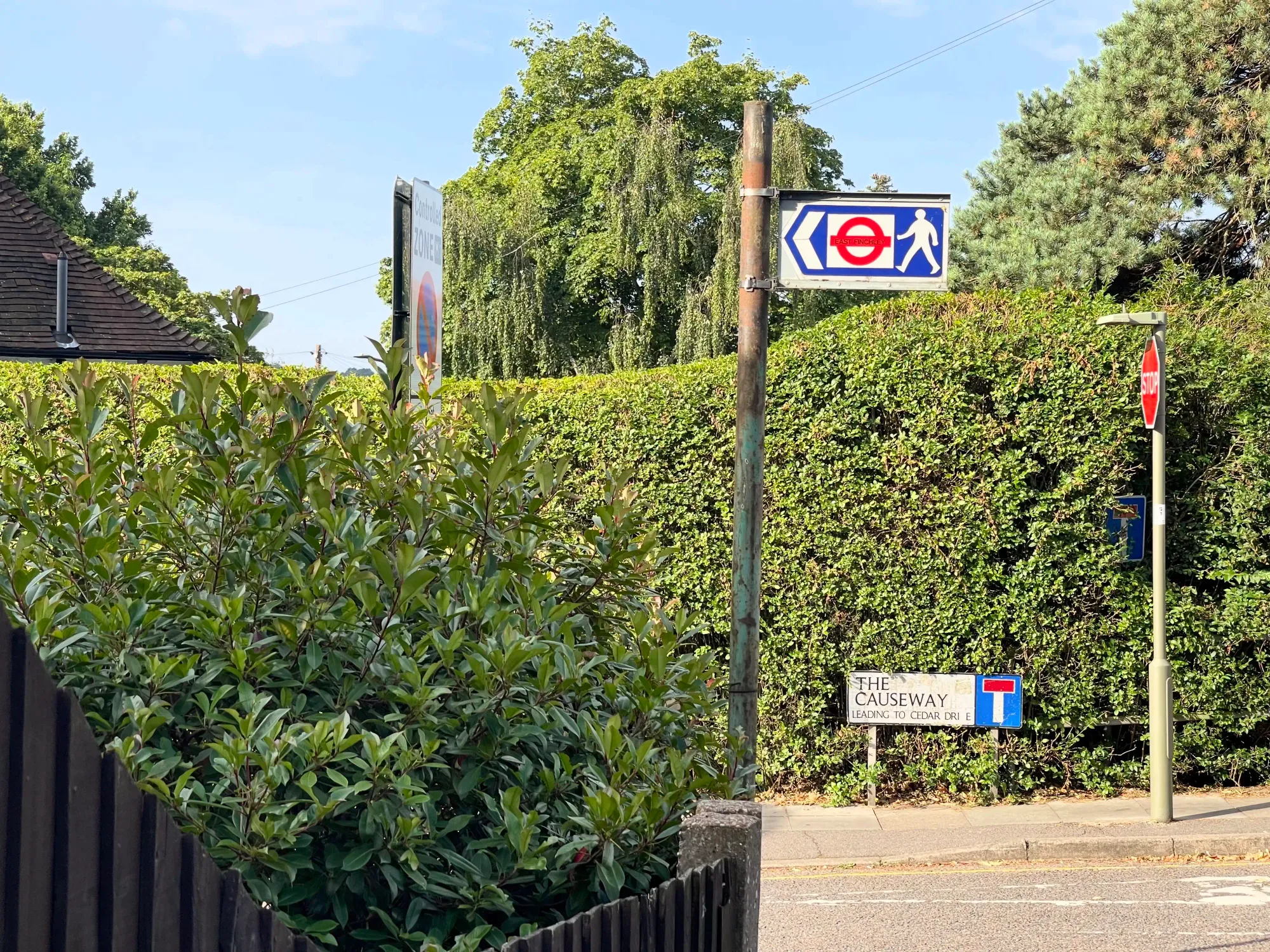
The East End Road
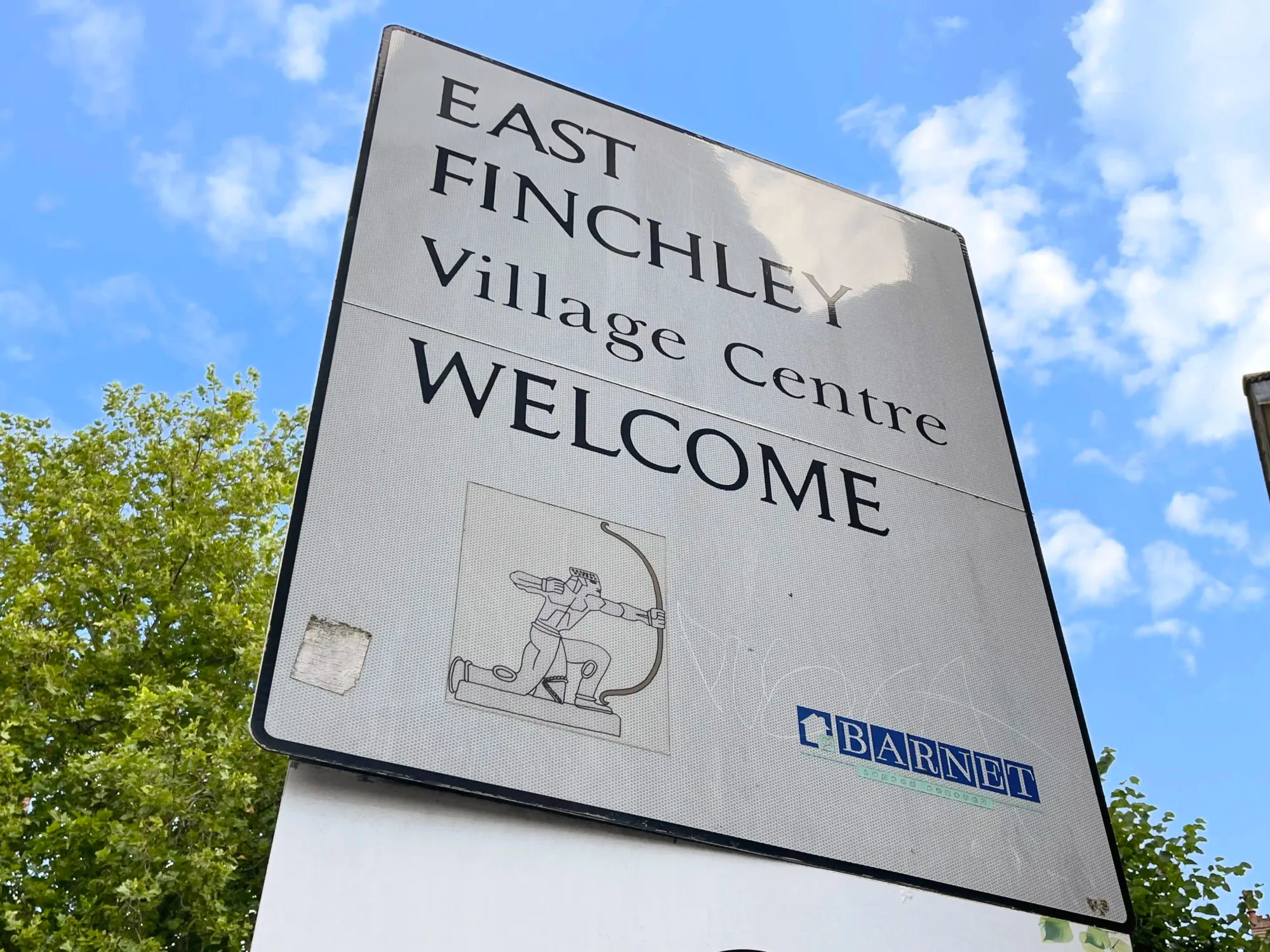
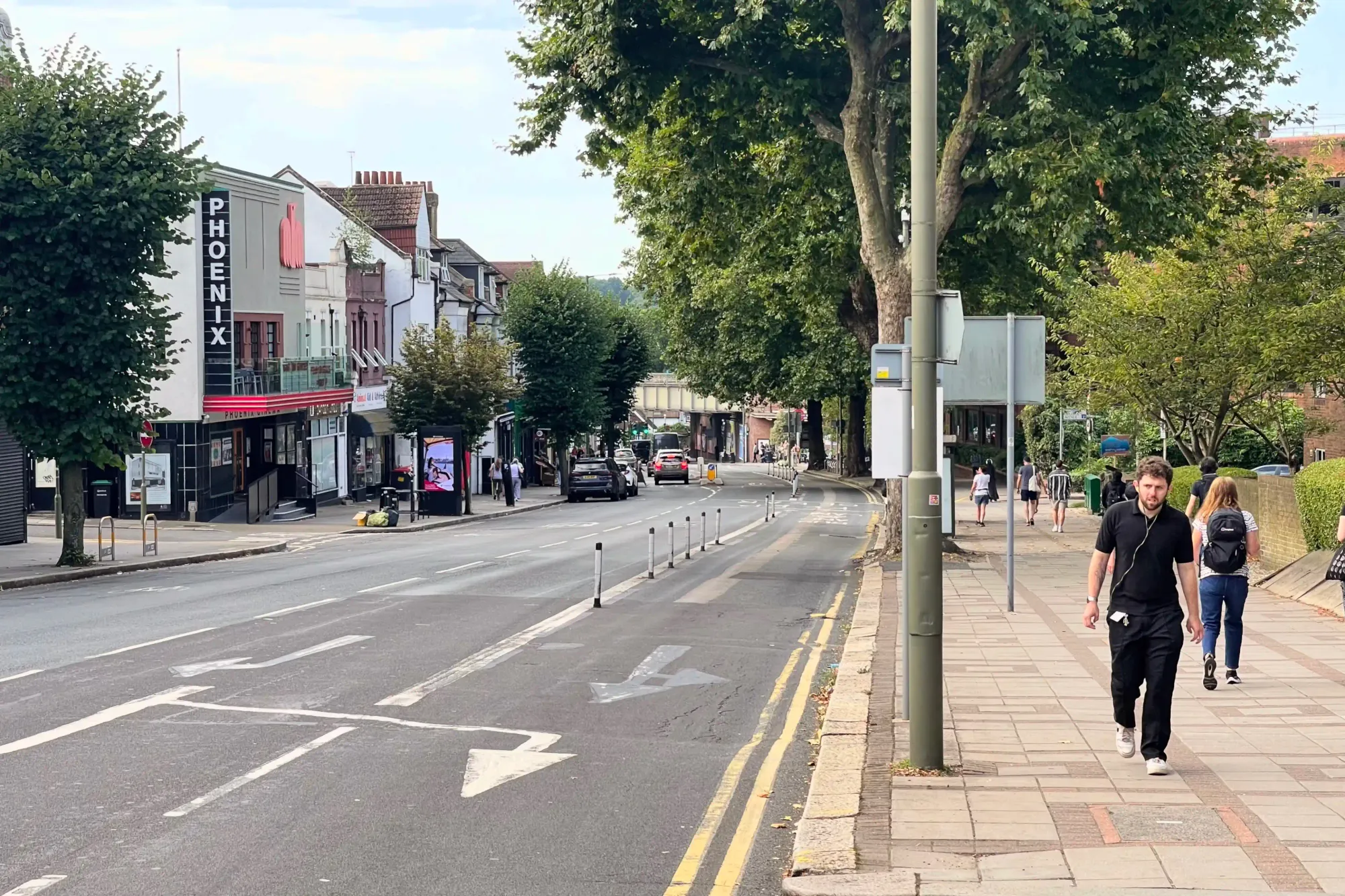
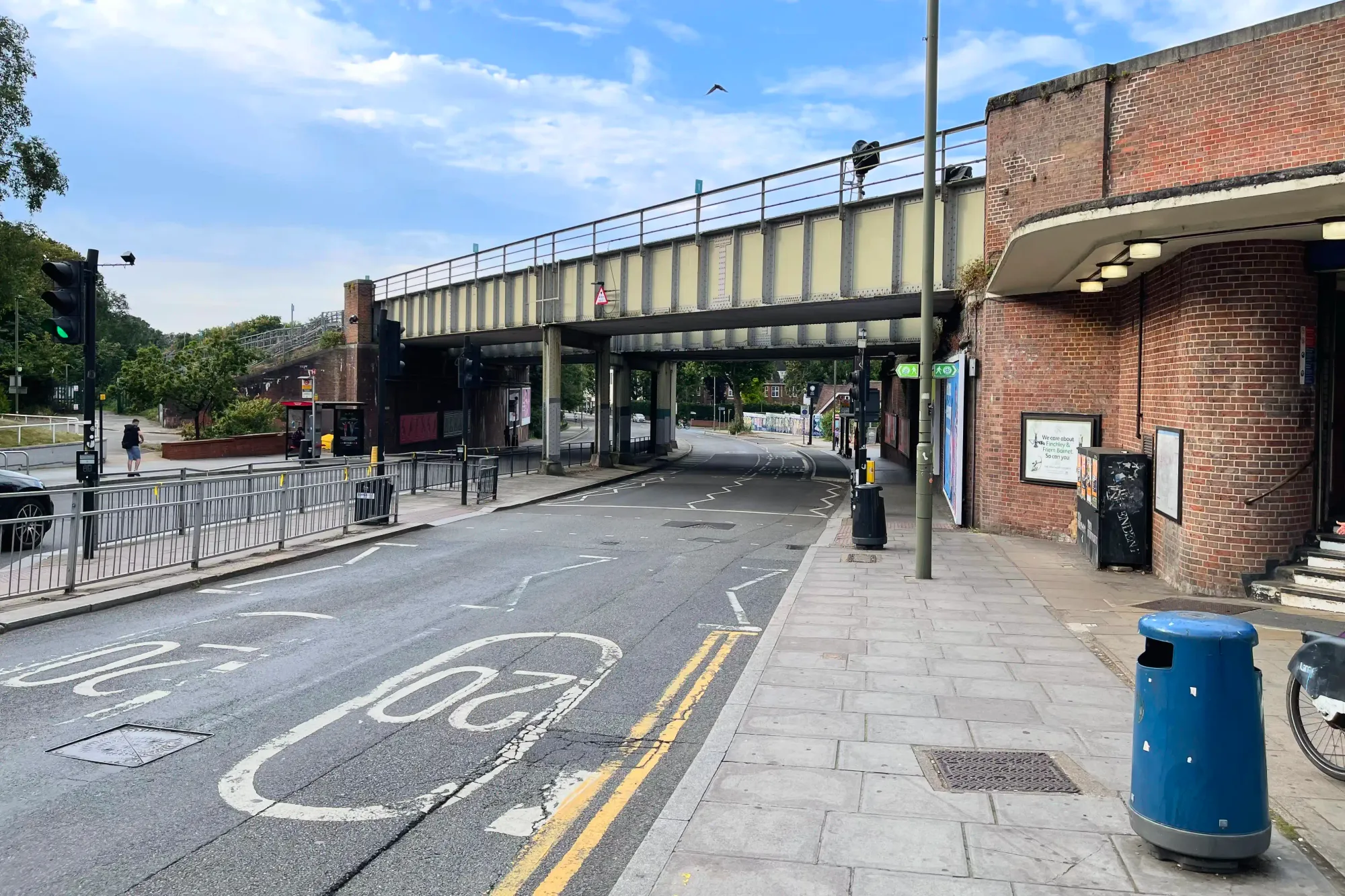
The East End Road with its definitive sounding name connects up the town centres of East Finchley with Church End (aka: Finchley Central) and parallels the Northern Line along the route between those two points. As we emerge from the footpath we can take a turn onto this road and cross back over the railway tracks to return to the High Road and East Finchley town centre.
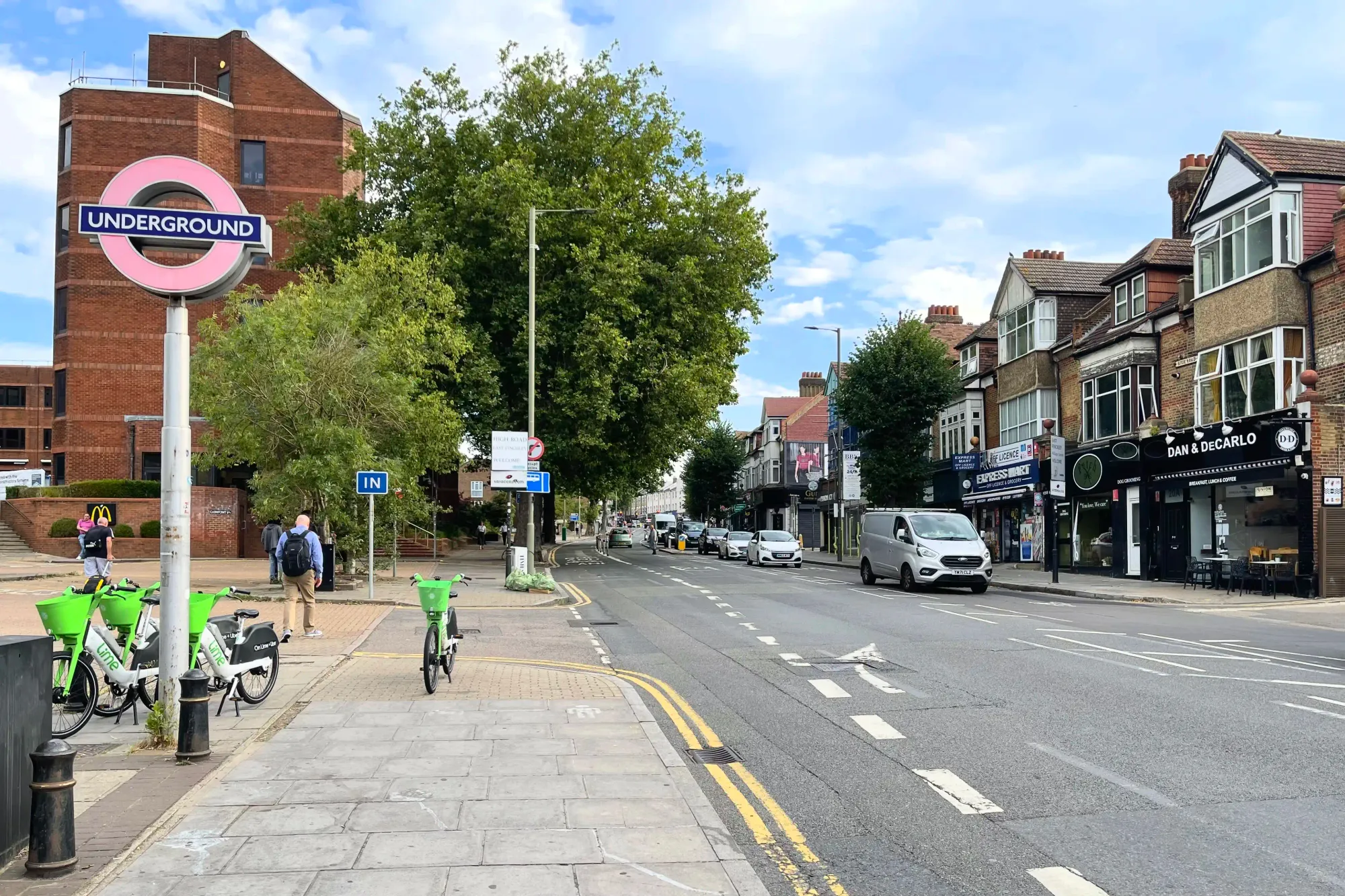
Phoenix Cinema
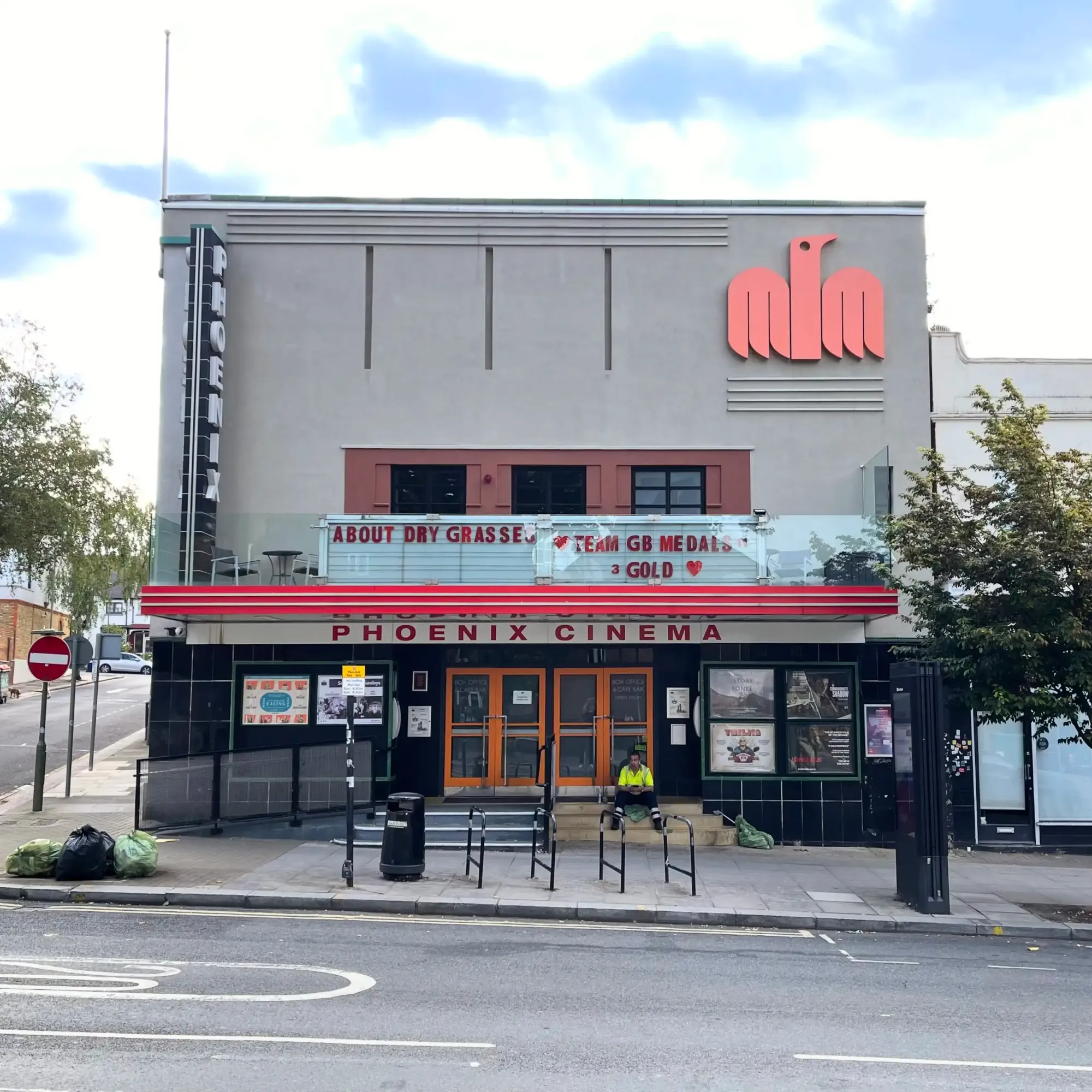
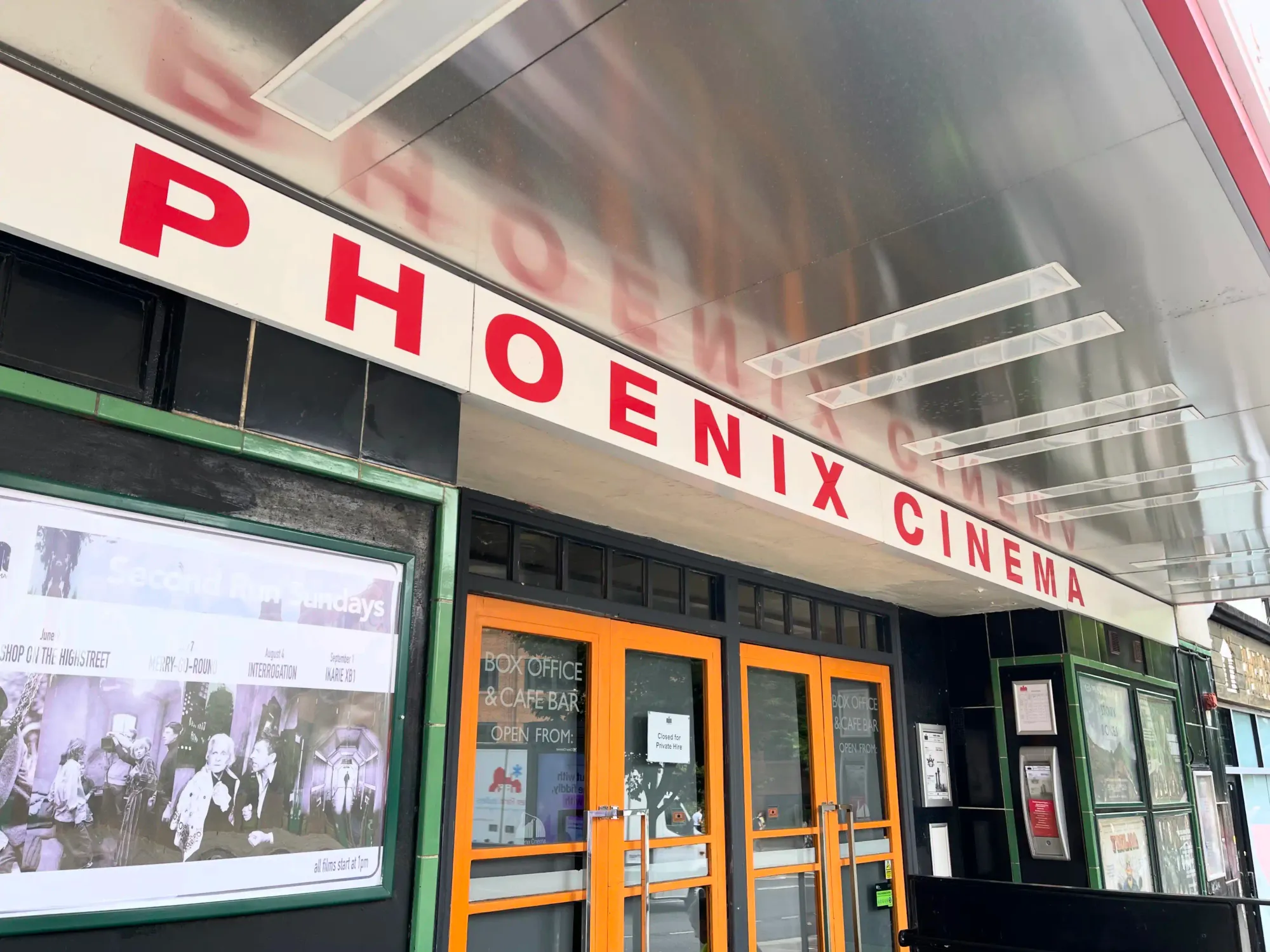
If the archer at the station is one iconic landmark of the neighbourhood then the Phoenix Cinema is the other. This independently run cinema has a history going back to 1910 and is still going strong. In its current form it provides yet another distinctive Art Deco landmark to the area.
The Old White Lion
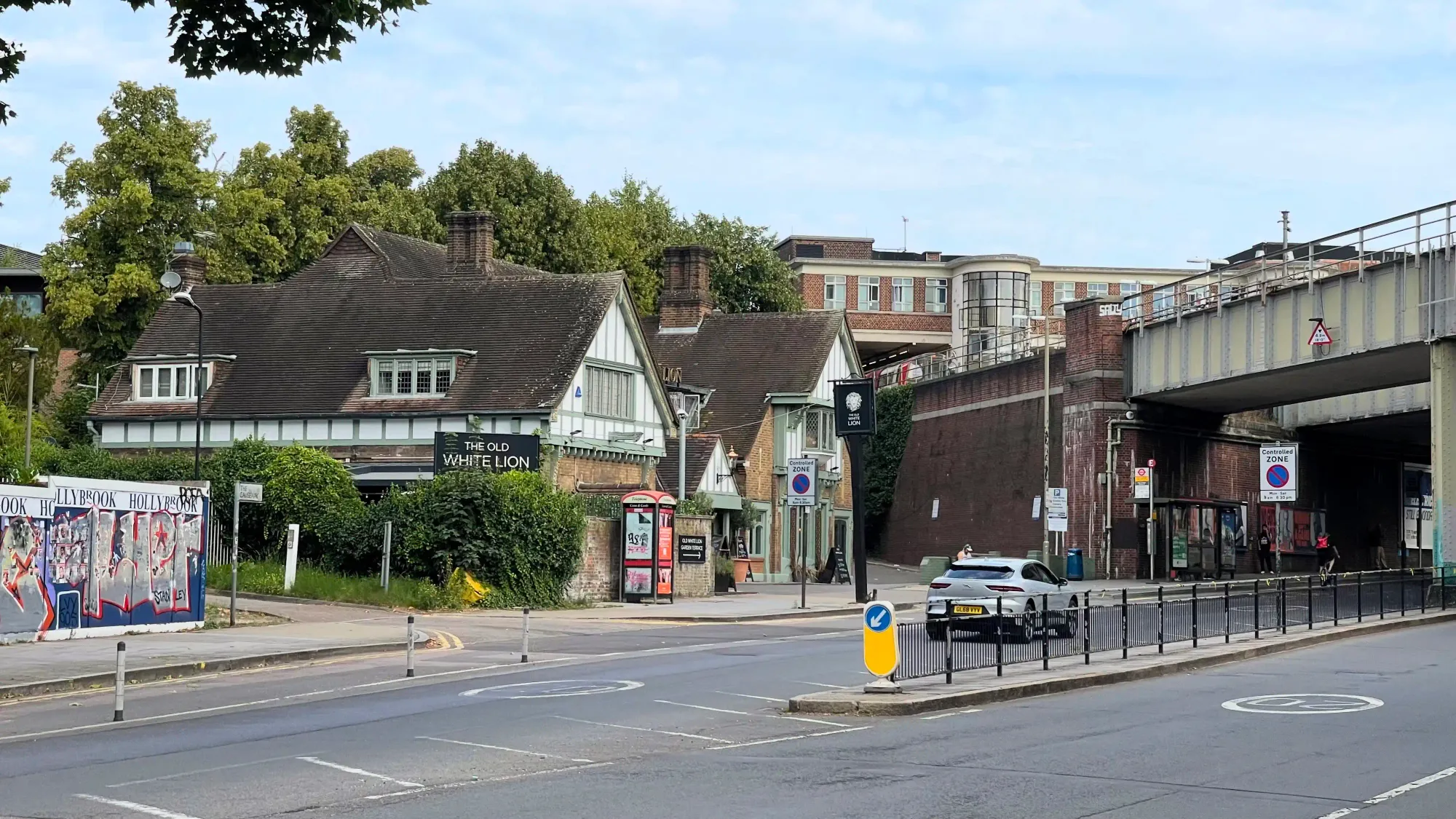
If we continue our walk down the High Road, past the station and under the railway tracks we find the Old White Lion pub. Dating from the 17th century, this historic public house has kept its character and is a great watering hole to visit if you’re passing by.
Cherry Tree Woods
Finally, we end up back in Cherry Tree Woods, completing the circuit.
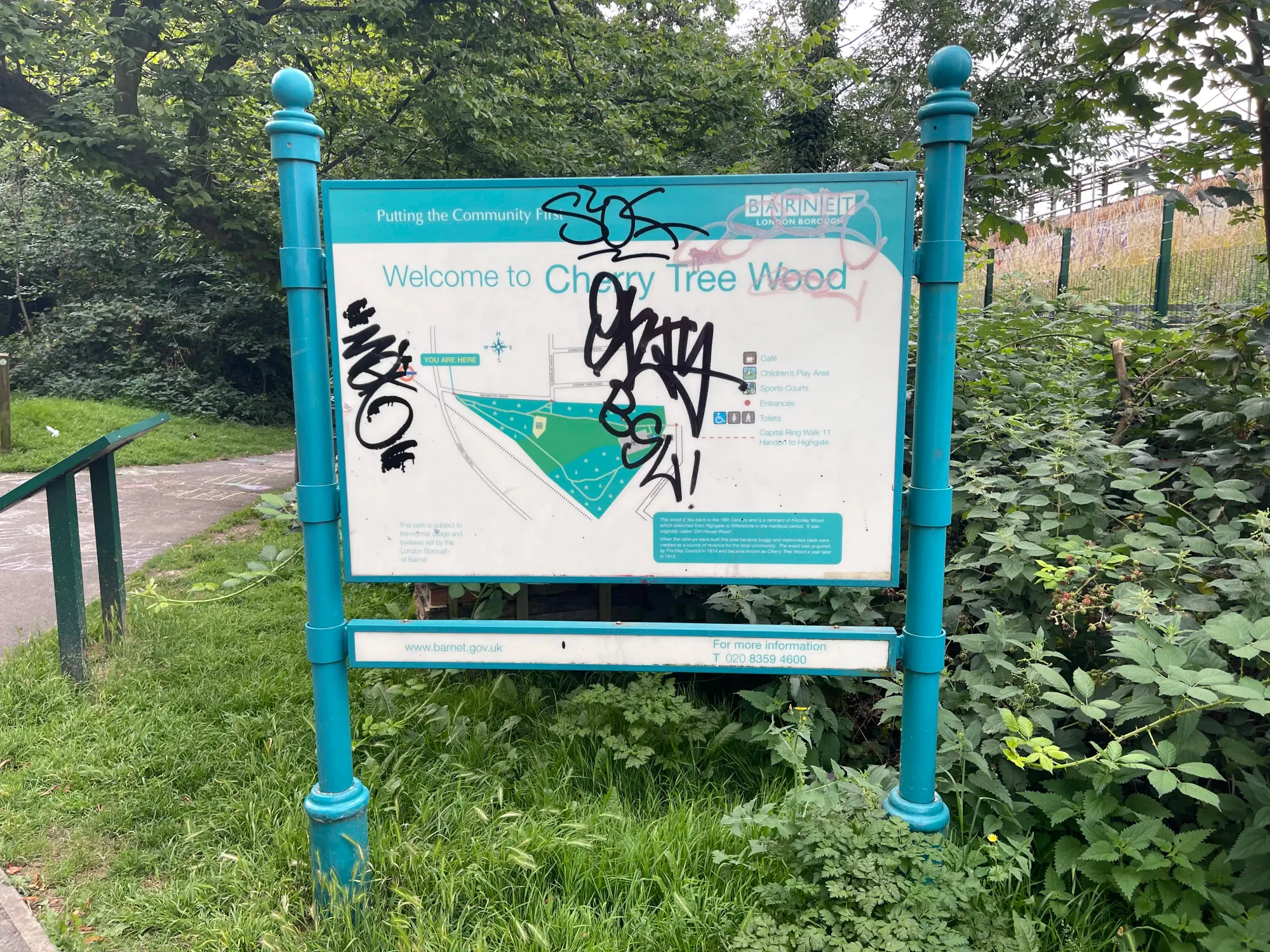
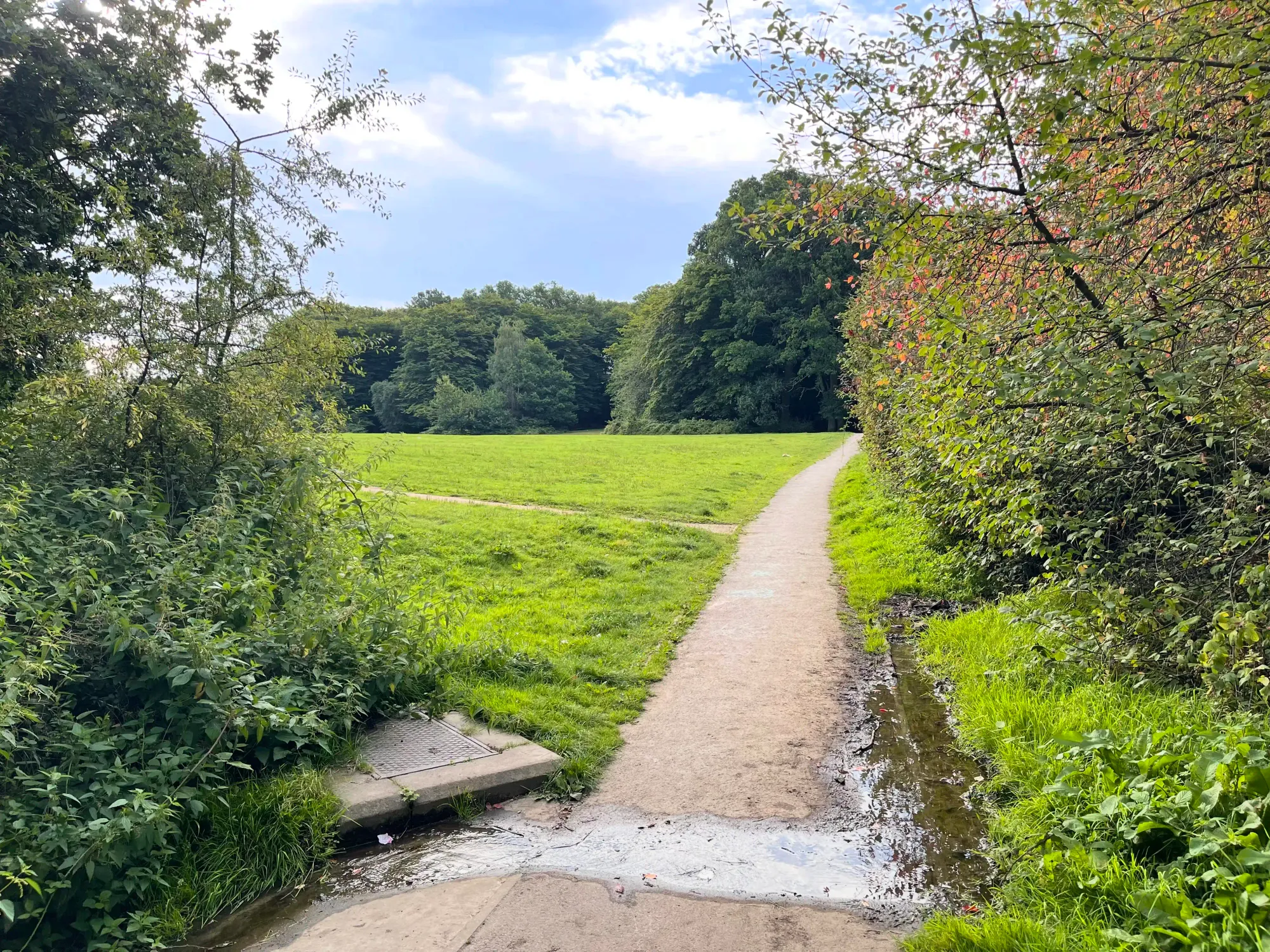
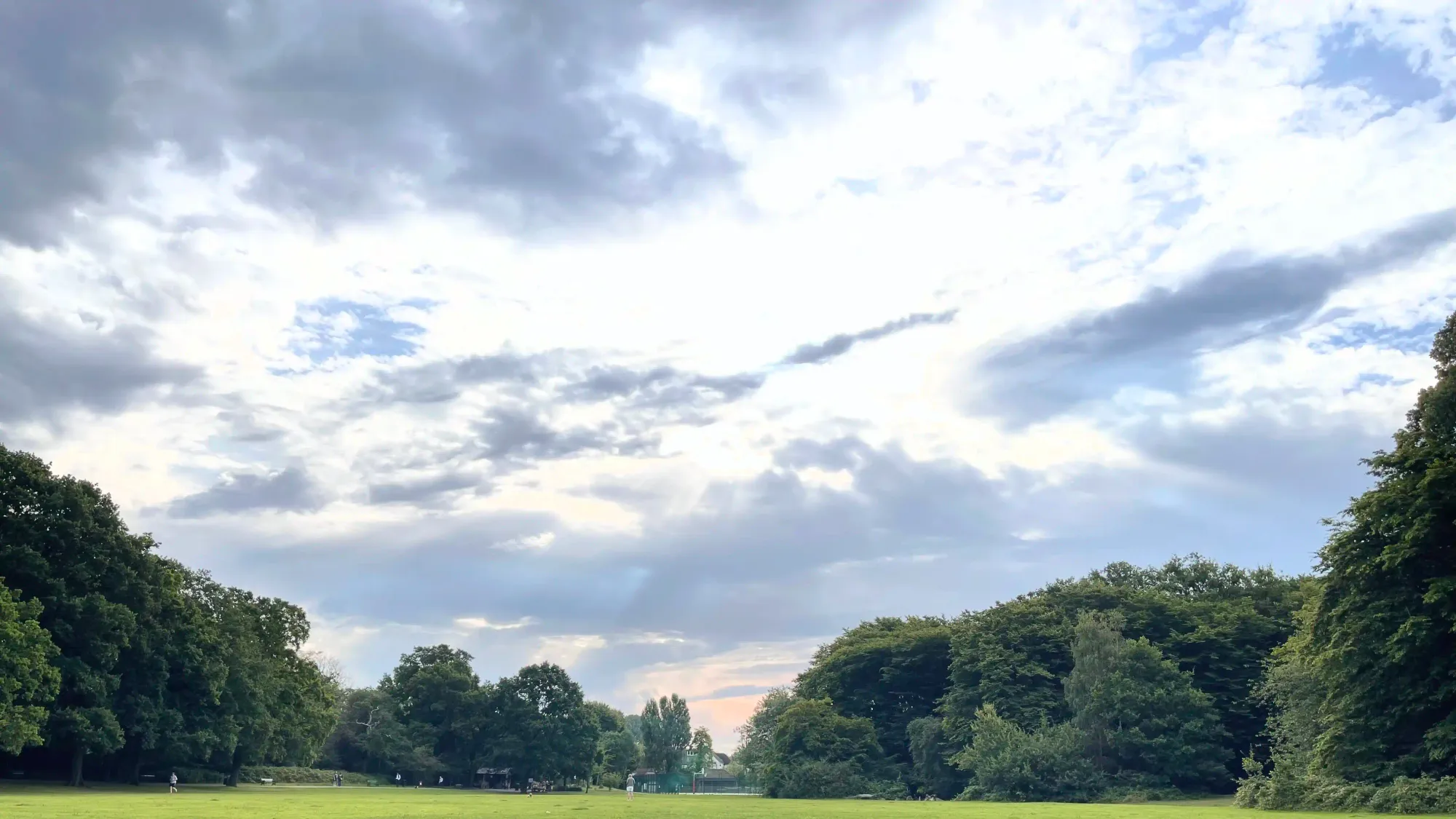
Conclusion
Today’s East Finchley stands as a testament to another era. When standing on the platform it’s not a stretch to imagine yourself waiting for steam trains to speed you out to the London suburbs. We can imagine an alternative future where the Northern Heights project had worked out and East Finchley was a transit hub with services to Elstree, Edgware, and Finsbury Park as well as to High Barnet and Camden Town.
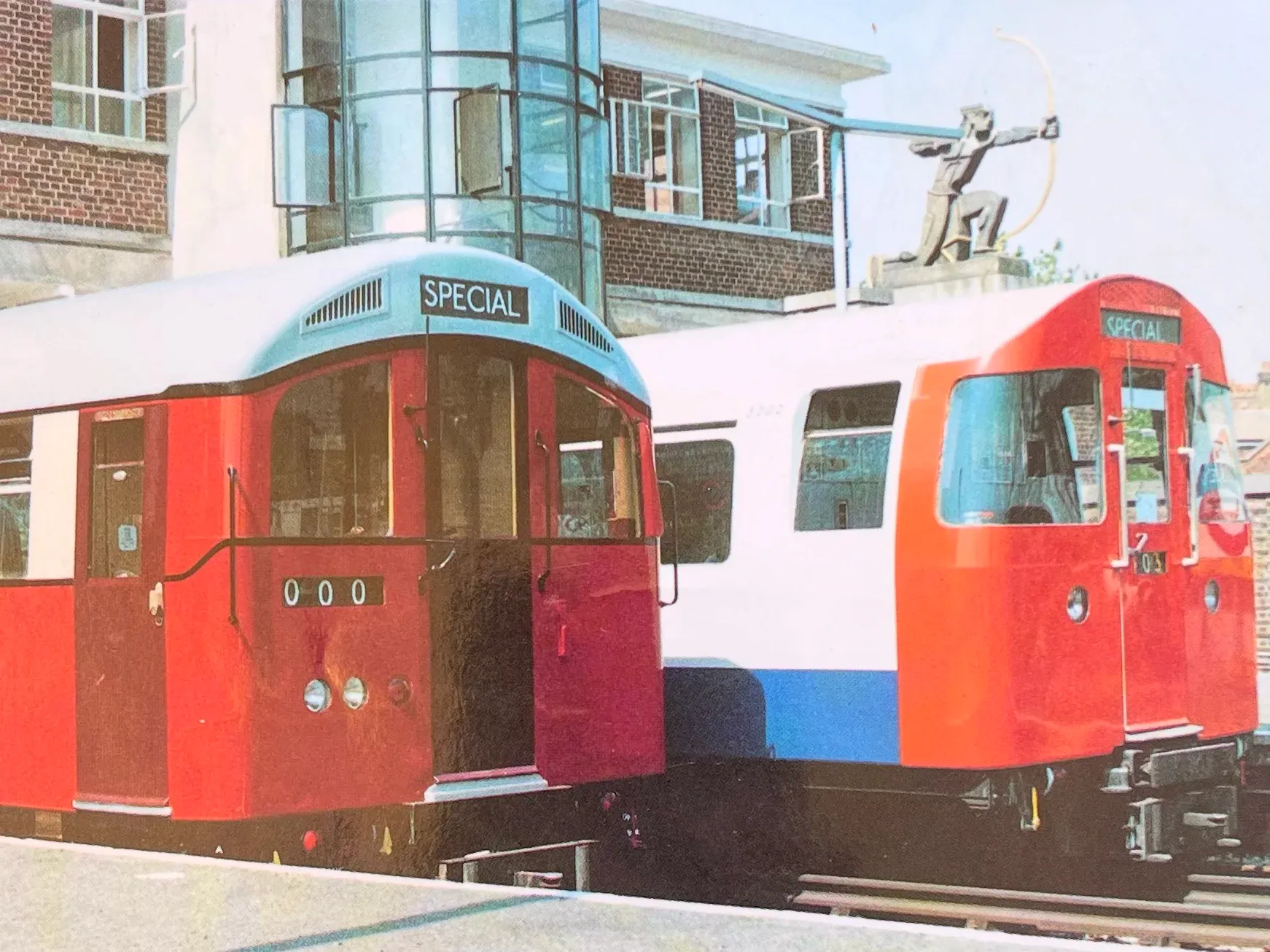
Sadly that world wasn’t to be, and instead we find a station more grandiose than ended up being required, but a beautiful monument to the aspirations of ambitious transit planning.
This article is a slightly shortened version the originally published article on the author's Heliomass.com site in September 2024.
All photos copyright Heliomass, unless otherwise credited.
Aficionados of Art Deco, Art Streamline, and Streamline Moderne will be interested in our recent post Greater London’s overlooked Art Deco railway stations.