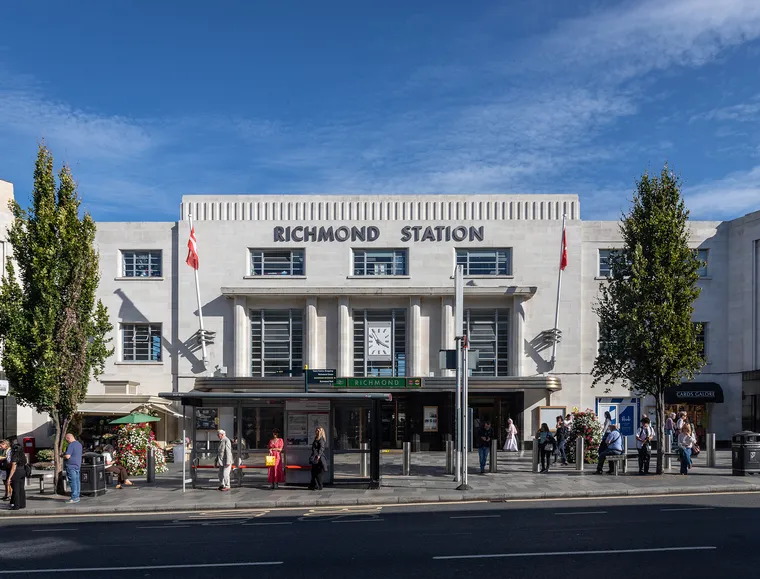
Dotted around the streets of London is a collection of stylish inter-war railway stations. These are not, however, the Art Deco Underground stations commissioned by Frank Pick between the two world wars, which seem to get all the attention. This second set, in contrast, is often overlooked. The stations are mostly, but not exclusively, south of the Thames in areas where the Underground feared to tread. These were the creations of the ‘Big Four’ companies of the mainline railway network.
London Underground’s inter-war stations will be well known to readers of London Reconnections. Under the patronage of the Underground’s Chief Executive Frank Pick, architect Charles Holden designed a series of now-famous Art Deco stations, as well as setting a stylistic template that other architects followed at yet further Underground stations.
The missing piece of the story of London’s railway architecture from the inter-war period is that of the mainline railway. Sure, everyone (well, the London Reconnections reader) knows Surbiton and, thanks to a recent renovation scheme, Richmond stations. But beyond such high profile survivors, curiously little attention seems to have been paid to other mainline stations of the period in London, or indeed anywhere else in the country. There are plenty of books about the inter-war Underground stations of Holden and his contemporaries. Far less study seems to have been undertaken on mainline station architecture of the same period.
Having published one of those books about Tube stations a few years ago (‘London Tube Stations 1924-1961’ with text by Joshua Abbott), architectural photographer Philip Butler found himself considering the potential for a book profiling surviving mainline railway stations from the inter-war era. Knowing of my interest in railway architecture of that era, he asked me to collaborate on what became the recently published ‘Trackside Transformation – the Evolution of British Mainline Stations 1923-1947’.
It is the research carried out for ‘Trackside Transformation’ that forms the basis of this article, in which we’ll be looking at the built legacy of the mainline railway companies in and around London – and trying to find out why their stations attract so much less attention than the Underground stations Frank Pick commissioned. But let’s get one thing straight from the start. It has nothing to do with the architectural quality of the mainline stations. These were buildings created with the same care and attention as London Underground’s, many representing a break from traditional railway architecture as radical as Holden’s work.
The Big Four
Following the passing of the Railways Act in 1921, from 1923 most of the existing mainline railway companies in Britain were ‘Grouped’ into one of the Big Four railway companies. For London, this meant the London & North Eastern Railway (LNER) operating out of Marylebone, King’s Cross, and Liverpool Street. The London, Midland & Scottish Railway (LMS) operated out of Euston, St Pancras, and Fenchurch Street (the latter being the starting point of a line which served neither the Midlands nor Scotland). The Great Western Railway (GWR) operated from Paddington. Finally, the Southern Railway (SR) operated the dense south-of-Thames railway network from a collection of termini and semi-termini including Victoria, Waterloo, Charing Cross, Blackfriars, Cannon Street, and London Bridge. The Big Four existed until the end of 1947, at which point they were nationalised – their existence almost exactly coinciding with the period in which Holden-designed stations were constructed on the Underground.
Unlike the Underground of the inter-war years, the Big Four undertook very limited new line development in and around London during that period. But they did build or rebuild many stations on their existing routes. With commuting into London booming, many stations needed larger buildings to cope with increased passenger numbers.
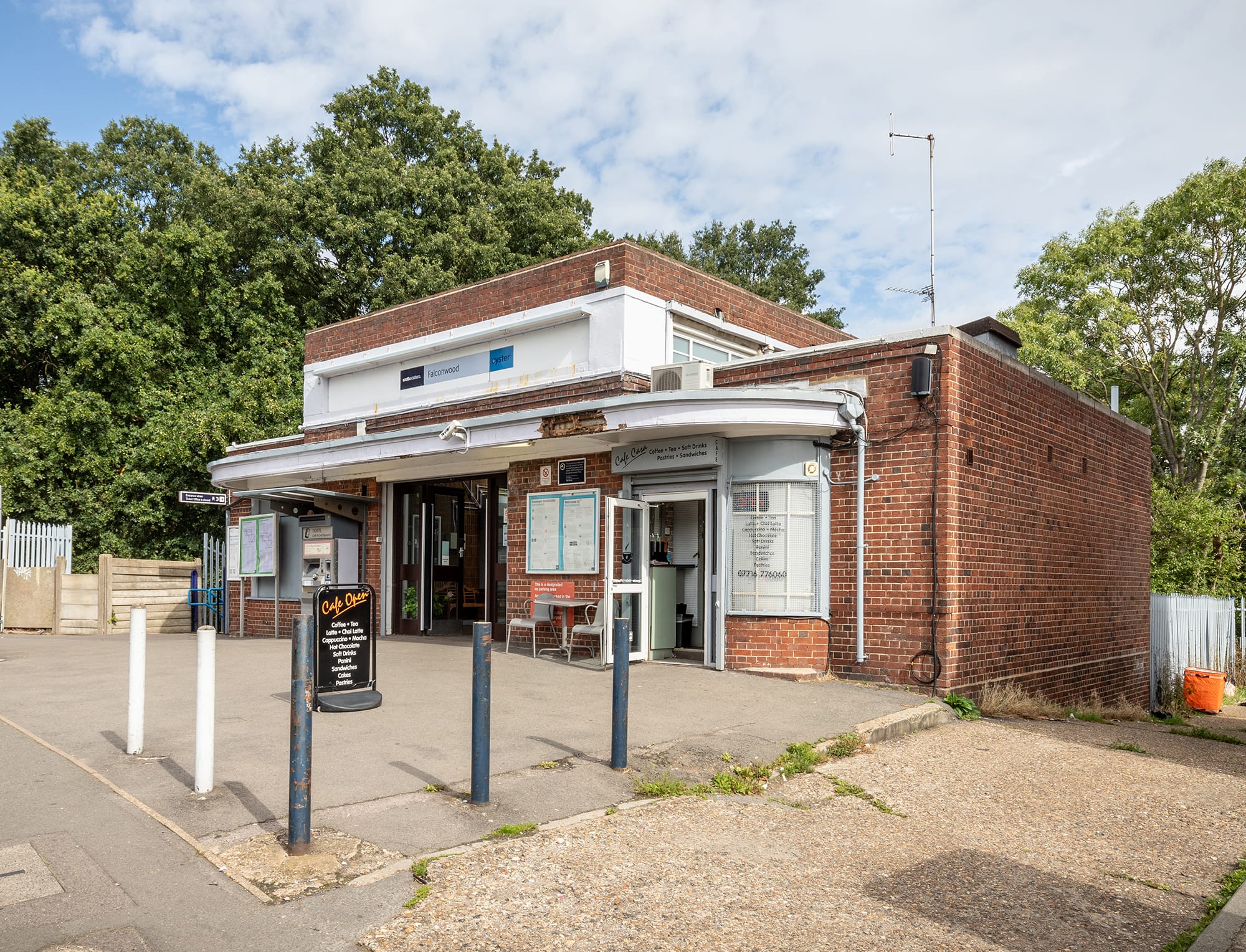
The Big Four were nevertheless aware of the way that the Metropolitan and the Underground stimulated new business by building new lines into the countryside around which commuter settlements developed. Although the Southern, in particular, copied this approach on occasion with new lines between Wimbledon and Sutton, and to Chessington, the Big Four more commonly inserted new stations onto existing railway lines, serving or stimulating new housing developments; the Southern’s Albany Park (1935) and Falconwood (1936) are examples.
Unfortunately, whilst the Metropolitan’s Metro-land boomed, the Big Four often seemed to be caught out building stations that never quite stimulated local housing development in the same way. The LNER’s unassuming red-brick station at Brookman’s Park (1926) is a case in point. House building around Brookman’s Park was so slow that by the time of the post-Second World War London Green Belt designation, it was still in a mostly rural location – and the station never achieved the patronage the LNER had once hoped.
Establishing exactly which stations the Big Four built and when they did it was, however, something of a challenge when it came to writing ‘Trackside Transformation’. As it turned out, no-one seems to have ever collated that information in a single place for any of the Big Four companies, let alone all of them together. A simple-sounding task turned out to be rather more complicated than Philip and I had expected. But we eventually came up with a list of some 280 stations built or rebuilt by the Big Four during their 25-year lifespans.
That number surprised us, as did the number of stations in and around London. This is London Reconnections after all, so this article focuses on the stations built or rebuilt in and around London, of which there were a little under 90.
A note on terminology
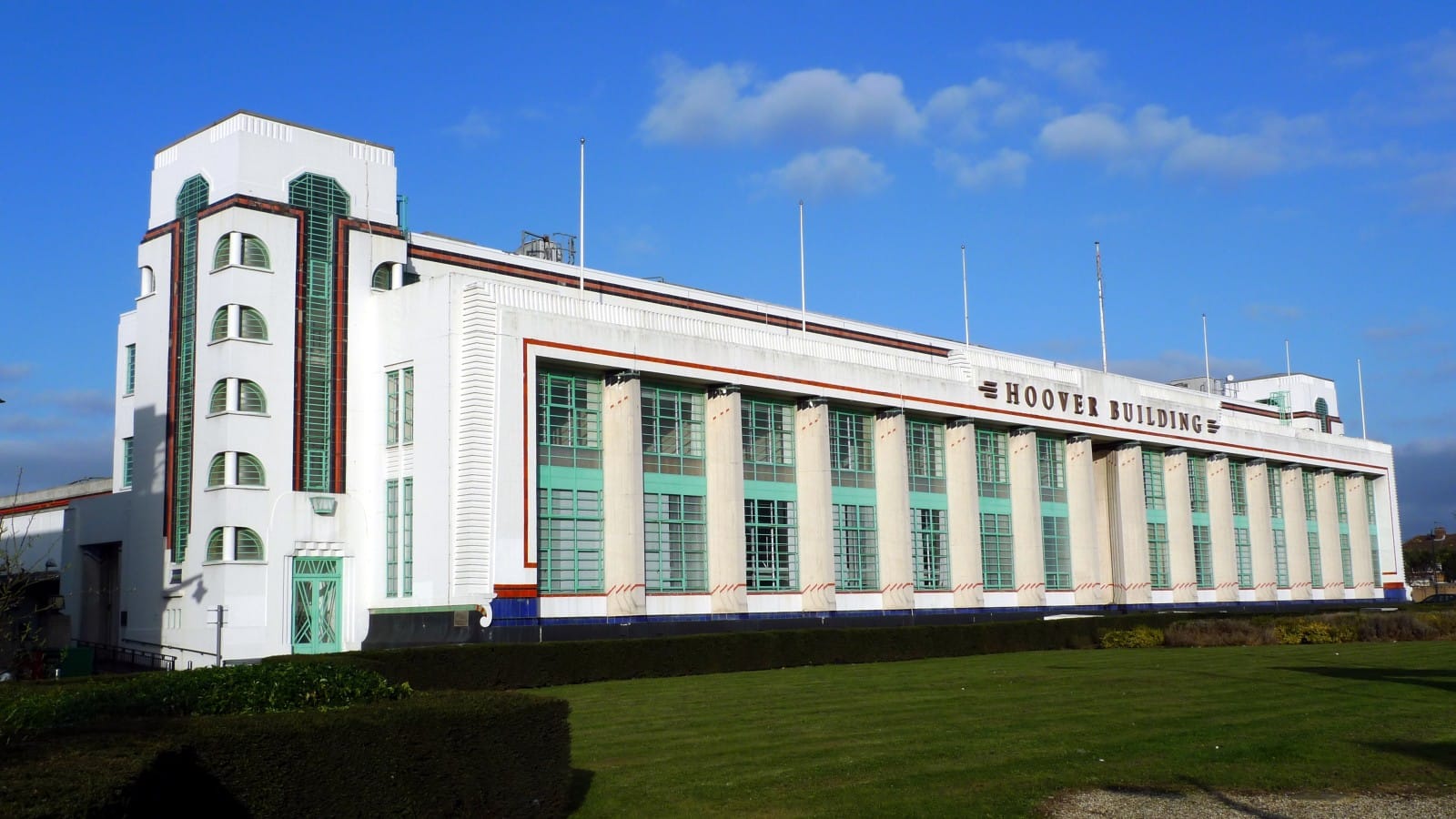
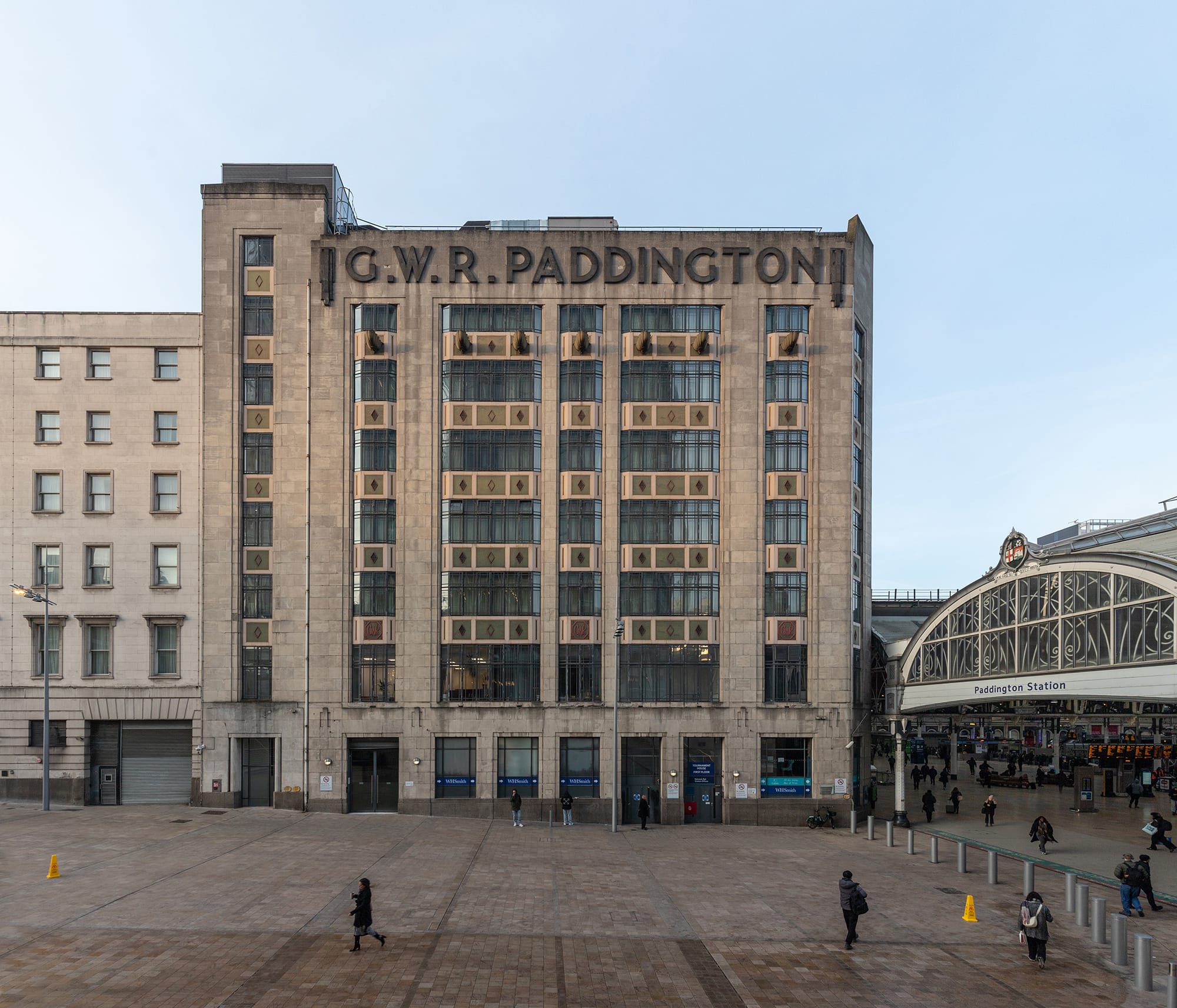
Tube and architecture enthusiasts are generally familiar the “Art Deco” stations of London Underground, although some architectural commentators would take issue with “Art Deco” being used as an adjective given that the stations were rarely actually decorated. Compare Holden’s work to the Grade II Listed Art Deco Hoover Factory in Perivale by Wallis, Gilbert & Partners, with its applied decorative and painted elements, for instance. At mainline railway stations, decorated buildings were rare, although the GWR’s 1930s office block at London Paddington is an exception.
Within the broader category of the mainline railway companies’ Art Deco stations (you know them when you see them), for ‘Trackside Transformation’, Philip and I identified two main phases of design. The first is the cuboid, angular, Modernist station buildings, which tend to comprise the Big Four’s earlier works. Although there is some degree of chronological crossover, the Big Four’s later works tended towards Streamline Moderne, with curved elements mirroring contemporary aerodynamic aircraft and ocean liner design, or Expressionist – less curvaceous but with flamboyant design elements that go beyond the functional (for example, Egyptian stylings).
Who designed the Big Four’s stations?
The names of the Big Four’s architects are much less well known than Charles Holden, and even of London Underground’s staff architect Stanley Heaps and the Metropolitan Railway’s Charles Clark.
For most of its Grouping-era existence, the GWR’s Principal Architect was Percy Emerson Culverhouse, succeeded in its final few years by Brian Lewis, then Frederick Curtis. The LMS’s Chief Architect was William Henry Hamlyn for its entire existence. The LNER had a three-region system of engineering responsibilities, and the architects for the southern part of its network which included London were J. Gardiner, followed by F. H. Crossley and J. M. Harrison. At the Southern Railway, James Robb Scott was the company’s Chief Architect for the whole of the Grouping era.
It was the Southern amongst the Big Four companies which most resembled the Underground in terms of operating a dense commuter network in London. Serving the booming commuter market in an area in which the Underground had much less presence, it was the Big Four company that most needed to upgrade significant numbers of its stations. It is JR Scott then who had by far the greatest influence on inter-war mainline railway architecture in and around London. Mirroring Pick’s approach on the Underground, Scott sought to contribute to the Southern’s developing brand identity by designing stations with a modern, eye-catching appearance.
Although the Big Four’s architects would no doubt have been aware of the Underground’s architectural innovations, their stations are not simply a copy-and-paste response to Holden’s work. Rather, the mainline companies and the Underground were responding to wider architectural trends. The railways also made more frequent use of materials like concrete for station construction and finishes than the Underground, which tended towards brick finishes for the most part.
The Big Four’s built legacy in London
If you’re not familiar with the mainline equivalents of the Tube’s Art Deco stations, the quality and range of the stations built by the Big Four may come as a surprise.
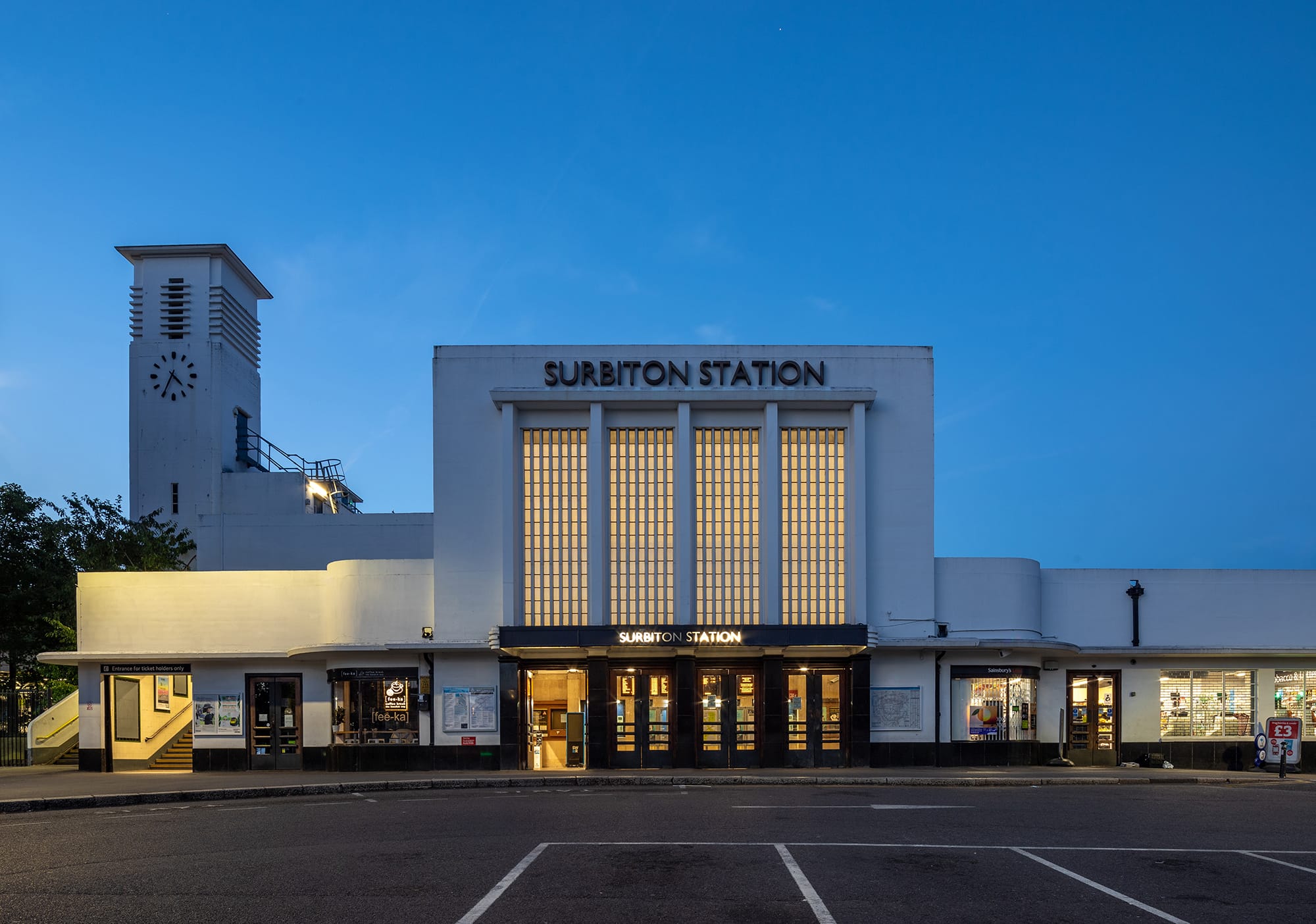
The most famous example in London is Surbiton (1937), Scott’s masterpiece for the Southern. Its lofty booking hall, lit with bronze uplighters, owes more than a little to American railroad stations of the same period, although scaled down appropriately. Its clock tower is pure distilled Art Deco style and is complemented by matching lift towers. The station was technically innovative too – its double decker footbridge separated out parcels (above) and passengers (below), the lower deck being further divided along its length between access to the platforms on one side, and a public pedestrian route over the tracks on the other.
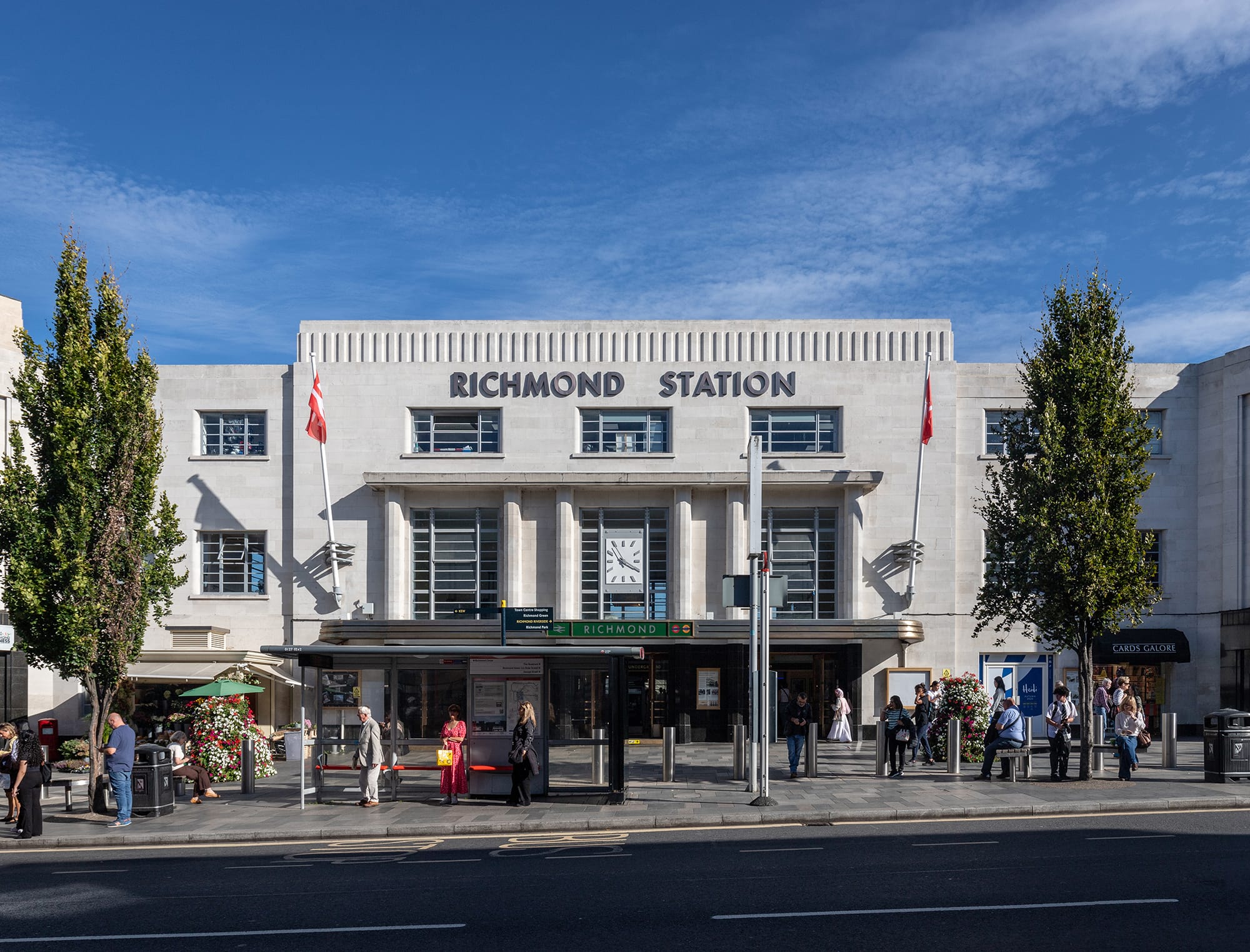
Richmond station (1937) has recently been refurbished under a scheme funded jointly by Network Rail, South Western Railway, and the Railway Heritage Trust, restoring the curved bronze canopy at the front of the station, complete with glass block skylights. Stylish 1930s glass signage has been uncovered, complemented by replica Art Deco light fittings in the booking hall, and an original sign returned from the London Transport Museum.
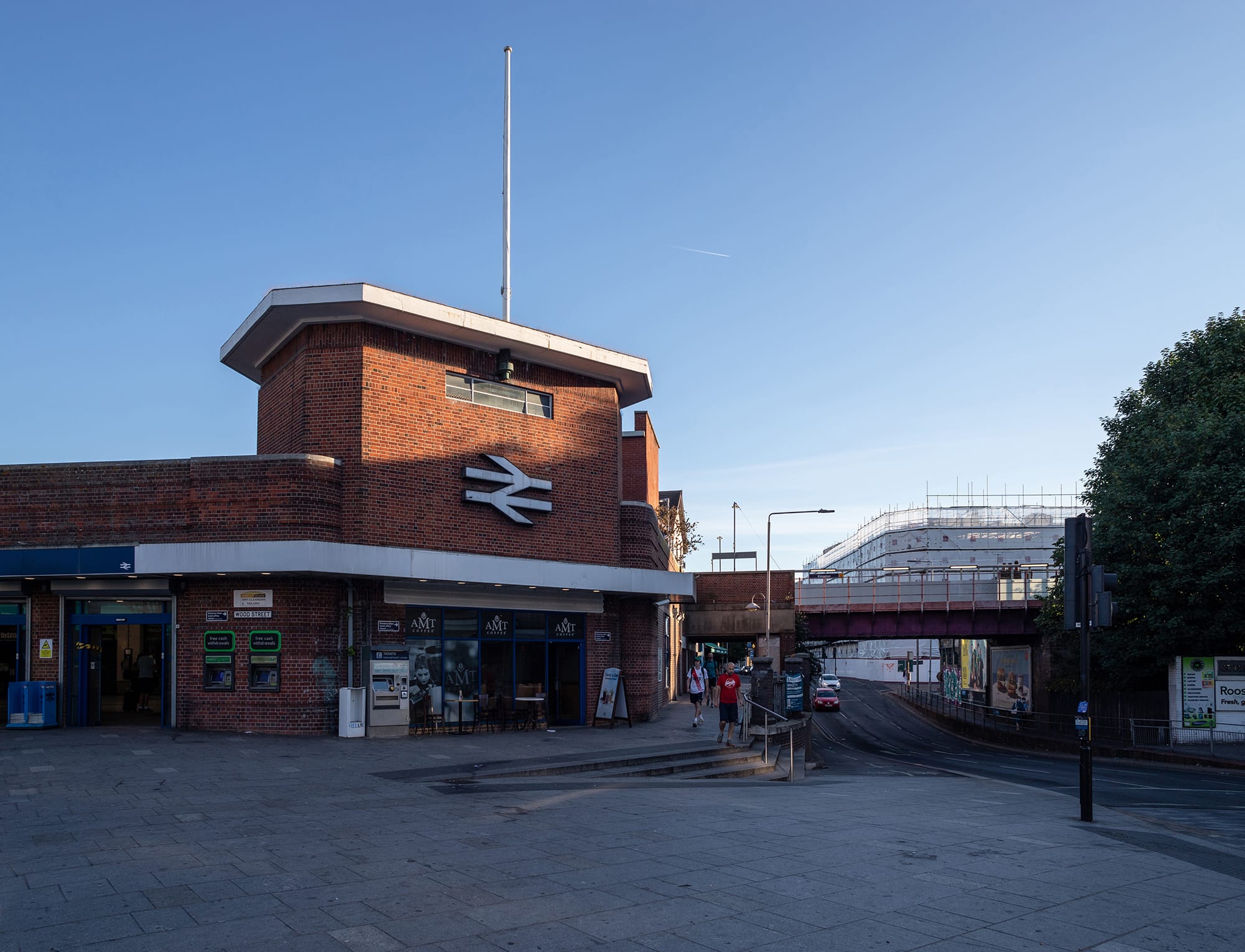
Other mainline stations from the Grouping era are much less well known. Wimbledon (1929) retains its Art Deco looks on the outside, but there are very few original features surviving within. Kingston upon Thames (1935) tends to be overshadowed by nearby Surbiton but is a dramatic exercise in brick Expressionism. Many smaller stations are Art Deco delights, going about their jobs apparently almost unnoticed. Waddon (1938) retains its full height booking hall (many others have had false ceilings inserted), and on a smaller scale so does Falconwood (1936), still lit by a skylight and clerestory windows. Worcester Park (1937) is like a miniature Art Deco factory in outline, with neat touches like a geometric pattern window over its main entrance.
The Chessington branch
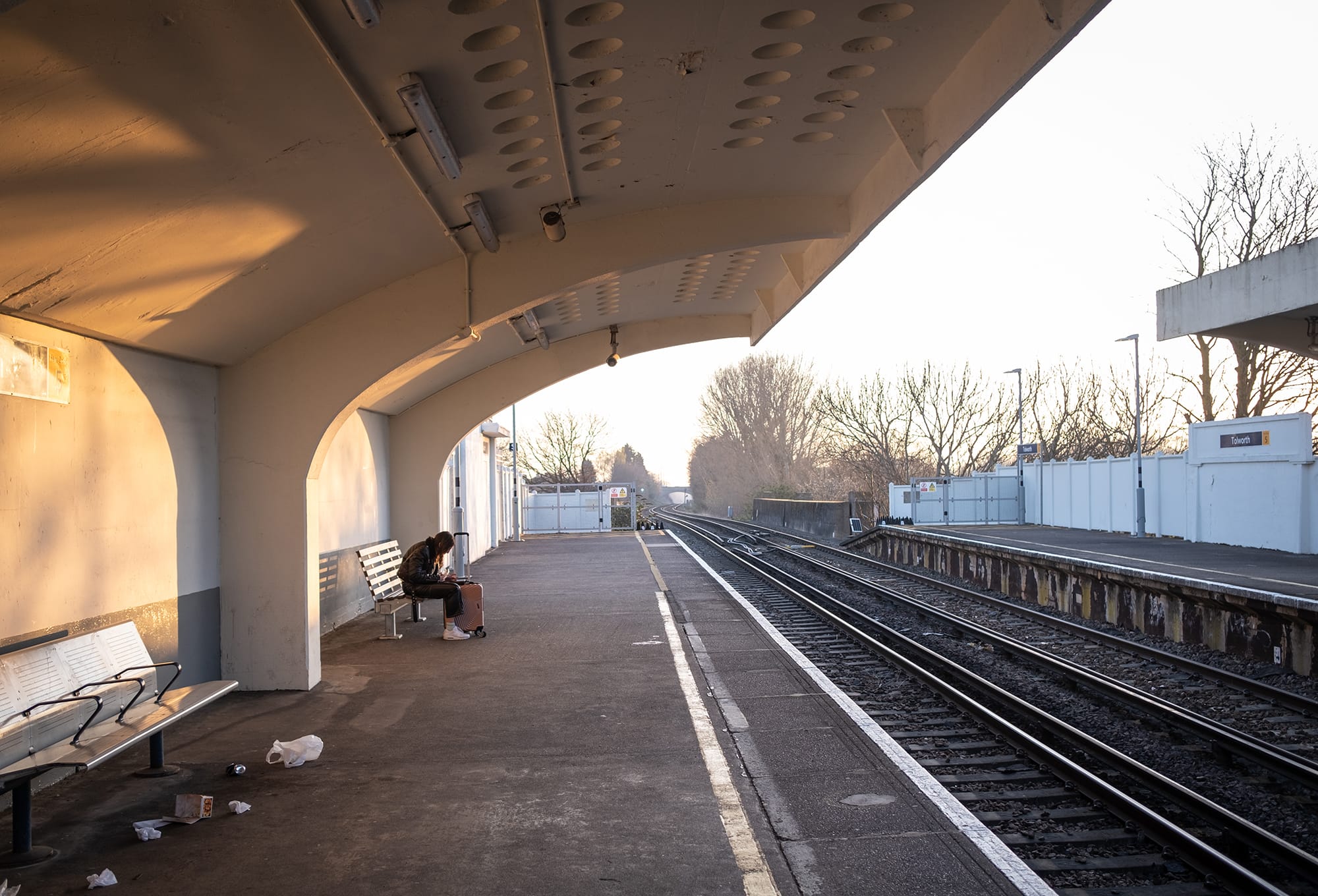
Scott’s most complete set of stations can be found on the Chessington branch line. Opening between 1938 and 1939, they share a Streamline Moderne design across all four stations, though with detailed differences to finishes. But unlike earlier Southern stations where the engineering department erected standard-issue canopies on the platforms, at these four stations ‘Chisarc’ canopies pierced by rows of circular glass lens skylights were built, continuing the Art Deco feel (unfortunately, the skylights have since been painted over). The Chisarc name comes from the British patent holder for this type of large span of unsupported roof construction, Messrs Chisarc and Shell “D” Ltd. Crittall windows (the minimal steel frame windows synonymous with Art Deco buildings), terrazzo flooring, and the Southern’s standard ceramic wall tiling scheme also survive at stations on the branch, adding to the 1930s atmosphere.
Although the Southern was responsible for the largest number of inter-war stations in London, and all those mentioned above, the other three railway companies also played their parts.
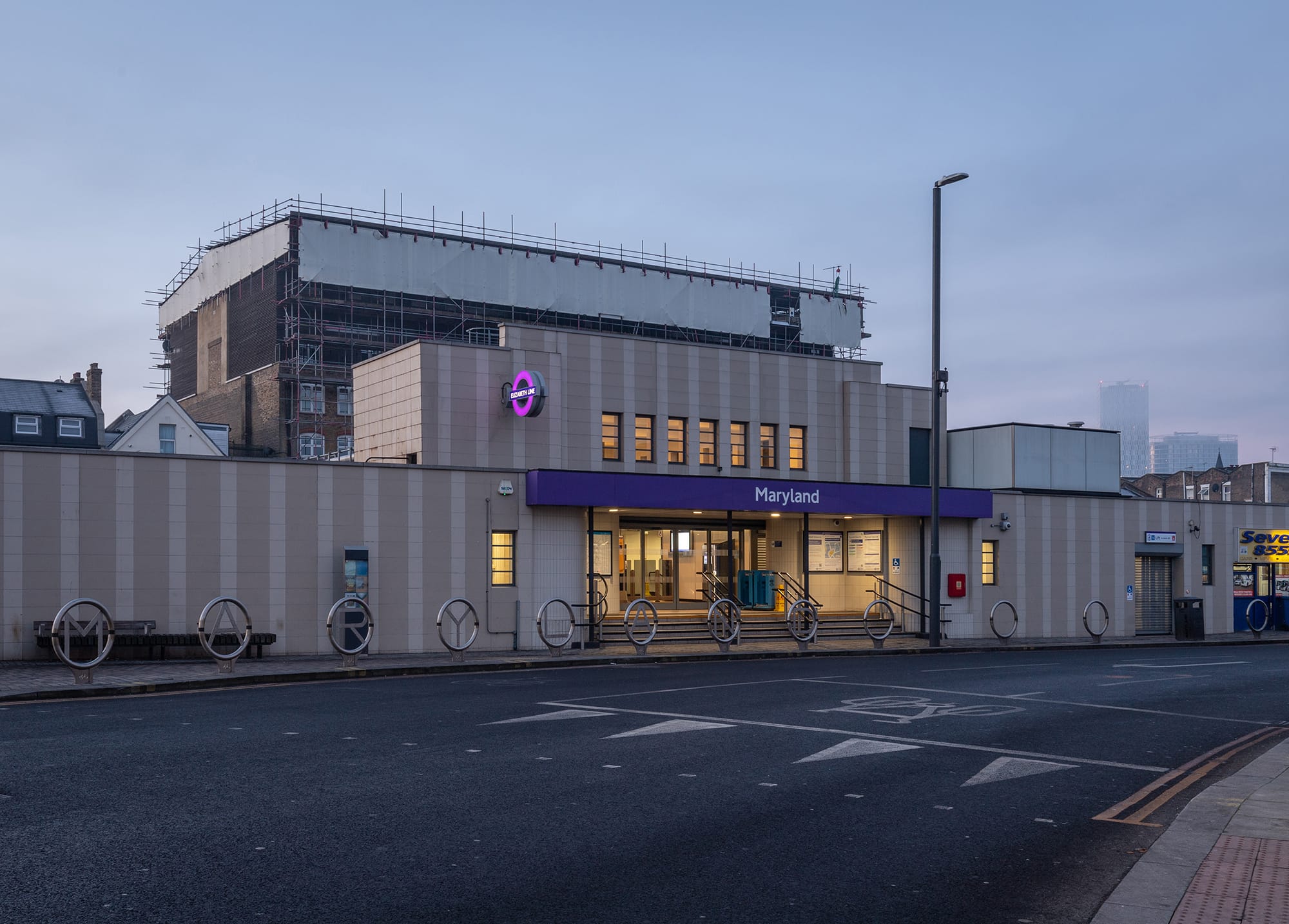
Surviving at Maryland is the LNER’s rebuilt station, designed before the Second World War but not completed until 1949, and recently spruced up following its transfer to the Elizabeth line. Few other LNER Art Deco stations survive in London, but if you know what to look for, the Streamline Moderne platform buildings at Stratford can still be identified.
The LMS built a wonderful Art Deco station at Wembley Central in 1935, with the station’s twin entrances in towers flanking a parade of shops. It was unfortunately demolished in 2008, its replacement an anonymous block of flats with an apologetic station entrance on the ground floor. A surviving LMS retail development over the tracks at Kilburn High Road gives some sense of what was lost at Wembley. Meanwhile, Euston House, the LMS’s head offices in central London, remains a gem.
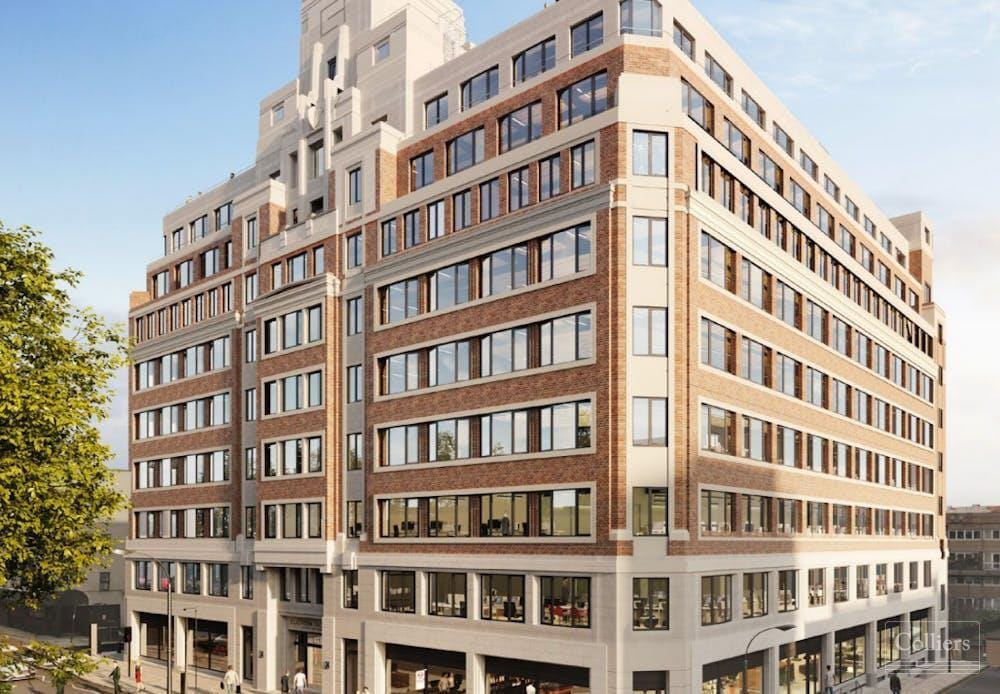
The GWR built the fewest London area mainline inter-war stations, but made up for it at Paddington. Culverhouse’s work there included a dramatic office on the north-east side of the station completed in 1934, with Art Deco embellishments and giant lettering giving the station’s name on the attic floor. He also oversaw refurbishment of the Great Western Royal Hotel at the station, which retains a splendid terrazzo GWR monogram in the driveway outside the main entrance. He also designed nearby Enterprise House and 4-18 Bishop’s Bridge Road, two large buildings originally containing offices, staff accommodation, and parcels handling facilities.
The Second World War and beyond
The Big Four had short lives, just 25 years from their creation in 1923 to their nationalisation and absorption into British Railways in 1948. In that time they utterly transformed the design evolution of mainline railway stations, moving from the traditional forms of the pre-Grouping era toward the modern forms that would dominate the post-war period.
The Big Four had plans for further station projects which were interrupted by the Second World War. The LMS wanted to rebuild London Euston as a vast Modernist terminal, on the scale of an American railroad union station, but the war put the final nail in the coffin of a scheme which was already suffering budgetary problems.
Artist’s impressions exist of an LNER plan to rebuild Finsbury Park in a style similar to Maryland, but sadly the project was never started. The post-war abandonment of the Underground’s Northern Heights project, which would have been routed via Finsbury Park, presumably explains why the idea was not revisited.
A few pre-war station projects in advanced stages of development were completed during the Second World War. Stoneleigh’s remarkable (if not exactly beautiful) concrete footbridge-cum-station was completed in 1940. Otherwise, ‘austerity’ stations were the order of the day like those at Longcross (which survives) or Upper Halliford (since lost). Cheap and quick to construct, they were never meant to make an architectural statement.
After the war, the Big Four were mostly pre-occupied with repairing war damage across their networks. Some work on stations did progress though. The GWR designed new stations for the Central line’s west London extension. The LMS experimented with a series of “Unit” stations, two of which were built in London. The prefabrication construction method of the Unit stations was timely, its economical use of materials an appropriate response to post-war shortages. The concepts behind the Unit structures helped inform British Railways’ later ideas for standardised, prefabricated, and kit-of-parts buildings for smaller stations.
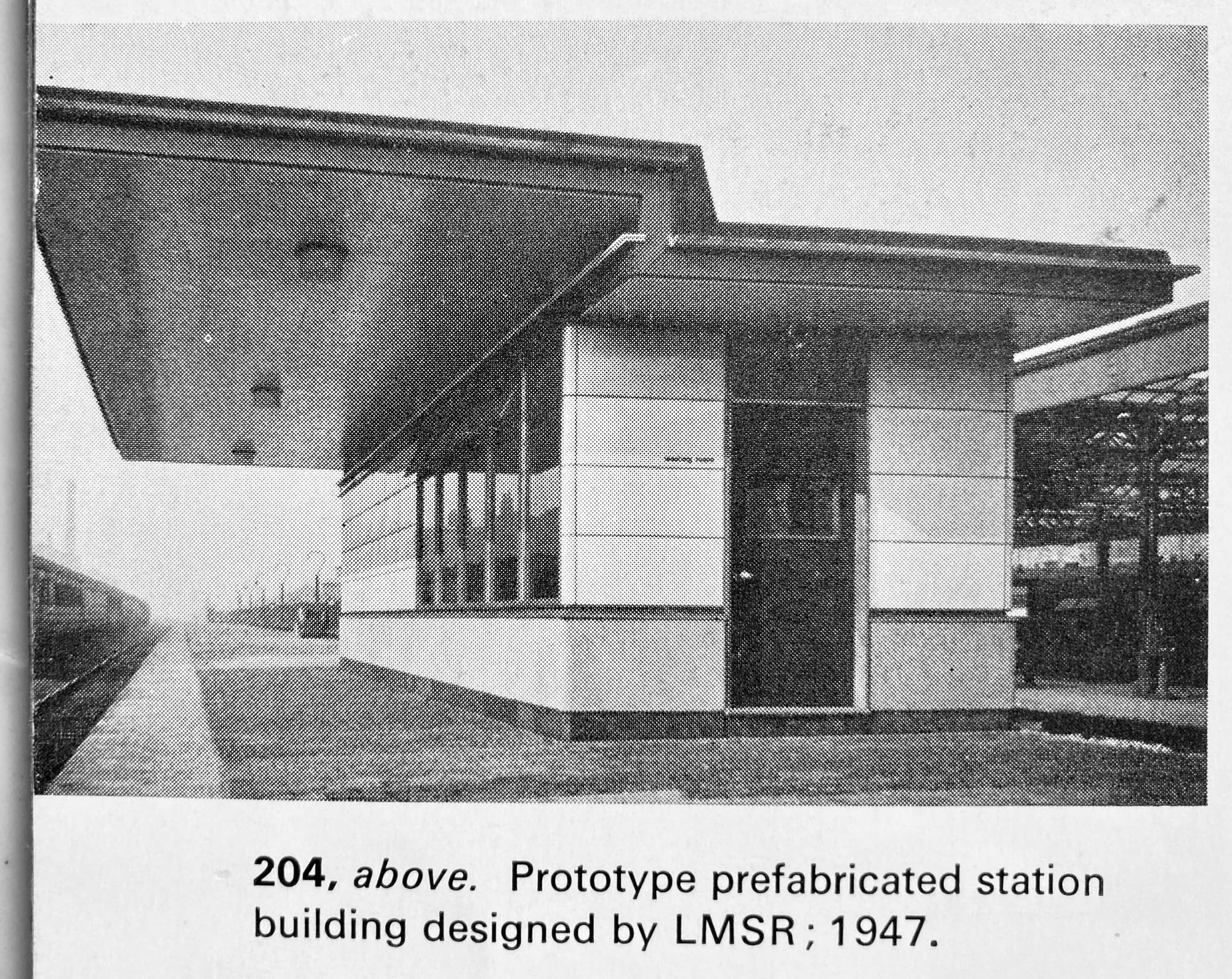
Indeed, the evolution of architecture to a more mimimalist, no ornament style is clear in the above photo of a Unit station, presaging the Mid-Century Modernist architecture style starting in the 1950s.
The LNER opened a new station entrance building at Stratford in 1946, and continued work on the reconstruction of Maryland. Today, we might be grateful that another of the LNER’s post-war plans – to rebuild King’s Cross in the style of an Art Deco factory – never progressed further than model stage.
The Southern built no new stations at all between 1945 and the end of 1947, though it was working on designs for its gigantic Ocean Terminal at Southampton Docks. Completed in 1950 it clearly drew inspiration from pre-war design trends, and with its Chisarc canopies was very clearly a Southern-designed station.
Meanwhile, plans to extend the Chessington branch line towards Leatherhead via two new stations (presumably of identical or similar design to the four already built) were abandoned, being located in the new London Green Belt and therefore with no prospect of housing development to provide passengers.
Spread thin and wide
The stations mentioned in this article are only a small selection of the Big Four’s estate. The process of finding them for ‘Trackside Transformation’, photographing the survivors, and identifying the lost, has helped Philip and me understand some of the reasons they remain largely under the radar.
The geographic spread of the Big Four’s stations provides the first reason they are less well known than those of the Underground. The Big Four had huge operational areas and were building stations across the country (the combined estate stretches from Redruth in Cornwall to Glasgow). London was just one part of their empires, and they simply built fewer stations in and around London than the Underground did.
The Underground’s stations were often clustered along new extensions, giving rise to geographically tight-knit collections of buildings with local street appeal that remains very appreciable to this day. In contrast, the Big Four’s stations tended to be dotted sparsely around London at existing locations where rebuilds were necessary.
Small is beautiful… but doesn’t make for a memorable station
Many Big Four stations were domestic in both scale and appearance, built at locations which needed a station building, but where predicted footfall dictated something smaller than the typical Tube station sized building of the period.
Around London, survivors of this type of station include the LNER’s Brookman’s Park (see earlier), the Southern’s Carshalton Beeches (1925) and Sunnymeads (1927), and the GWR’s North Acton (1923). Although now an Underground station on the Central line, North Acton was originally built by the GWR in the cottage-like red brick style which characterised the GWR’s smaller stations before the Grouping, and continued to be used by Culverhouse after 1923.
This is another reason the mainline stations have been overlooked; some of their stations are simply less noticeable, being smaller in the first place, with less opportunity and budget for signature architecture, and therefore more easily overlooked.
Dignified… but lacking the drama
Early stations by the Big Four tended to be in the Neo-classical style (sometimes called Classical Revival), which was a natural evolution of pre-First World War mainline railway architecture. An example of this approach in London is the Southern’s splendid, Grade II-listed Bromley North of 1925. Feeling slightly understaffed and forlorn today, it is nevertheless an extremely dignified small building, in a style reminiscent of many banks, post offices, and fire stations of the time.
Although not exactly Art Deco pin-ups like Holden’s Tube stations, it is worth remembering that the Underground itself built a number of Neo-classical stations in the inter-war years. Mainline Neo-classical stations of this period can be thought of as equivalents to Stanley Heaps’ pavilions on the 1924 Northern line extension to Edgware, and Charles Clark’s Metropolitan Railway stations of the early 1920s.
The difference between the Underground and the mainline railway is that the Big Four continued producing Neo-classical stations (alongside Moderne stations) long after the Underground ceased to do so. The LNER’s Romford, Harold Wood, Brentwood, and Shenfield stations (the latter now lost) were built in Neo-classical style between 1931 and 1935.
This provides another reason the Big Four’s inter-war stations are less famous than those of the Underground: a number are simply less eye-catching than the Underground’s Art Deco stations. In addition, the mainline Neo-classical stations are not immediately obvious as being inter-war stations in quite the same way.
Going Underground
Many of the Big Four’s station rebuilding projects in London are now much better known as Underground stations and their mainline origins generally go unrecognised. Some were deliberately undertaken with the intention of a swift transfer to Underground ownership/operation as part of the New Works programme and are really creatures of London Underground, rather than their mainline railway company owners. The LNER’s Loughton station rebuild (1940) is an example, as are the GWR’s Brian Lewis-designed rebuilds of its stations on the Central line’s western extension which were completed after the Second World War – apart from North Acton which for some reason was never rebuilt, despite designs being drawn up.
At other locations – for instance East Finchley (1942) – the Underground used its own architects to design the station rebuild. But East Finchley was originally an LNER station and the LNER’s involvement can still be perceived. In the booking hall’s windows, above the Underground roundels, the glazing bars form empty pointed ovals; they once housed LNER logos. London Reconnections will be publishing a pictorial on East Finchley Underground station shortly.
Other Big Four stations transferred much later though, like the LMS’s stations between Upney and Upminster (built between 1932 and 1935) which were operated by British Railways from 1948 until 1969. South Kenton (1933) transferred to London Underground as late as 2007, having been a mainline station until then, despite its visual similarities with contemporary Underground stations.
Built by… Anonymous
Architecture was considered by the Boards of the Big Four to be little other than a subsidiary function of engineering – the architect’s departments were entirely subordinate to the chief civil engineers. The Big Four’s general managers were less interested in publicly promoting their station architecture and the architects less responsible than Pick was in London.
In contrast to Pick’s championing of the architects he commissioned, the names of the Big Four architects were rarely mentioned when new or rebuilt stations were opened, so their names are not nearly so widely known today. The Big Four’s architects instead worked almost anonymously for their respective companies, with the firm itself taking overall corporate credit.
With less corporate enthusiasm behind it in the first place, the architecture of mainline stations from the Grouping era never achieved the same profile as that on the Underground network.
The battle to survive
When British Railways took control of the railway network in 1948, it inherited the estate of stations built and rebuilt during the Grouping era. Those stations arrived, however, with less institutional appreciation of their architectural importance than was already being afforded to the London Underground stations of the same period.
With lesser corporate interest in its estate of Grouping-era stations, the estate suffered a much greater degree of loss than that of the inter-war Tube stations. Of some 110 Underground stations built or rebuilt from 1923-47, 90-odd (or 81%) survive. The Big Four built or rebuilt some 280 stations, but only 170 (or 61%) survive, some only partially and many outside London. The 90 Big Four surviving stations around London are spread over a much wider area than those of the Underground, contributing to their paltry recognition. There have also been some notable losses in the London area including the Southern’s Modernist station buildings at Coombe Road, Epsom, and Tinsley Green for Gatwick Airport, and the LNER’s entrance building at Stratford.
Condition critical
Buildings that survived British Rail ownership passed to Railtrack when the railway was re-privatised from 1994, before transferring to Network Rail in 2002. Under the two-tier management model of the privatised era, most were run and maintained on a day-to-day basis by franchised train operators on short-term contracts. Network Rail currently has the long term interest in most station buildings and any heritage features they might retain, but has no day-to-day responsibility for them. The train operators have responsibility for maintaining the stations but no long-term interest in them or in the preservation of any original design features. Indeed, franchised operators have arguably been inadvertently incentivised to remove original heritage features which might require costly repairs, replacing them with cheaper modern equivalents. The condition of many Grouping-era stations has deteriorated during the privatisation era, although admittedly the decline generally began under British Rail.
Even when Grouping-era stations have been recognised as architecturally significant, building a business case to invest in repairs and restoration of heritage features to show these stations off in anything approaching their original condition has often proved difficult, particularly for privatisation-era train operators on short-term franchises.
Commercial imperatives placed on the railway by the government to maximise returns mean that commercial developments at stations continue to threaten the entire existence of some examples. Often, for every successful restoration project at one Grouping-era station, another finds itself facing the bulldozers.
Along with Wimbledon station itself, Wimbledon Chase was one of the earliest Modernist stations ever to be built by a mainline railway company, in 1929. Constructed on the Southern’s then-new Wimbledon-Sutton line, it has a unique design with a wide concave frontage extending upwards into a parapet, finished with glazed tiling. Scallop detailing separates the station entrance from the retail units which flank it. Originally, these units had beautiful Art Deco doors, but they have been long since lost.
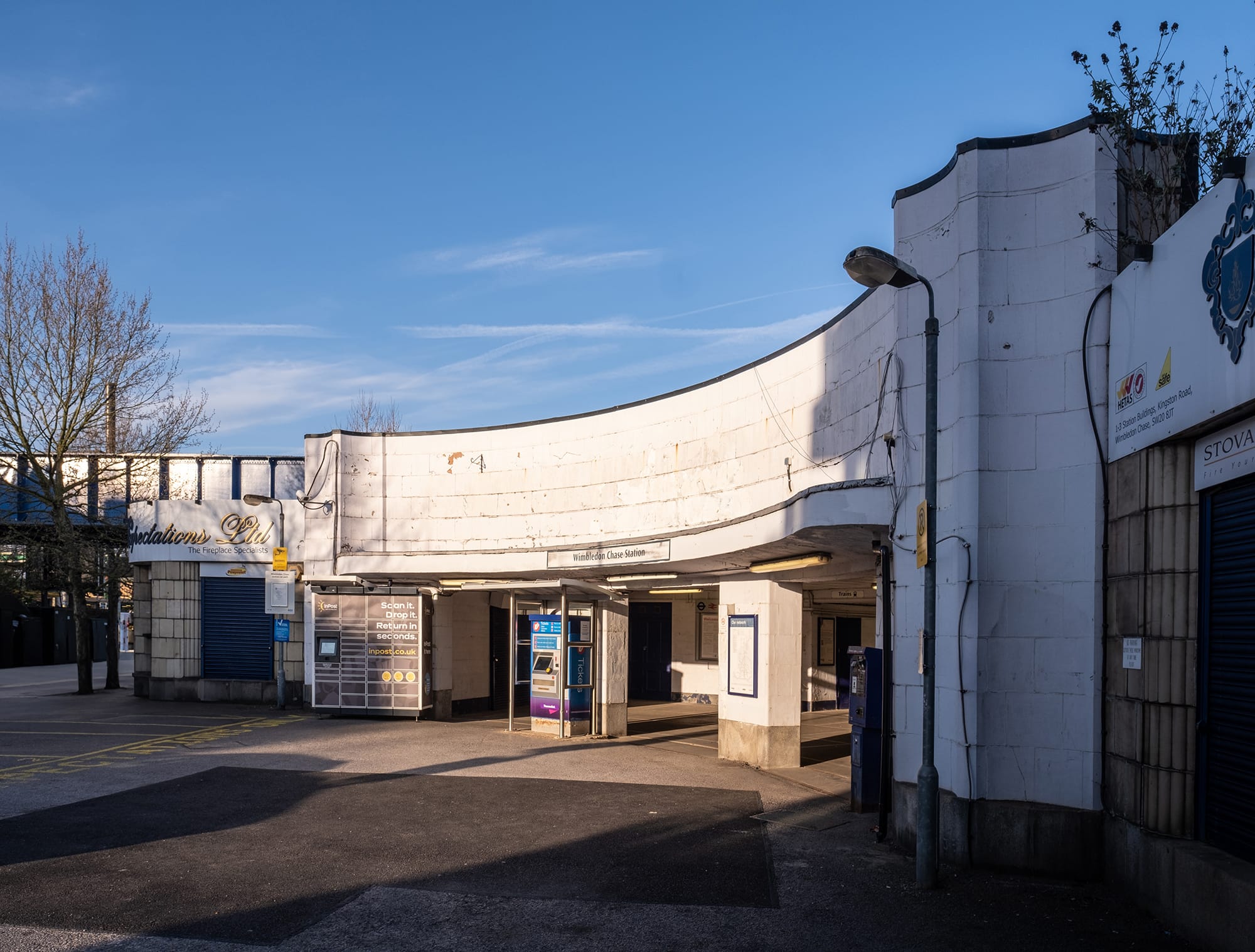
Unstaffed for decades, Wimbledon Chase’s pioneering role in railway design seems to have been forgotten by the rail industry. Its skylights have been covered over, making the inside darker than it needs to be. Externally, tile work has been unnecessarily painted over rather than simply cleaned, and the paintwork itself has then been allowed to deteriorate and peel off. Vegetation has taken root on the building.
Recently, plans have been announced to demolish the station building completely and replace it with a block of flats incorporating a smaller entrance to the station. The architects say that the design of the flats takes inspiration from the station, but it will be no substitute for the original.
The treatment – over decades – of this pioneering piece of railway Modernism by its owners and operators has been extraordinary, and it is one more example of why mainline railway Modernism is less well known than London Underground Modernism. It is impossible to imagine London Underground allowing a demolition scheme like this today at one of its early Charles Holden stations.
Looking to the future
Further changes to the responsibilities for upkeep and maintenance of Britain’s mainline stations are underway, with the return of most of the passenger railway to public operation under Great British Railways. How this will impact the management, preservation, or restoration of stations from the Grouping era is, as yet, unclear.
But in the meantime, given that mainline stations from the inter-war era have a nasty habit of disappearing on an alarmingly frequent basis, Philip and I hope this article encourages you to seek out some of Greater London’s lesser known Art Deco and Streamline Moderne railway stations.
—
‘Trackside Transformation: The Evolution of British Mainline Stations 1923-1947’, by Daniel Wright and Philip Butler, is published by Art Deco Magpie Publishing, or can be ordered from any good bookshop.