
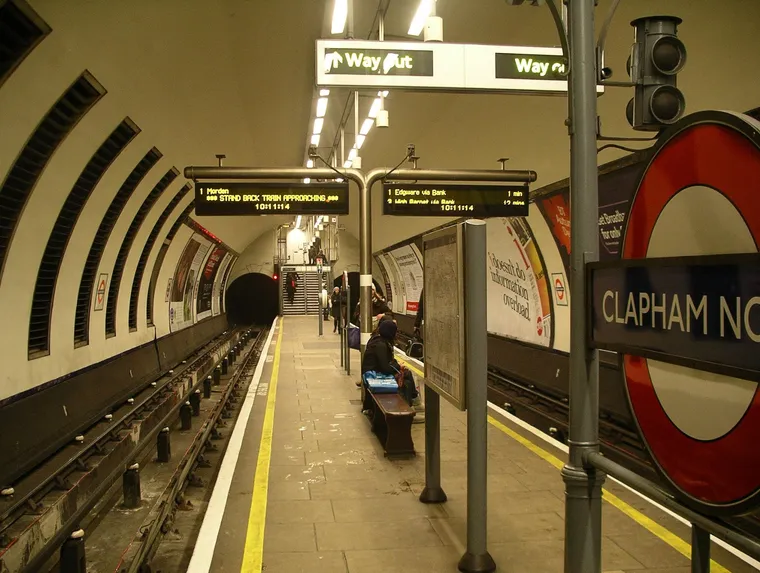
Sometimes a simple question can lead into a tangle of historical research when it is discovered that there appears to be no documented explanation for something. This is especially the case when the question seems to be so simple that one cannot understand why it has not been asked before. Such is the case with Clapham North…
The station platforms are located in a single tunnel, 30 feet in diameter, with a narrow island platform and tracks either side. The only other station with this configuration nowadays is Clapham Common, one stop to the south. Both stations are regularly mentioned for the ‘scary’ platforms and it is understandable that during rush hour or incidents causing overcrowding that such a platform will alarm a fair number of people.
Other Tube Stations that had Island Platforms
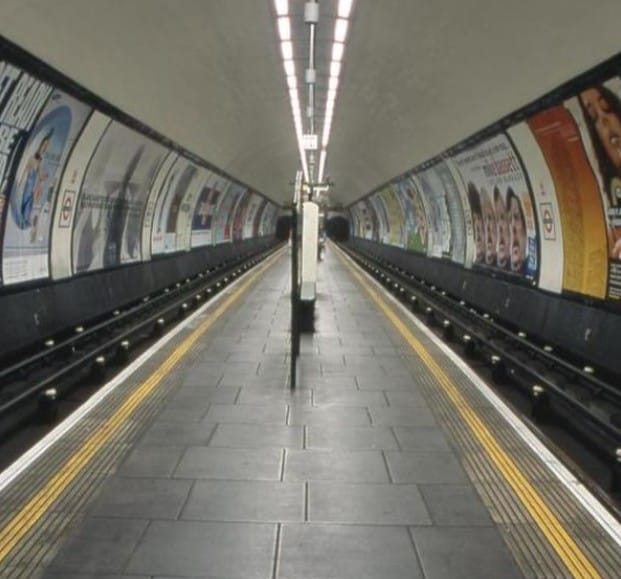
Other stations were built with a similar platform layout to Clapham North and Clapham Common. All were on the City & South London Railway (C&SLR), and all had one thing in common: they were termini.
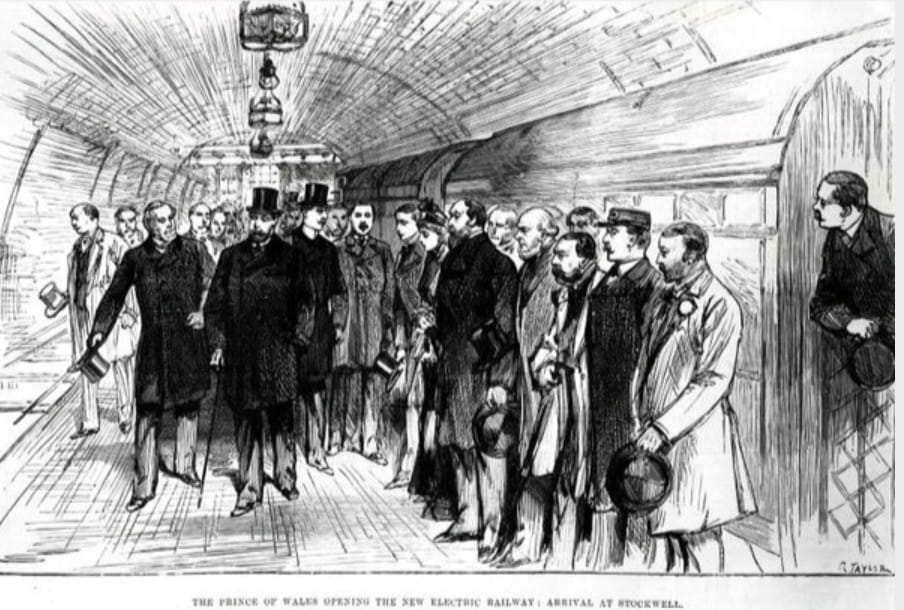
The first was at Stockwell. This was the southern terminus of the railway from 1890 until 1900, and it had an island platform to allow for two trains to use it. The platform was accessed from a passageway on the western side that passed behind the end of the western track. This station closed in 1923 when the C&SLR was rebuilt and its tunnels enlarged, and new platforms were built immediately to the south, in separate tunnels.
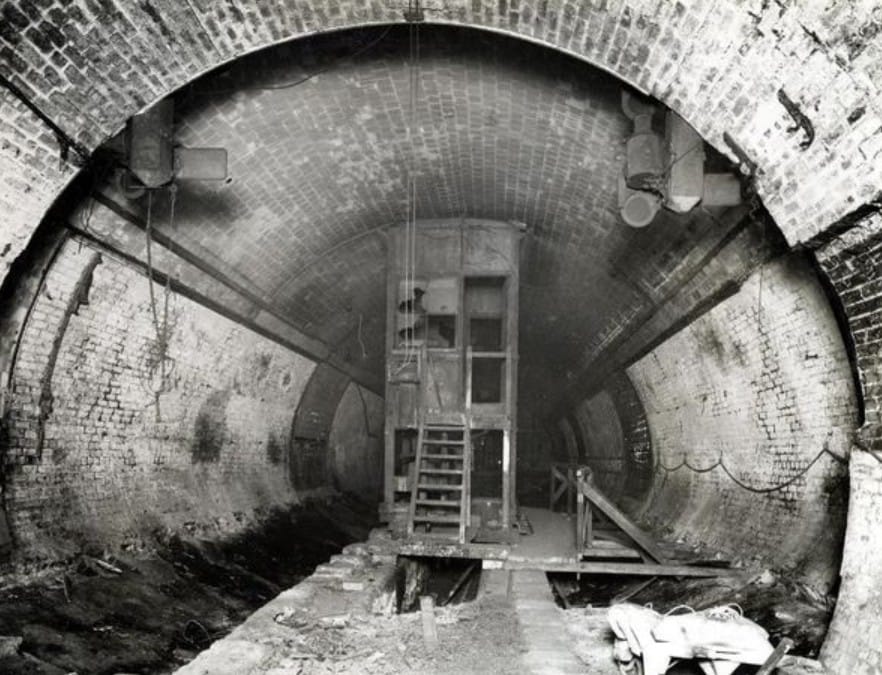
At the other end of the original railway, King William Street also had a single large tunnel. However, this opened with a single track flanked by two platforms. It was built earlier than Stockwell, when the C&SLR still intended to use cable haulage of its trains. A single track made sense; an incoming train would have released its gripper from the ‘northbound’ cable as it finished its journey. To depart southbound, the driver would have attached the gripper to the ‘southbound’ cable and departed. Having two platforms would have considerably complicated the cable system. That said, with electric traction in use, a single track was a great constraint on the train service, and in 1895 the company rebuilt the station with two tracks and a single island platform. The need to fit the pointwork in at the southern end of the station made it very tight for trains, and the sharp curve and gradient on the approach made it impossible to extend the tunnel westward. To the east the staircase would have needed rebuilding, and the tunnel would have been getting even closer to the Monument had it been lengthened.
It should be noted here that both King William Street and Stockwell stations had slightly smaller tunnels, 26 ft wide and 20 ft high. There was insufficient confidence that cast iron would support the larger tunnels required for any of the platforms on the line, and so they were built by breaking out the lining of the running tunnels little by little, mining out the clay above and around, and erecting a thick brickwork lining. One advantage of this was that the tunnel invert (the section beneath the track) was excavated less, saving on effort and giving the tunnels a flattened cross section. The big disadvantage was that it caused greater subsidence at the surface, with damage occurring to buildings above all the stations along the line. In effect the company had two types of station configuration: a large tunnel with two tracks and an island platform for termini, and a pair of tunnels with a single platform in each for intermediate stations.
In 1900, two extensions to the C&SLR opened. In February the line was extended northwards to Moorgate, via stations at London Bridge and Bank. The new route diverged from the old just north of Borough station, abandoning the tunnels to King William Street. These three new stations all had platforms in separate tunnels each with a diameter of 21 ft 2½ inches. These were excavated using larger shields and lined with cast iron segments.
Moorgate was always intended to be a temporary terminus, as it was authorized as part of what the C&SLR described as their Islington extension, authorized in 1893 and described shortly. A crossover tunnel was provided south of the platforms to allow trains to use both platforms to reverse, with a signal cabin positioned on girders within the tunnel and above the tracks. This made the construction here more complex, as a pair of short running tunnels were needed between the platform tunnels and the crossover.
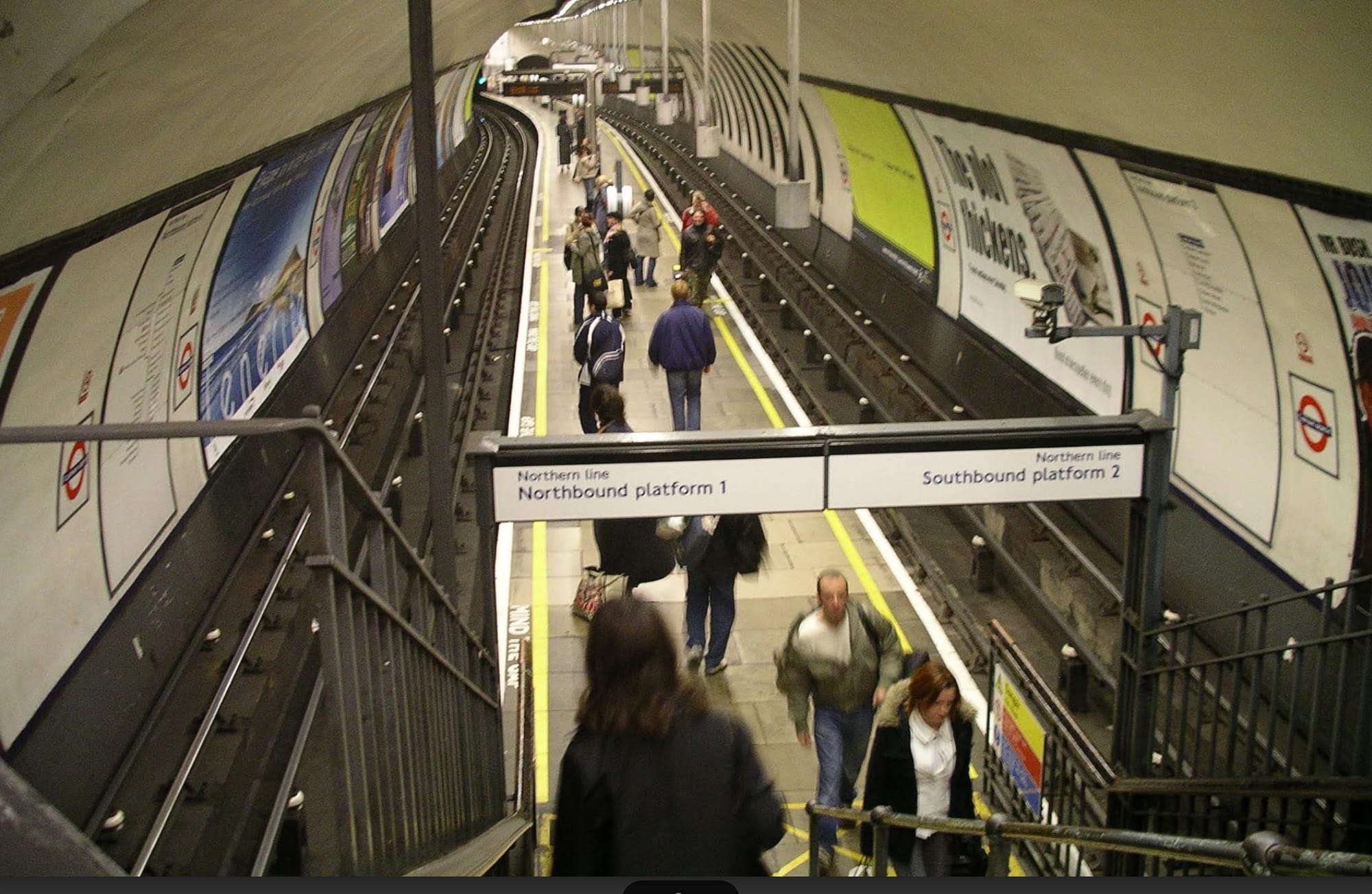
The second extension of 1900 was to Clapham Common, with one intermediate station at Clapham Road (since renamed Clapham North). This was to be the southern terminus of the line, and no further extensions south were proposed during the independent existence of the C&SLR. This could have been because of the opposition of the Southern Railway to any other railway threatening to serve what it saw as ‘its’ territory south of the Thames. As noted previously, both stations were built with a single platform tunnel of 30 ft diameter. Unlike the earlier larger tunnels, these were also excavated from within a tunnelling shield, which at the time was the largest in the world. They were lined with cast iron segments, rather than the brickwork of the earlier station tunnels, this reducing the subsidence at the surface. Both stations contained a single island platform, 14 ft wide, flanked by the northbound and southbound tracks.
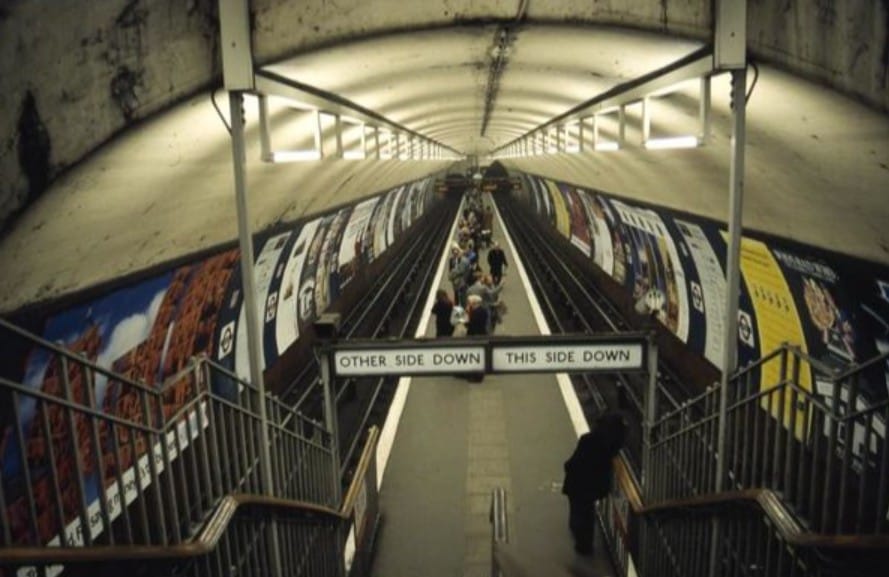
The Islington extension was completed in 1901, with three new stations opening at Old Street, City Road, and Angel. The latter station used a 30 ft diameter tunnel for its island platform too, although oddly this was not the original plan. The C&SLR Act of 1900 made a last-minute change to the extension, allowing the larger single tunnel. The C&SLR had been promoting an onward extension to Euston, under the name of the Islington & Euston Railway, and so might not have intended for Angel to be a terminus for long. The Metropolitan Railway objected strongly to the route, fearing the competition, and the Bill was rejected in 1901. It could be that the C&SLR could see that Angel would remain a terminus for rather longer than originally envisaged, and their 1900 Bill gave them the ability to build it in their standard configuration for a terminus.
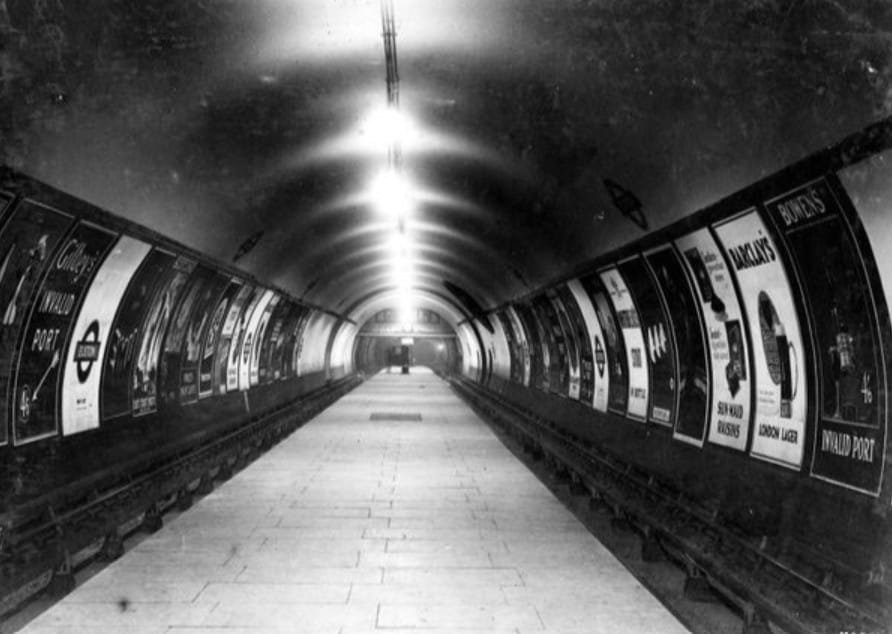
The final extension of the C&SLR opened in 1907, and carried the line on via King’s Cross to Euston. Again, a single 30-ft tunnel containing an island platform was provided for the terminus.
Not Found Elsewhere
No other tube railway in London used this type of platform tunnel, and so the six stations shown in bold above were the only ones of their type. By 1992 only the two at Clapham remained. King William Street had closed in 1900, and Stockwell was rebuilt in the 1920s. Euston was provided with a new northbound platform as part of the Victoria line construction work in the 1960s, and a similar platform diversion was constructed for Angel in 1992, allowing the station to be rebuilt with escalators as well.
So the question remains:
Why did the C&SLR build Clapham North with platforms in the same style that they used for their termini, rather than the separate platform tunnels used at every other intermediate station?
There appears to be no documentary evidence for this choice, and hence any explanation can only be speculative. Two possibilities come to mind:
Firstly, to save money, a single tunnel shield of 30 feet diameter was made for the excavation of both stations’ tunnels, rather than having a large shield for the terminus and the cost of making a smaller shield for just two platform tunnels at Clapham North. It would seem likely that the extension was built from north to south, extending the siding tunnels south of Stockwell, and so the large tunnel at Clapham North was built as the extension proceeded, with the larger tunnelling shield being dismantled and either moved through the tunnel to the site of Clapham Common once this was reached, or was removed to the surface and then taken down the work shaft at Clapham Common to excavate the platforms there. It would also mean only casting one size of tunnel segment for the station tunnels, rather than two, which might have saved money – there would be roughly 30% less cast iron required for the single, larger tunnel.
Secondly, the company was experimenting. Having started out with large tunnels at termini, and separate tunnels at intermediate stations, it took the opportunity to experiment with reversing this approach with a large tunnel at Clapham Road and two separate tunnels at the Moorgate terminus. If this is the explanation, it would appear that they did not view it as a success as the extensions to Angel and Euston reverted to the standard pattern.
These two suggestions are not mutually exclusive either. It could be that the contractor on one of the two extensions proposed saving money by only using one type of shield for all the platforms, and the company realized that this gave them the opportunity to experiment.
Build Two Replacement Tunnels?
The two platforms have remained in use for almost 126 years now. Questions have been raised, especially in recent years, about whether they should be replaced. The problem is one of cost and inconvenience. The solution would be similar to that at Angel, with a new platform tunnel built alongside the existing large tunnel at each station, the track in one direction diverted to the new platform, and the corresponding trackbed in the old tunnel being infilled to form a single wide platform. Experience from Angel, and also the recent enlargement work at Bank, suggests that the station would need to be closed in at last one direction for several months. The platform access tunnels would also need some reconfiguration – and would probably mean that any new platforms would need to be on the northbound side of both stations.
Or One Long Replacement Tunnel?
Given the complexity of making the junction tunnels with the original running tunnels, and the fact that the stations are adjacent, it is possible that a cheaper solution would be to build a new northbound line from south of Clapham Common to north of Clapham North and abandon the original northbound tunnel between the two stations.
Or Do Nothing?
Regardless of how any remedial work would actually be implemented, it is likely to cost well over £100 million, and would not be affordable in the current financial climate.
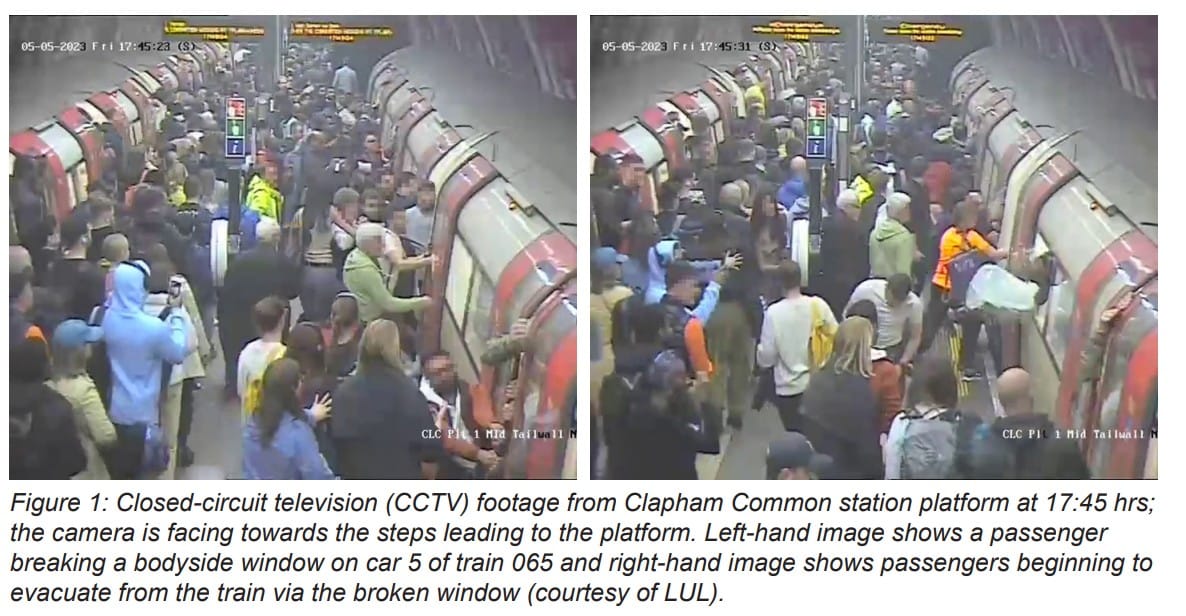
Following a passenger evacuation incident at Clapham Common in 2023 (RAIB report [PDF]), the following response was given to a question asked at the London Mayor’s Question Time:
Such works would require closure of the stations for a considerable period of time which would be disproportionate to the benefits. There would also be significant costs. At this stage, TfL does not have any proposals to undertake such works and considers that it can manage the risk to customers effectively with current measures. TfL will continue to keep this under review.
Acknowledgements
Thanks to Pedantic of Purley for asking the original question, and to Printz Holman for discussing the possible explanations and suggesting the possibility of experimentation.