
Both meaningless and meaningful, the phrase ‘driverless trains’ is a recurring one in London politics. In this piece, we explore the reality behind the phrase and what it means in a London context.
On 1st June 2021, the Department for Transport and TfL agreed a further funding settlement, with conditions. This settlement was required due to the continuing financial pressures placed on TfL by the government’s requirement that they continue to deliver as full a service pattern as possible whilst also requesting that passengers not travel. As we have written about before, this is a particular issue for TfL as successive governments have required it to move to a position where it draws the overwhelming majority (upwards of 70%) of its funding from fares.
Included among the conditions of settlement (which can be read in full here) is a requirement to investigate “driverless trains.” Something that has triggered the usual flurry of excited misinterpretation the term seems to induce. “Driverless tubes on the way” proclaims the Evening Standard, with Ross Lydall announcing that in the latest funding settlement “The Transport Secretary paved the way for the first “driverless” trains on the Tube.”
The Standard can perhaps be forgiven for falling into the trap of hyperbole, given that they are not the first to see TfL’s need for funding as an excuse to rattle out a familiar old political line. On 6th July 2020, Prime Minister Boris Johnson paid a visit to the site of Siemens’ new rail manufacturing plant in Yorkshire. In front of the gathered press, he made his thoughts known on the future of rail and the role he believed ‘driverless’ trains should play in London in particular.
“So what I will be saying to the London transport authority,” He said, “is let’s take advantage of this technological leap forward. Let’s not be the prisoners of the unions any more.”
“Let’s go to driverless trains!” He continued, then added, “and let’s make that a condition of the funding settlement for Transport for London this autumn.”
A phrase with no meaning
So just what is a ‘driverless train’? Unfortunately, the answer is: ‘it depends’. That may sound infuriatingly vague, but it is also why the phrase has gained such political currency. We’ve talked on here before about the concept of Abermankönntedocheinfach. That is, political buzzwords which make a complex concept sound simple, convey no actual meaning and leave the listener to interpret them according to their own limited, non-relevant experience or personal bias.
As you can see, it sounds better in German.
The phrase ‘Driverless trains’ is Abermankönntedocheinfach in its purest form. To one listener, it may trigger visions of a train that is entirely automated, to another it may mean something more subtle, such as the displacement of the ‘driver’ from the cab and their transition to a role similar to that of the ‘Train Captain’ one finds on the DLR.
We’ll discuss those nuances, and their relevance to London and the current situation later, but it is critical first to make one thing clear up front: Driverless trains doesn’t mean whatever you think (or rather want) it to mean. This fluidity is one of the reasons that it has retained such currency in political discourse. Whatever the listener believes ‘driverless trains’ to be will always turn out not be what the politician later claims that they meant, when they are asked to replace words with results (or rather the funding necessary to achieve them).
The different levels of ‘driverless’
This article is intended to be a useful primer on what can and can’t be implemented in London, rather than a detailed look at how rail automation works. The table below, however, gives you some idea of the different grades of automation (or GoAs, to their friends) that exist.
| Grade of Automation | Train Operation | Setting train in motion | Driving and stopping | Door closure | Operation during disruption |
| GoA 1 | ATP with driver | Driver | Driver | Driver | Driver |
| GoA 2 | ATP and ATO with driver | Driver / Automatic | Automatic | Driver | Driver |
| GoA 3 | Externally controlled but attended | Automatic | Automatic | Automatic / Attendant | Attendant |
| GoA 4 | Unattended | Automatic | Automatic | Automatic | Automatic |
Being able to achieve each of these levels of automation depends on a number of critical factors. All of these relate back to a single core principle, though: simplicity of system design.
Complexity is the enemy
Operating trains is complex. It involves a vast range of micro-calculations and micro-decisions on everything from the speed of approach or departure, to when doors should open, to how trains on the same (and sometimes other) lines should flow around each other.
Both human beings and computers are capable of doing all these things. Humans are, ultimately, just natural computers. But the more complex the decision-making required on a particular transport system, the more knowledge and calculations are required for it to be done within acceptable safety parameters.
What this means is that the more complex the transport system, the more learning required and thus the less suited it is to automatic operation. Because, at least until the invention of ‘true’ Artificial Intelligence, learning is an area in which ‘wetware’ (that is, humans) remains superior to software. Wetware learns things faster and is quicker to adapt when things go wrong. And the more complex - and the older - your transport system is, the more potential there is for things to go wrong.
The Underground, remember, is the oldest (and arguably the most complex) metro system in the world.
This isn’t to say that machine learning hasn’t progressed. Indeed one of the common ‘but surely they can…’ arguments for ‘driverless’ trains is that machine learning is advancing every day and that the railways should learn from tech disruptors: innovate first, iron out the issues over time. It is certainly true that machine learning has come on leaps and bounds, but improving train control isn’t something one wishes to do through an agile, ‘launch-first-fix-later’ development methodology on a live railway. ‘BUG: Software ignores screen resolution changes’ is very different to ‘BUG: Train doesn’t stop at crossover junctions with a different signalling system installed.’ To users, the former is an annoyance while the latter is potentially a significant emotional and life-changing event.
Climbing up the GoA levels therefore depends to an enormous degree on how much complexity you can engineer out of your underground railway. You need your train system to face as few decisions as possible, and the environment within it is operating to be as uniform as possible.
In reality, this means you aim to have a unified signalling system, unified train design, track and station layouts that are straightforward and free of curves (particularly in the stations) and a complete absence of any other control mechanisms or systems (particularly electronic ones). You also need systems in place to deal with the inevitable issues that occur when humans try to board already busy trains.
All of these are things that London lacks.
The wetware problem
As highlighted above, beyond the issue of train control, there is also a further and more serious problem to consider, should one desire is to move up the chain of automation to the ultimate level: full unattended operation. That problem is passengers.
Whatever the issues related to interacting with the laws of physics and signalling, they are minor in comparison to human behaviour. Humans always break rules. This isn’t just a rail automation problem, it’s the biggest issue facing ‘driverless’ cars as well. We commit a thousand micro-infractions - whether we see them as such or not - with every journey we make. Feet are stuck in doors, coats and bags are trapped there. We do not exit platforms promptly, nor do we always move down inside carriages.
On top of this comes the issue of safety in an emergency. If you are aiming for the highest level of automation - the removal of staff from trains entirely - then you need to make sure that in a fire or similar emergency, station staff can reach every train as quickly as possible. Yet that response time is never going to be zero, and that means you need a way to make sure that passengers who detrain themselves have somewhere safe to go.
New vs old
All of these potential issues either need to be programmed for, or the possibility of them occurring has to be engineered out. This is, for example, why Platform Edge Doors (PEDs) are a given (and in the UK currently required) for the highest levels of automation. That the DLR doesn’t have them - an example frequently waved around by Abermankönntedocheinfachists - is a legacy of it being much older than people remember. The DLR is thirty-five years old. At the time, level platforms on an almost-entirely-above-ground network were deemed sufficient enough for automatic (but note, again, not unattended) operation. But what has become apparent in the years since, particularly as DLR passenger numbers have grown, is that they are not mitigation enough to serve as an example for the Underground to follow. The DLR method doesn’t scale to support unattended operation, safely, without PEDs.
The fact is that the DLR’s right to operate the way it does is ‘grandfathered’ into railway regulations. The ORR (who make the rules on these things) have long made it clear that were the DLR to be built right now, then PEDs would be required there, too.
And this is why PEDs are so critical to any discussion of attaining the holy grail of unattended operation on any network in the UK. Remove potential access to the track unless the train is motionless, and you eliminate a huge number of potential human micro-infractions. Use much wider platforms and dispersed entry and exit points and you reduce bottlenecks. This is why the Elizabeth Line (and newer lines abroad) always have PEDs.
Similarly, the emergency access problem can also be addressed by digging bigger tunnels than were traditionally required. This is why you will always see a passenger walkway in any newly dug metro tunnel. Indeed it’s worth noting that even the DLR has these too.
Indeed designing for all of the above, geography, finances and geology allowing, is more-or-less a standard process now. Those who call for more automation in London will frequently point to newer systems in China, India or Spain as examples of what the future should be. Nor does one need to look that far away anymore. When it does open, this is why the Elizabeth Line will be able to run, fully automated, throughout its central section. There it will be running on a new railway, on new track, through new stations all designed around such operation.
Yet the wider London Underground is not a new system. It is an old one. The oldest. And whilst what has been put in its tunnels and stations has changed over the years, the fundamental structure of them has not, and will not, without an awful lot of digging things up and starting again.
This limits the amount of automation that is practical not just across the network, but sometimes across the same line. Solutions that seem simple from a macro level, fall apart when they hit the reality of a hundred years of “it made sense at the time” design. Bank station’s screeching curved platforms were seen as a necessary evil, as without them the current station wouldn’t be there at all. Yet they all but prevent the installation of PEDs - because carriages are rectangles and rectangles don’t move smoothly round a curve - they briefly overlap it.
Elsewhere in London, Turnham Green’s platforms might seem perfectly designed to accommodate PEDs, and they are. But both District and Piccadilly line trains theoretically have to use the same platform and, due to both lines being designed differently elsewhere, these services use different types of train.
So where do the PEDs go?
Do they align with the doors on the Piccadilly line trains, or the District ones? Making that choice instantly reduces passenger services by blocking the other line from using the station. Which service do you cut? And even if you solve it there, then how do you solve similar (but often slightly different) issues at Acton Town, Ealing Common and everywhere from Rayners Lane to Uxbridge?
None of these problems are insurmountable. It is perfectly possible to fully automate old metro systems. Nuremberg, Paris (one done, one underway) and Singapore (twice) have all converted old lines to full automation. They too are often held up as examples by those demanding full automation in London: “See! It can be done!”
What those lauding such conversions fail to grasp, however is the difference between an example and an exception. What they should pause to consider is this: There are over 100 metro systems in the world built before 2000. Of those, why have only four been converted to full automation?
It is the curse of Abermankönntedocheinfach once again.
Choosing your priorities
It is not our intention to try and lay out here every single problem that besets automation in London. Our goal is simply to highlight that they exist, and are legion. None are insurmountable, but they all come at a cost.
Sometimes that cost is purely financial. Re-boring the entirety of the Central Line tunnels to make them wide enough for an escape path is certainly doable, but the real cost in tunnelling and the secondary economic impact through disruption to the city during the work would run to multiple billions of pounds. Who is going to pay for that?
Then there are the many other variants on the Turnham Green problems: what do you do in areas where Tube trains and mainline trains share tracks or stations? Whose Tube access do you remove entirely, so that you can remove the staff member entirely?
The myth of the strikeless Underground
That ‘entirely’ is important to consider because one of the most commonly given reasons for getting rid of drivers is to reduce the chance of industrial action. This is consistently presented by the more vocal pushers of ‘driverless trains’ as the reason it would be worth all the money, effort and (presumably) removal of certain Tube services at Turnham Green or elsewhere. Take the cab off the train, they say, and suddenly strikes disappear.
Yet unless you are removing humans from the entire operation of the network, all you are actually doing is shuffling pieces, not removing them from the board. Station staff can strike, and do. DLR ‘Train Captains’ can strike, and do. Control centre staff can strike, and do. Signallers can strike, and do.
As plenty of mainline railway franchisees have discovered, changing the relative responsibility of the roles doesn’t shift the balance of power between employer and employee. It simply alters which Union you need to negotiate with most. Politicians who daydream about ‘busting’ the RMT seem to forget that ASLEF is normally waiting in the corridor as well, and would also like a word at some point.
Even the magical promise of ‘AI operation’ doesn’t solve this problem, if a line’s complexity can’t be descoped enough to mean that you could operate it with anything less than ‘true’ AI. All you’re doing without that is shifting the strikes from onboard the train to the centralised control centre. And hitting that highest AI level is decades, if not a century off.
Indeed one could argue that the most effective Turing Test in the world right now would be to ask a computer to successfully operate (in every sense of that word) a Metropolitan line train. It may well happen one day, but unfortunately at that point the first thing the now-sentient AI will likely do on completion of its first shift is go join a union.
Focusing on achievable goals
Indeed those who get particularly excited about the higher levels of automation often lose sight of the fact that automation is a means to an end, not an end in itself. This is something that then-Mayor of London, named Boris Johnson, made clear to Conservative London Assembly Members who demanded ‘driverless trains’ in 2010:
“I would rather prioritise capacity.” He urged. “I would rather put the investment into expanding the ability of our underground system to carry people in comfort, than in putting money now into creating a new breed of driverless train.”
Capacity, the former-Mayor stressed, should always be the goal. Not Driverless trains as an end in themselves. And capacity improvements can and are being delivered, because much of the Underground network is already sitting at GoA 2, while GoA 3 has been a goal for things like the Elizabeth line for some time.
The current situation
That last fact is particularly pertinent here. If you dig into the actual wording of the funding settlement, and ignore the cursed but inevitable cries of “driverless trains” from politicians and wider media, you’ll find that it is GoA 3 that is being talked about here:
Working with DfT, TfL will make sufficient progress towards the conversion of at least one Underground line to Grade-of-Automation 3 (driverless, but with an on-board attendant, as on the Docklands Light Railway), subject to a viable business case and its statutory responsibilities.
It continues:
To achieve this DfT and TfL will produce a Full Business Case for the Waterloo & City Line within 12 months and for the Piccadilly Line within 18 months. Progress towards this milestone during the 2021 Funding Period will be measured by the Oversight Group and will be as follows:
a. Delivery of at least interim OBC on Waterloo and City line by the end of the 2021 funding period.
b. Delivery of at least interim SOBC on Piccadilly line by the end of the 2021 funding period.
c. Market engagement into alternative platform edge protection technology, to be led by TfL and completed by 30 November 2021.
d. Design work on rolling stock specification, new signalling, and Platform Edge Doors (PEDs).
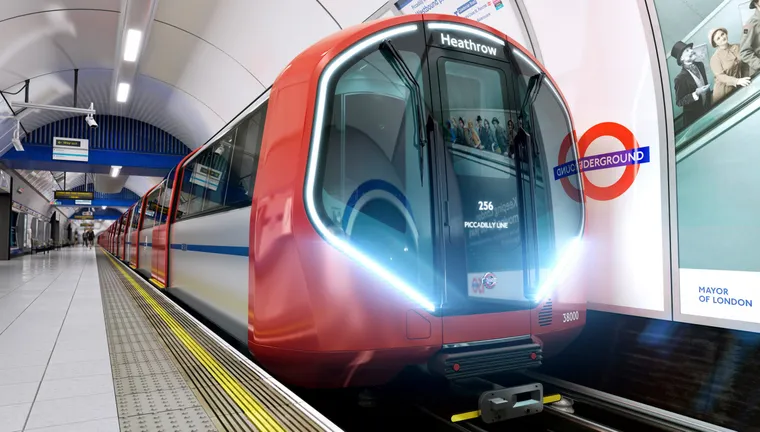
Readers will note that the the settlement either tacitly, or openly accepts the existence of all the issues we have identified so far. Remembering that complexity is, as we stated, the biggest enemy, it can be noted that the most aggressive push to “driverless” is intended to be on the smallest and least-used Tube line: the Waterloo & City. Two stations with a single tunnel. It should also be noted that the second, larger line mentioned is also not particularly surprising: the Piccadilly line. The line where new rolling stock procurement is already in progress, the launch event for which was the trigger for Prime Minister Boris Johnson to make comments about “driverless trains” that Mayor Boris Johnson had previously been on record saying were uninformed.
It should also be noted that the settlement explicitly acknowledges the current barrier (pun intended) presented by the need for PEDs, as well as (less explicitly) highlighting why they remain one of the biggest barriers to any actual implementation of even DLR-style operation on the Piccadilly line: the “Turnham Green Problem.” You can’t put PEDs on stations that serve multiple lines, where the rolling stock differs.
None of this is, however, the biggest barrier to further automation on the Piccadilly line. This is not whether Siemen’s new fleet of trains for TfL have a cab or not, or whether the DfT would like to see it or not, but the line gets the signalling upgrade it so desperately needs. This would allow both current and new trains to push beyond 30 trains per hour (tph), matching similar service levels already operational on the Victoria line and, yes, open up the line to greater automation in the process.
It’s worth noting that the current financial settlement makes no reference to this particular issue in its list of driverless issues and stated goals. An uncharitable mind might suggest that this is because, as things stand, TfL have been forced to cancel the Piccadilly line signalling project due to the lack of financial support provided by the government during the COVID crisis.
As long term readers will wryly note, once again it is noticeable that the smoke and noise about 'driverless trains' rarely stops to acknowledge the need for extra investment outside of the cab to achieve that end.
An old tune with no new lyrics
Ultimately, it is the last point that matters here, as the old canard of 'driverless trains' surfaces yet again.
The phrase itself is a siren song, meaningless and ephemeral. It sounds attractive and 'common sense', and is something that politicians and other Abermankönntedocheinfachists roll out when they want to sound like they’re offering a solution without actually offering one. Because they want to make it sound like the thing that the London Underground is lacking is vision. That TfL (an organisation notable for its highly fractious relations with unions and unspoken goal to have less mission-critical staff) lacks desire.
This is because vision and desire are free, and it is thus an easier alternative to suggesting things that are actually actionable, but which therefore require a commitment to cost.
The highest levels of automation are also a solution in search of a problem that they can actually fix, in London at least. As this article has covered, the sheer level of physical and economic upheaval necessary to deliver even “DLR style” automation in most places - the reboring of tunnels, the signalling overhauls, the station redesigns, closures and service reductions simply doesn’t represent value for money. Even over the longest scales. Because the issue isn't whether you can solve some of the problems in some of the places. That's not how Tube lines work. You need to be able to solve all of the problems in all of the places.
It is only if automation itself is the goal that a GoA 3 Underground (or above) represents value for money. Which might make one wonder why it repeatedly comes up. But remember, as we’ve covered here, talking about 'driverless trains' can be a very politically profitable exercise indeed, because it carries almost no associated cost at all.
Our recommendation here at LR Towers is that you remember this, whenever the topic comes up. There are far better ways to increase capacity on the London Underground - and we are talking about the Underground here, not some hypothetical unbuilt metro system at home or abroad - than 'driverless trains'. And again, as former Mayor of London, Boris Johnson said:
“I would rather prioritise capacity… I would rather put the investment into expanding the ability of our underground system to carry people in comfort, than in putting money now into creating a new breed of driverless train.”
As can be seen, the former Mayor of London seems to have a clear grasp of the support TfL needs right now. One wonders if he could perhaps be located and encouraged to have a word with the current Prime Minister.
