
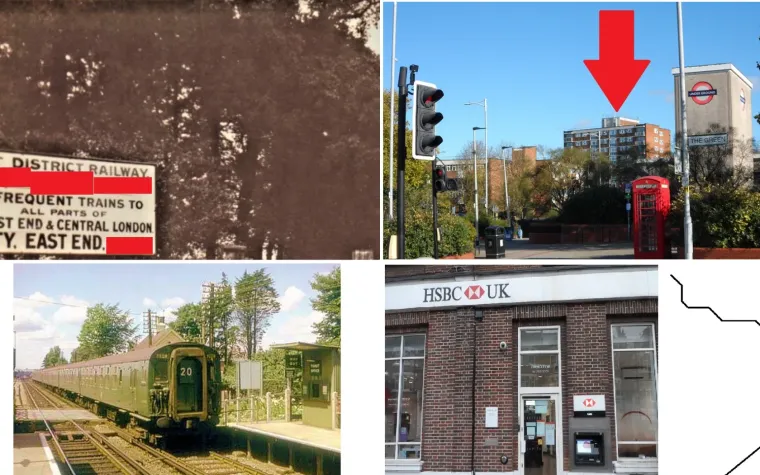
It's that time of year again. Time for the London Reconnections Christmas Quiz.
Unlike the preceding years there is not a single question on the Elizabeth line – or at least there is not a single question overtly about the Elizabeth line. There may be one or more but there might not.
There are probably more picture questions and more questions about related things than in the past in an effort to defeat search engines and AI agents.
As usual you can send in entries to quiz@londonreconnections.com and the deadline is 23.59 on December 31st. We aim to provide the answers at 00.01 on January 1st 2026. As usual, if you have already submitted an entry and you later want to change it, please submit a completely new entry rather than expect us to update the original entry.
The prizes are the same as last year so see last year’s quiz to find out what is on offer. As usual the quiz is mainly for a bit of fun.
Question 1
A question that is probably particularly appropriate for 2025.
I) Where could you have once found a rocket at Clapham?
II) Where is it now?
III) In 2025, where could you have found a quarter-scale model?
Question 2
If things had gone according to plan, in 2025 you could have ridden in or on a ‘bridge car’ in central London. This has now been delayed until the second half of 2026.
I) In 2026 where should you be able to ride in or on a bridge car in central London?
II) Where in London can you currently ride in or on a bridge car (though it is not necessarily called that)?
Question 3
In order to facilitate remedial work, in 2025 TfL temporarily closed a major traffic intersection which was the location of many past fatalities. It was supposed to re-open three months later but now won’t reopen to general traffic until 2026. What is the name of this traffic intersection?
Question 4
In recent years we have been disappointed by the lack of a transport-related bonkers article on the MyLondon website that we could make fun of and use as the basis of a quiz question. We failed again in 2025 but did come across this article in late 2024.
The article is entitled London train station that’s probably the most useless with another one 200 metres away. It then goes on to state “It’s left commuters stumped as to why it’s actually there”. The station is West India Quay DLR station and commuters know exactly why is is there. What has MyLondon overlooked?
Question 5
In 2025, what ‘5’ went from singles to doubles, from oldest (probably) to newest and connects ‘3’ and ‘7’? We are only looking for a three letter/digit answer though you can give a longer answer if you wish.
Question 6
What does ‘Bakerloo Railway’ (or ‘Bakerloo Tube’ as it was commonly known) have in common with ‘Big Bang’, ‘Crystal Palace’ and ‘Americano Coffee’? More strictly in relation to this question we should have used the phrase ‘Caffè Americano’.
Question 7
I) What form of transport (apart from the obvious ones) is related to Tottenham Hale, Woolwich, Westminster and Canary Wharf?
II) More specifically, what was or is the purpose of this form of transport at these locations? We are looking for something this form of transport provided at these locations which is not necessarily true when this form of transport is provided.
Question 8
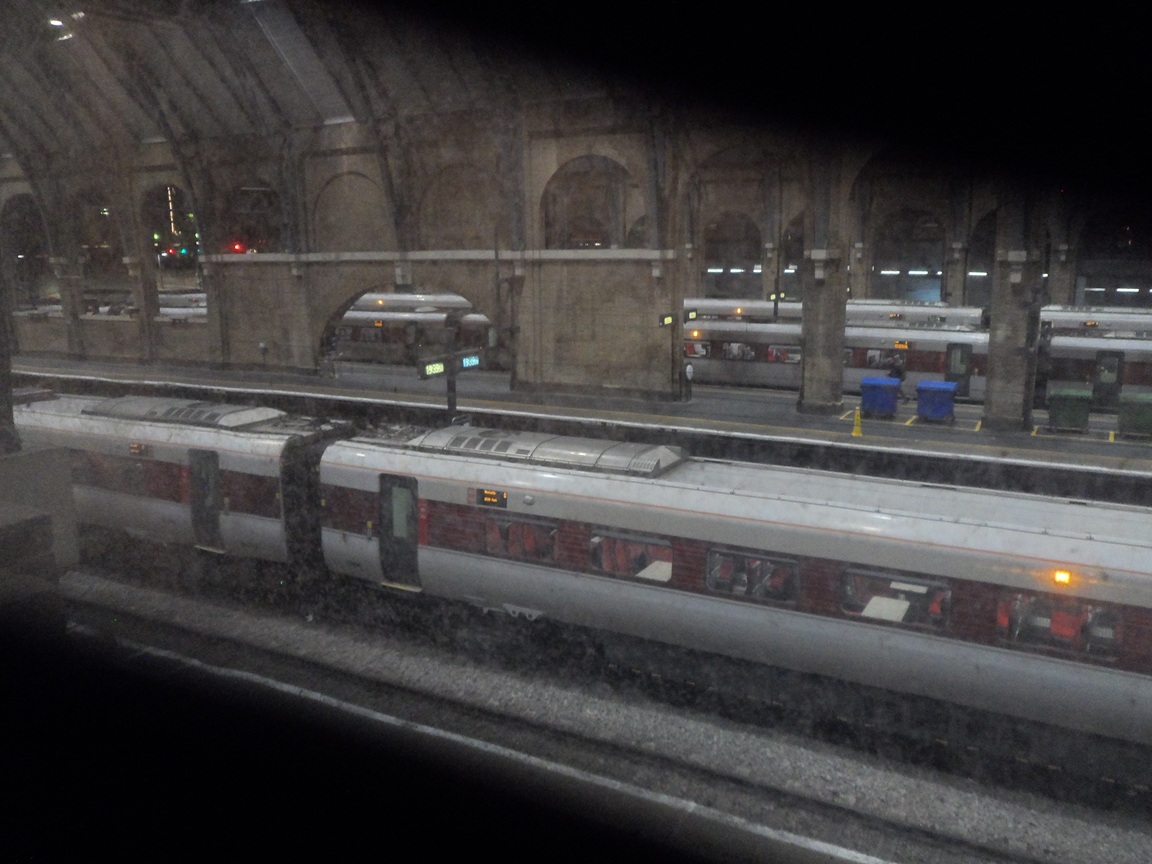
I) Name the building where this photo taken from? The building is publicly accessible.
II) Name the room within the building where this photo was taken from. Just to make it more difficult, although the public has access to this location, this room is not accessible to everyone and probably not to most readers. As a hint, it features a theme found in past quizzes.
Question 9
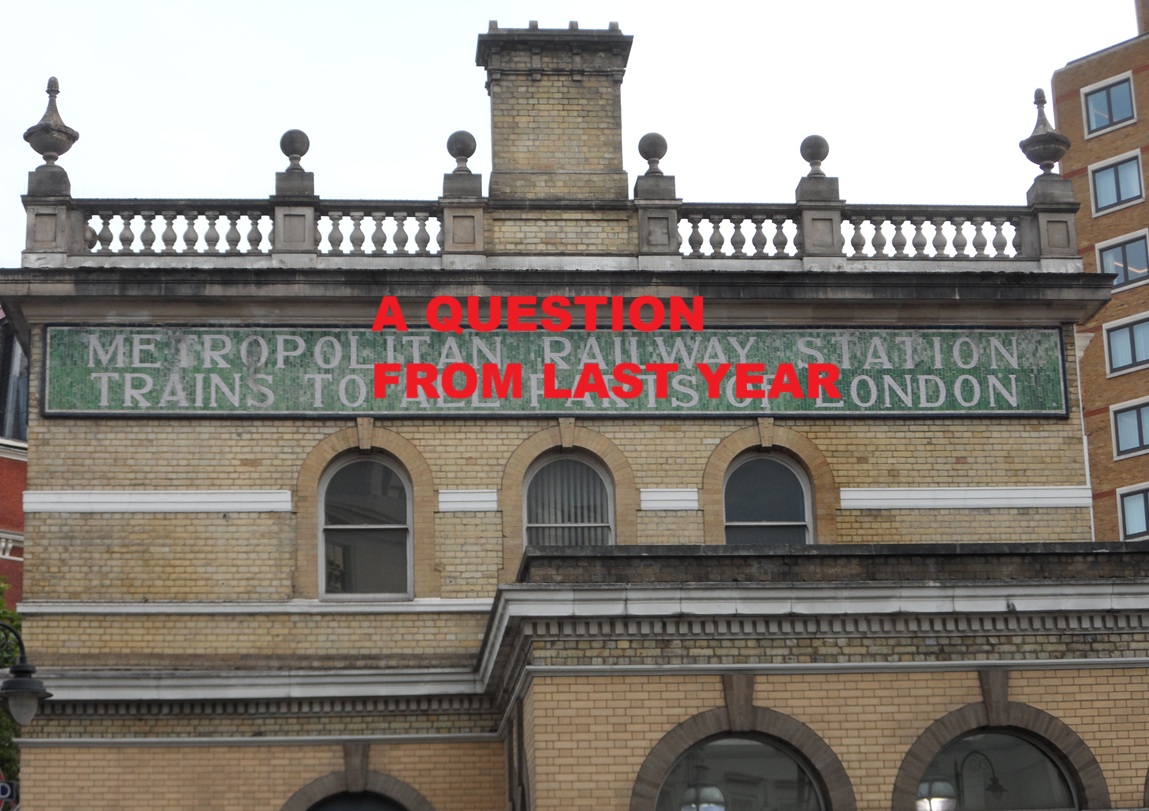
Last year we asked which station this is.
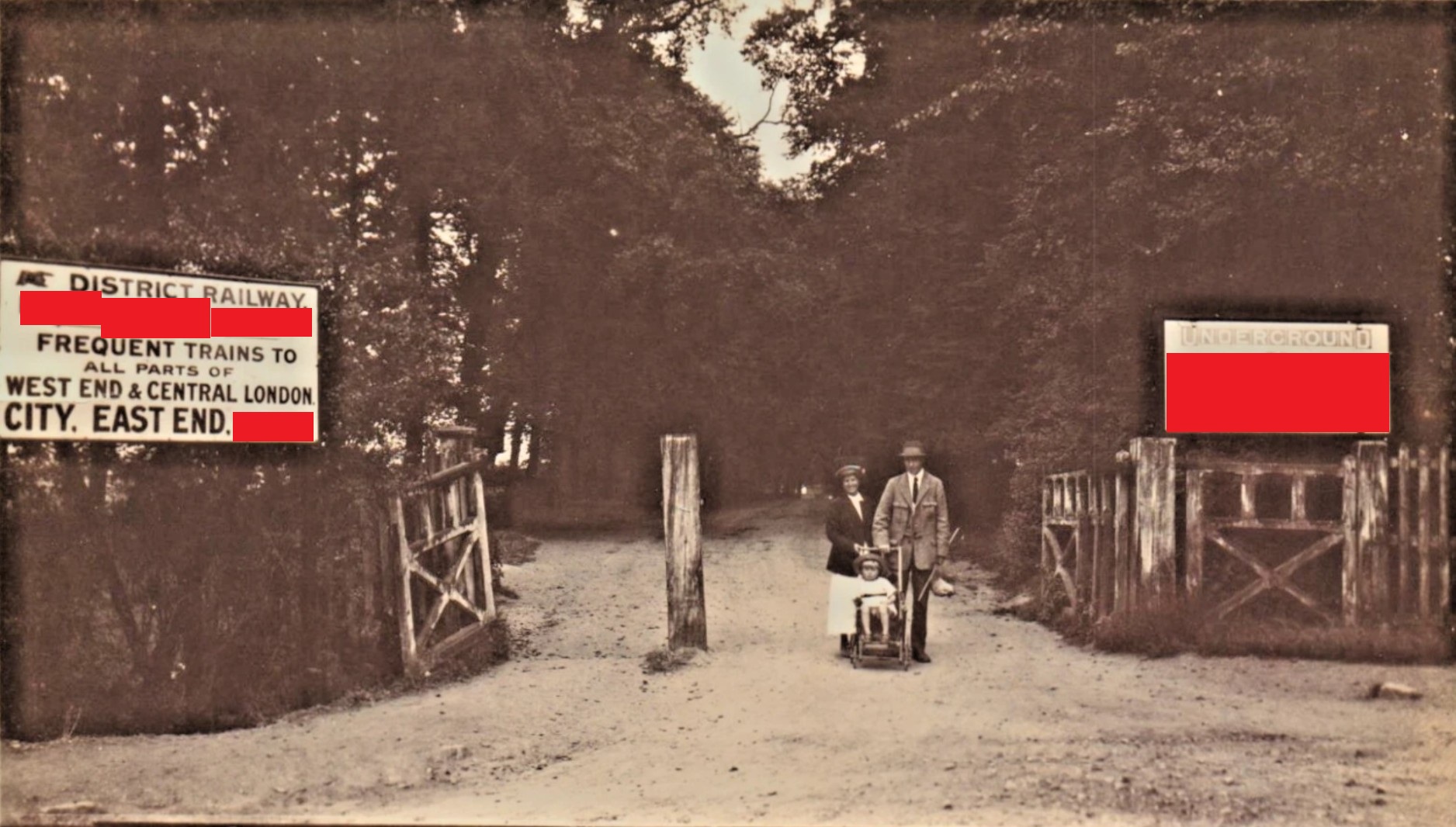
In similar vein, what station was this the entrance to? We concede that it is a very hard question but you should be able to make a plausible guess which stands a reasonable chance of being correct.
Question 10
I) Take a word that is part of a station name of a station on the Victoria line and combine it with the name of a town served by former Underground trains to form a phrase which is a homonym (sounds the same) that, in London, relates to many little-used bus routes that serve homes away from the main transport routes. What is that phrase?
II) Take a different word that is part of a different station name of a station on the Victoria line and combine it with the same name of a town served by former Underground trains to form a phrase which is a homonym to describe a service where car drivers catch a bus to enter a town centre. What is that phrase?
Question 11
Some questions relating to Croydon Airport which are vaguely transport related.
I) Which famous field marshal (you will have heard of him) arrived at Croydon Airport in 1937 in order to attend King George VI’s coronation?
II) The international radio-procedure communications distress call created in order for pilots to urgently convey an emergency situation involving their or another plane was conceived at Croydon Airport. What is this distress call? We want an exact answer i.e. exactly what the pilot would (or should) say over the radio. The answer must be 100% correct to get the point.
III) To supplement the distress call there was subsequently developed (not at Croydon) a call to indicate urgency but not immediate distress as such. This was generally initially associated with mechanical problems. What is this call? We will allow variations in spelling and omitted punctuation but the essence must be correct i.e. exactly what the pilot would (or should) say over the radio.
IV) Possibly the biggest ever turnout at Croydon Airport was for a celebratory visit by the man who first flew non-stop solo from New York to Paris. His name, linked to him ‘hopping’ the Atlantic, gave the name to a style of dancing developing along the US east coast and the predecessor to rock’n’roll dancing. Who was this?
V) One of the main airlines to fly to Croydon Airport in the early days is generally regarded as the longest continually operating airline (strikes etc. excepted) and it is still a major international airline operating under its original name. To give you a big clue, the name of the airline contains letters of the alphabet – don’t say we aren’t kind. Which airline is this?
VI) What connects all the above answers?
Question 12
Another aviation question.
West London was remarkable in the number of fixed-wing airports present around the middle of the 20th Century that began with the letter ‘H’.
Heath Row/Heathrow, Heston and Hounslow Heath (briefly) are three of them.
Name a fourth location beginning with ‘H’ which had an airstrip serving fixed-wing aircraft which was located in the same general area as the three already mentioned.
Question 13
A question about getting to Epping Forest.
I) Judging by its name, there is one station that ought to be the nearest station to Epping Forest (not Epping). Which station is this?
II) The above photo shows what is the closest part of Epping Forest to any station, give or take a few yards. The station entrance is probably only a minute’s walk away. This area of land, which is part of Epping Forest, has another name. The name of the nearest station forms part of the name of the area of land. What is the name of the area of land?
Question 14
This question asks to identify the relationship between different objects or photos.

I) What is the two-word phrase that relates to this picture (left) and this diagram (right) ?

II) What two-word phase links something found in a chemistry laboratory with something that could describe this picture?

III) We are looking for a homonym to connect these trains with something found in an operating theatre. Give the name related to the trains.
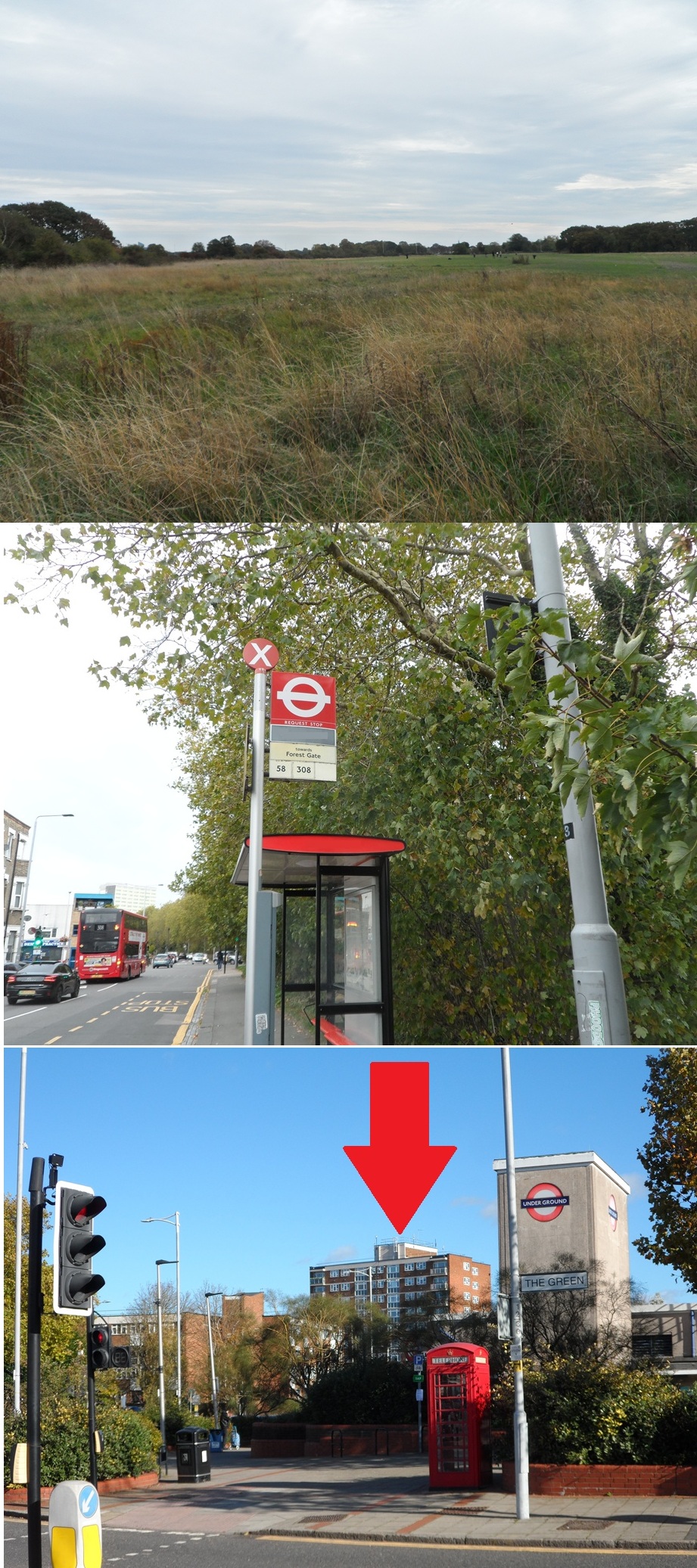
IV) What two words connect these three pictures – and is related to part II of the previous question?
Question 15
At every Underground station a number can be seen somewhere that is unique to that station.
I) Chesham is 1, Chalfont & Latimer is 2, Amersham is 3 and Heathrow Terminal 5 is 270. What are they?
II) Why aren’t Nine Elms and Battersea Power Station 271 and 272?
III) What could one regard as special about 174 (Warren St) when considering this genre?
Question 16
I) The National Rail journey planner website page for live departures from National Rail stations includes entries for Newbury Park and Earl’s Court Underground stations even though they aren’t National Rail stations. Until recently, it also contained an entry for Hillingdon station.
Why are or were these Underground stations included in live departures whereas others Underground stations aren’t?
II) What do these stations and most other Underground stations have in common with ‘zebra’?
Question 17
What connects the Cabinet War Rooms, the original name of the village that is one of the termini of the 146 bus and railway lines leaving London?
Question 18
A question about TfL services and rivers.
I) What is the present-day name of the Underground line that was originally intended to have a name which is the name of a river?
II) What is the name of the river in I)?
III) Name five Underground stations consisting of two words that have the name of a river as one of the two words. One mark for each.
IV) Related to the previous part of the question, which Underground station has a river running above the platforms? We are not talking about deep-level tube stations that happen to have platforms tunnelled under a river.
V) More challenging, name an Underground station with platforms located entirely below ground level that has a river running below it.
VI) If things proceed as recently announced, what station name containing the name of a river will be added to the DLR in future?
VII) What other DLR station with containing the name of the same river as in VI) might be built in future? Passive provision was made for it when the line was built.
VIII) In 2025, what river was adversely impacted by London Buses?
Question 19
A question about National Rail stations and rivers.
I) What current train operating company includes the name of a river in its name and a service it operates? You can give the name of the company or the name of the service.
II) What 4-platform National Rail station within zones 1-6 has a river name within the station name and is notable for platforms 3 and 4 being a considerable distance from platforms 1 and 2? The river is described by Wikipedia as ‘a small stream in London that was enclosed in ‘ [many years ago] so you might not be familiar with it.
III) This National Rail station containing the name of a river which, unusually, is in zone 6 but not in the Greater London Area (the station not the river). Which station is this?
IV) This station in zones 1-6 has a confluence of two rivers between platforms 2 and 3 but the confluence itself is not within the station. Which station is this?
V) The name of one of the rivers forming the confluence in the previous part of this question which is also the name of a station in zones 1-6. Despite this, you cannot get from this station to the station in the previous part of this question without a change of train. What is the name of this river?
Question 20

Not quite a London question but we couldn’t resist the opportunity to include this delightful photo of a rural bus shelter complete with local Ordnance Survey map – presumably for the benefit of walkers in the area. It is located not that far from the least-used station in Surrey and a short walk away from Station Road.
I) Where precisely is it?
II) Buses also stop on the other side of the road. What is unusual about this? What happens here is not unique but certainly won’t be found in London.
Considerable thanks go to Jonathan Roberts for contributing, trying the questions, pointing out errors and helpful suggestions. Also to Jo Down for his contributions (not all of which could be used this year).
