
In the perennial battle to be the foremost Antipodean metropolis, Sydney has recently announced an ambitious addition to its existing extensive suburban rail, ferry, tram, and bus network – it’s first metro line, with automated operation. In this City Snapshot, Dr Chris Hale suggests that Sydney’s ambitious dreams should have been tempered with a larger dose of reality.
Often cast in a 'rivalry' with Melbourne, Sydney's 2000 Olympics resonated with a broader balance of power shift between Australia's two largest cities. By the same token, whilst Melbourne has spent nearly a decade now of huffing and puffing about level crossing removals as one of state of Victoria's largest-ever infrastructure programs - Sydney spent the same period building real mass transit, to real results. To further accentuate some crucial differences - Melbourne's metro tunnel project bypasses one of its busiest rail stations (South Yarra) whilst robbing it of half its daily rail services. A plainly idiotic 'anti-planning' outcome.
By contrast, Sydney's long-term, consistent, investment-rich planning and development of a polycentric city schema is beginning to look like a resounding success. Let's drill down into a few Greater Sydney projects, because there are question marks beneath the veneer of success.
Sydney Trams
Sydney's new tram seems to be mainly successful via its reactivation of George Street. What was previously a sewer of cars, parking, slow-moving buses, and delivery vans is now the pedestrian spine the city always needed.

But the project was needlessly rushed, resulting in major cost blowouts. And most people are raising questions about travel speed along the length of the new route.
Suburban Parramatta's new light rail is soon to open. But in both the Sydney and Parramatta contexts, New South Wales (NSW) transport stakeholders will now be confronted with the reality that light rail is about networks – as individual routes only ever really make sense as the start of something much bigger. It's not clear this outlook exists:

Sydney Metro
Sydney's Metro project also faces major questions of strategy and outcome. It's great to have lots of new rail. But what kind of rail? Suburban Sydney is a vast landscape. From a broader world transport perspective, the insistence on a Hong Kong-style MTR offering seems bizarre.
Sydney's current suburban rail network is at its best when riders are offered a choice between stopping all stations and express services. And seating-rich double-deck trains are a great asset.

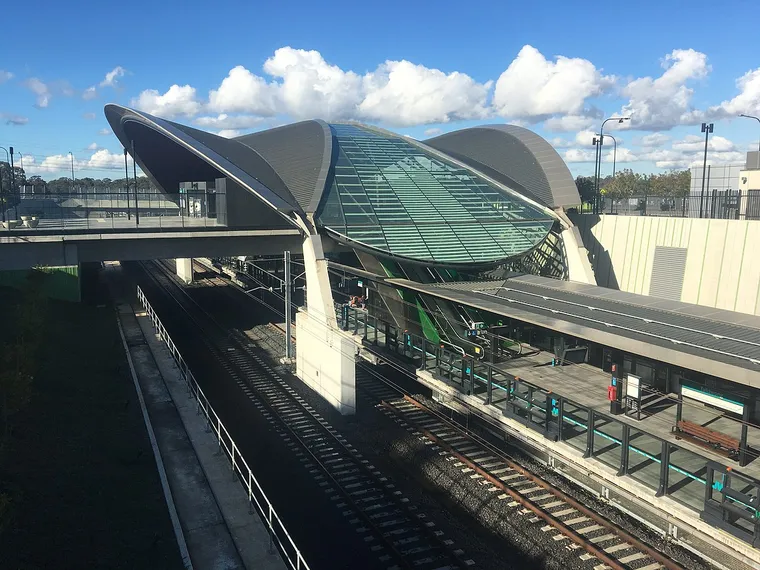
Sydney's first metro, designated the Metro Northwest Line, opened in 2019 linking the previously unconnected Tallawong with Chatswood, a major rail interchange north of Sydney Harbour. It combined 23km of new alignment with conversion of a 13km heavy rail line.
The trains are driverless, corresponding to Grade of Automation 4 with a centralised control facility at Tallawong. Platform edge doors were constructed on the eight new and retrofitted to the five existing stations on the line.
The Metro is currently being extended further south from Chatswood as the Metro City & Southwest line (future M1 Line). The additional 30km will take it under Sydney Harbour through the central business district (CBD) via Central Station before heading south to the interchange station at Sydenham where the existing rail line to Bankstown will be converted. The line and its 18 new stations are due to open in 2024, however much like a similar cross city rail line in London, delays and budget creep have plagued the project.
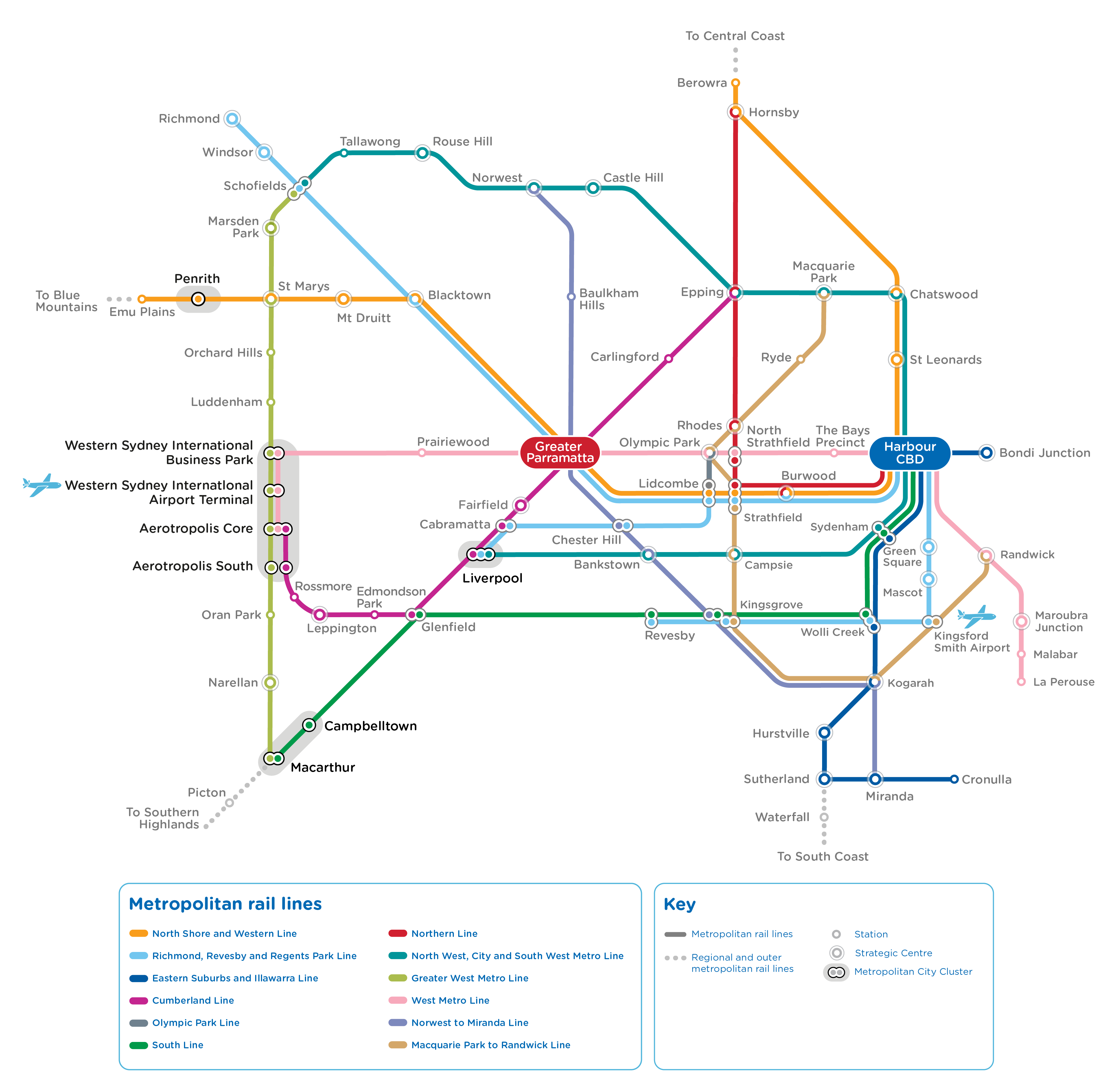
Two further Metro lines are shortly to begin construction. The Metro West line (M3 in the following diagram) will link Westmead and Parramatta with the CBD - however direct interchange will not be provided with the City & Southwest Line M1, nor with Central Station. And the Western Sydney Airport line (M2 as follows) will link the new airport with the existing St Mary’s interchange for rail services into Sydney. The following diagram shows the full planned build out of the Metro network:
As much as Sydneysiders love the ‘improving the outer West’ narrative, pushing ahead with a second Sydney airport as the centrepiece was always a triumph of political bravado over reality. There has been no information on which airlines will be using the new airport.
Overall, these major projects have suffered from a variety of problems - huge cost blowouts, rushed planning, murky land deals, questionable transport detail, and poor protection of the public interest have loomed large.
Maybe it's time Sydney’s transport sector sobered up a bit and started paying more attention to the basics.
Dr Chris Hale is the founder and CEO’ of Hale Infra Strategy, which does infrastructure planning for East Coast Australian cities. This is one of a series of his City Snapshots of public transport networks on LR, slightly updated from his posts on LinkedIn. Thanks to Snowy for editing.